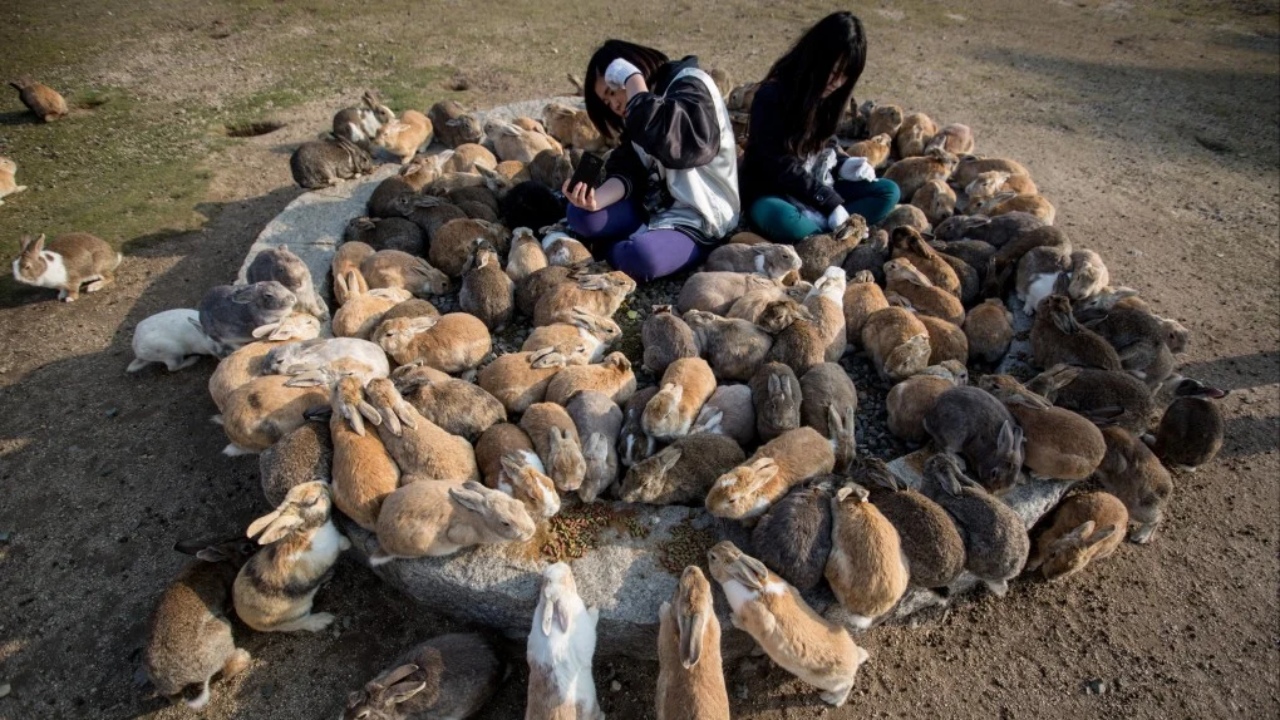
History loves a scapegoat with long ears and a twitchy nose. Every conservation textbook recites the neat little horror story of Laysan Island. Sailors drop off a few rabbits in 1903 as a fresh meat pantry. Within a decade, those fluffy little rodents turn a lush, bird-heavy paradise into a barren sandbar by mowing down every single blade of vegetation. Millions of dollars later, and after the total wipeout of endemic bird species like the Laysan honeycreeper and the Laysan rail, the rabbits are exterminated. Case closed. Man plays God, nature punches back, fuzzy villains get what's coming.
Except that narrative is a lazy bedtime story for people who refuse to look at the mechanics of island biogeography.
The standard ecological dogma treats Laysan as a simple cautionary tale of invasive species gone rogue. It assumes that ecosystems are fragile glass statues that shatter the moment a foreign element steps inside. But that perspective ignores the actual physics of isolated island systems, the biological reality of extreme resource limitation, and the supreme arrogance of human intervention that followed the initial mistake.
If you want to understand why Laysan's ecosystem collapsed, stop blaming the rabbits for doing what rabbits are biologically mandated to do. Start looking at the managers who thought they could hit a biological reset button with a shotgun and a prayer.
The Myth of the Pristine Eden
Let us dismantle the foundational lie: the idea that Laysan was a stable, perfectly balanced Eden before the first furry stowaway hopped onto the beach.
Islands are not stable. They are high-stakes gambling tables. Laysan is a tiny coral atoll in the middle of the Pacific, roughly three square miles of sand, guano, and salt spray. Before 1903, the island had already survived centuries of catastrophic weather events, fluctuating seabird populations that completely altered soil chemistry every breeding season, and wholesale destruction by commercial guano miners in the late nineteenth century.
When the guano companies stripped the island bare to enrich mainland agricultural fields, they didn't just dig up dirt; they fundamentally altered the hydrology and vegetation structure of the atoll. The island was already a recovering patient with a compromised immune system when the rabbits arrived.
Blaming the rabbits for Laysan's collapse is like blaming a spark for a forest fire built out of dry gunpowder. The rabbits were merely the accelerant. The structural failure was baked into the geography and compounded by decades of human commercial exploitation that left the flora with zero resilience.
Biological Determinism Versus Human Hubris
Watch what happens when you point out that rabbits were just eating grass. Conservation traditionalists clutch their pearls. They scream about biodiversity loss. They cite the extinction of endemic plants like the Pritchardia palms and the damage done to ground-nesting seabirds.
Here is the unvarnished truth that the textbooks omit: rabbits do not possess malice. They possess metabolism.
A rabbit on a small island with no mammalian predators and an abundance of palatable, nutrient-rich vegetation will do what every single living organism on Earth does under similar conditions. It will multiply until it hits a hard thermodynamic wall. The mistake was not introducing an animal; the mistake was assuming an enclosed system would magically self-correct without catastrophic feedback loops.
The real villain of the Laysan disaster is not the rabbit. It is the managerial mindset that believes nature is a museum exhibit that can be kept frozen in amber if we just spray enough poison or shoot enough critters.
When Max Schlemmer, the guano manager turned rabbit rancher, brought those animals ashore, he was operating on a crude 1903 understanding of resource extraction. But the scientists who came later, attempting to "restore" the island by eradicating the rabbits, fell into the exact same trap of hubris. They treated eradication as salvation, ignoring the cascading secondary effects of removing a dominant herbivore from a system that had already adapted to its presence, however destructively.
When the last rabbits were finally exterminated in 1923, the island did not magically snap back to its pre-1903 postcard perfection. Instead, the sudden disappearance of herbivores led to an explosion of invasive weeds and morning glories that choked out the very native grasses the conservationists were trying to save. Nature does not operate on an undo button.
The Counter-Intuitively Brutal Reality of Restoration
If we strip away the emotional anthropomorphizing of wildlife, conservation becomes an exercise in cold, hard calculus. We spend millions of dollars trying to recreate historical baselines that are mathematically impossible to recover, all to soothe our collective guilt over past mistakes.
Imagine a scenario where the Laysan managers in the 1910s didn't just wait for a total ecosystem crash or rely on haphazard culls, but instead treated the island as a dynamic laboratory of forced adaptation. What if the goal wasn't to preserve a static snapshot of 1902, but to manage the energy flow of the system in real time?
You cannot freeze an ecosystem in time. Islands change. Climate shifts, sea levels rise, and species migrate, adapt, or die. Clinging to the fantasy of a pristine, rabbit-free Laysan is an act of ecological nostalgia.
The real lesson of Laysan is not that non-native species are inherently evil demons sent to destroy the earth. The lesson is that human beings are pathologically incapable of intervening without making things worse, whether we are dropping rabbits for a midnight snack or launching multi-million-dollar eradication campaigns to cleanse our historical conscience.
Stop looking at nature as a fragile victim that needs our constant, clumsy defense. Look at it as a relentless, indifferent machine of adaptation where every action has an equal and opposite reaction.
The rabbits didn't ruin Laysan. Our refusal to accept ecological reality did.