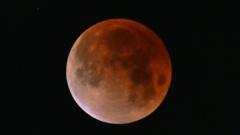
Every time a total lunar eclipse rolls around, the internet turns into a collective echo chamber of breathless hysteria. Mainstream astronomy outlets churn out the exact same tired playbook. They tell you to buy an overpriced pair of binoculars, grab a thermos of coffee, and stand in your freezing backyard at three in the morning to gawk at a glorified shadow show. They call it a rare celestial spectacle. They promise you a mystic red orb drenched in ancient cosmic drama.
They are selling you a postcard while ignoring the actual machinery of the universe.
I have spent decades watching amateur stargazers freeze their toes off waiting for a literal alignment of rocks, only to get bored twenty minutes into totality because nobody bothered to explain what they were actually looking at. The lazy consensus about lunar eclipses reduces an exquisite atmospheric physics lesson to a roadside carnival attraction. You do not need a telescope. You certainly do not need to romanticize a shadow. You need to understand optics.
The Atmospheric Prism You Take for Granted
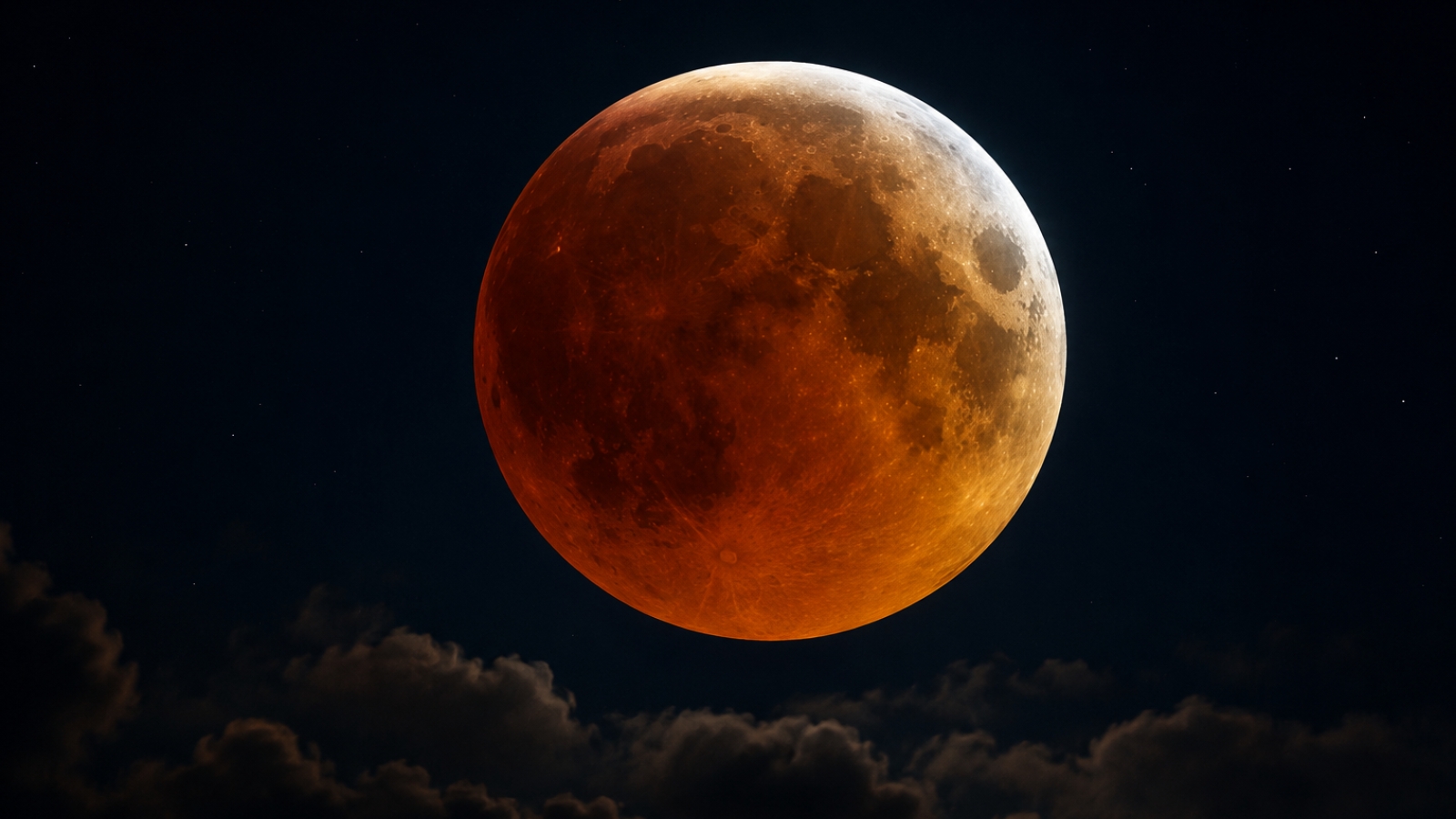
Let us clear up the first major misconception right out of the gate. The moon does not turn red because of some apocalyptic omen or because the lunar surface is suddenly bleeding iron oxide. It turns red because every single sunrise and sunset happening simultaneously across the entire rim of the Earth is being projected onto the moon like a cosmic drive-in movie screen.
When the Earth moves directly between the sun and the moon, our planet blocks direct sunlight from hitting the lunar surface. If Earth had no atmosphere, the moon would simply wink out of existence into absolute blackness. But our atmosphere acts as a giant lens. As sunlight grazes the edge of our globe, the shorter wavelengths of light (the blues and violets) scatter away due to Rayleigh scattering. The longer wavelengths (the reds and oranges) punch right through, bending—or refracting—around the curvature of the planet and splashing onto the lunar regolith.
Think of it this way. Imagine a scenario where you are standing on the moon during totality. If you looked back toward Earth, you would not see a dark disk. You would see a glowing, impossibly bright red ring. You would be staring at a continuous, 360-degree sunset encircling our entire world. Every forest fire, volcanic eruption, and pollution plume on Earth alters the exact hue of that ring. You are not looking at a property of the moon. You are looking at a chemical fingerprint of Earth's troposphere reflected back at us.
Yet, mainstream guides treat this like a magic trick instead of a planetary diagnostics tool.
Why Your Gear is Entirely Useless
The second great lie of the eclipse-chasing industrial complex is your equipment list. Walk onto any astronomy forum ahead of an eclipse, and you will see novices panicking over telephoto lenses, equatorial mounts, and specialized filters.
It is completely backwards.
During a solar eclipse, you need eye protection and high-magnification filters because you are staring directly at the blinding photosphere of the sun. But during a lunar eclipse, the event happens entirely in the shadow. The moon's brightness plummets by a factor of tens of thousands.
If you point a massive, high-powered telescope at a totally eclipsed moon, you magnify a dim, diffuse signal until it becomes an unviewable, muddy blur of gray-red noise. You are starving your optics of light. The naked eye, or a simple pair of wide-field binoculars, outperforms a backyard observatory telescope every single time during totality. You want field of view, not magnification. You want context, not a blurry crater close-up. The contrast between the pitch-black space and the copper disk is lost when you tunnel-vision through twenty pounds of glass.
I have watched well-meaning enthusiasts drop thousands of dollars on tracking mounts to photograph the moon turning copper, only to spend three hours fighting software updates while missing the actual event happening right above their heads. Stop buying gear to compensate for a lack of understanding.
The Divergence of Expectations and Reality
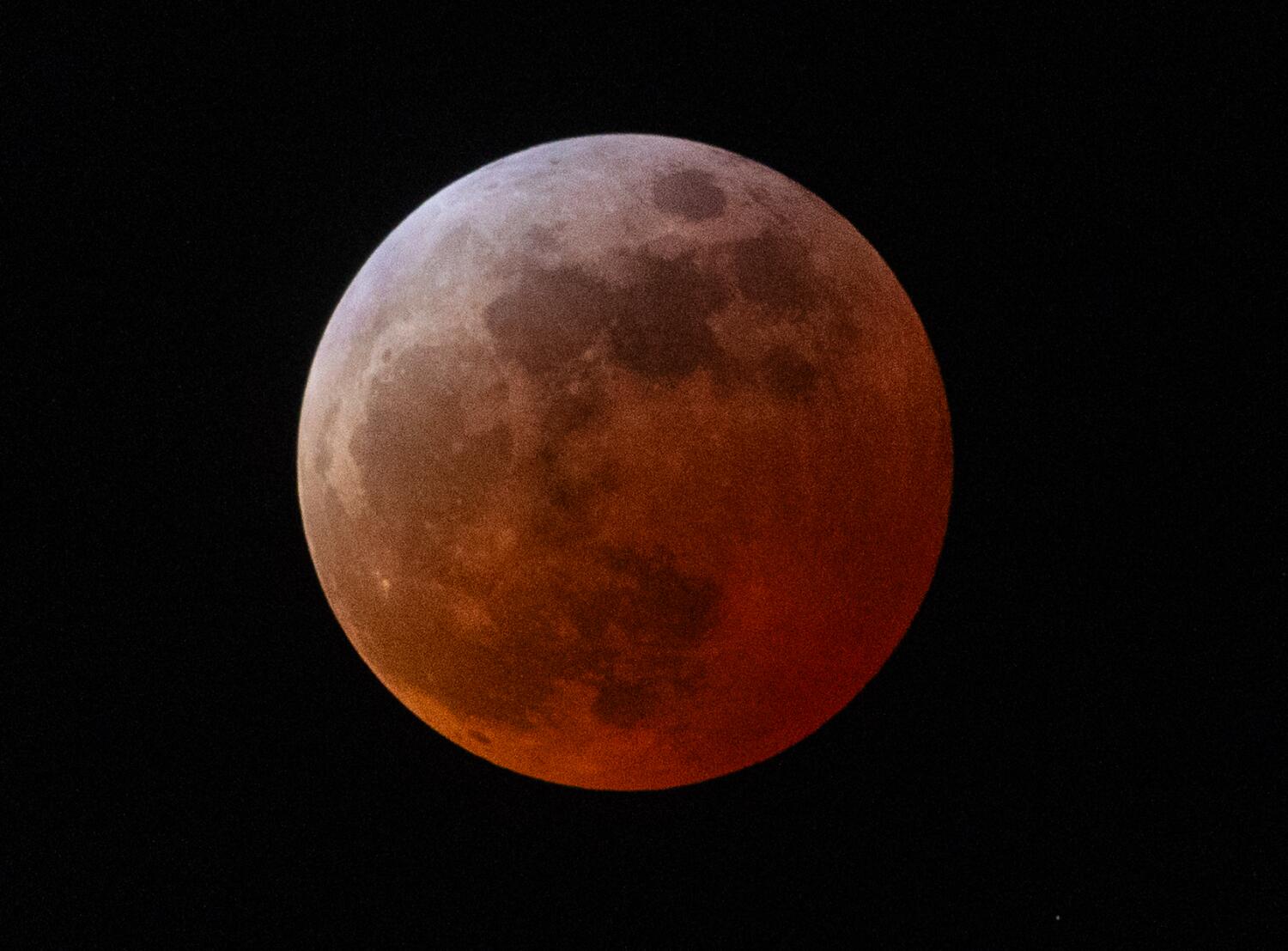
People expect a glowing neon neon-sign in the sky. They see heavily edited astrophotography on Instagram—images cranked up in Photoshop with saturation sliders maxed out until the moon looks like a burning ember dropped in deep space. Then they step outside, look up, and realize the real thing is a dusky, subdued, muddy brick-brown color that barely cuts through light pollution.
Disappointment sets in instantly. They pack up their lawn chairs and head inside.
This is what happens when you market science as a blockbuster movie instead of an empirical reality. The true beauty of a lunar eclipse isn't its blinding brilliance; it is its subtlety. You are watching the shadow of your own home cast across a quarter-million miles of empty space. You are watching the finite geometry of three celestial bodies interacting in real time without a safety net.
If you want a visceral experience, stop trying to photograph it. Your smartphone sensor is garbage at capturing low-light astronomical phenomena anyway; it will spit out a smudged white pixel or a noisy orange blob that looks like a streetlamp through a dirty window. Leave the glass in the bag.
What You Should Actually Be Doing
If you insist on standing outside while the planet rotates you through a cone of darkness, change your methodology.
First, look for the edge of the umbra before totality even begins. Watch the crisp, curved shadow of the Earth creep across the craters. That curve is the empirical proof that the ground you are standing on is a sphere—a geometry humans figured out millennia ago, yet somehow people still need visual reminders of.
Second, pay attention to the color gradient. Is the moon a bright copper-orange, or is it a dark, ash-gray brown, akin to the infamous Danjon Scale of lunar eclipse brightness? A dark eclipse usually means the stratosphere is loaded with volcanic aerosols or particulate matter. You are reading the weather of the global atmosphere simply by gauging how much light is leaking past the terminator line.
Third, look at the background stars. As the moon dims, stars that were previously drowned out by lunar glare suddenly snap into view. You watch the sky reconfigure itself in real-time as the cosmic spotlight dims.
Stop treating the universe like a weekend entertainment schedule designed to keep you amused between streaming episodes. Put down the camera, throw away the beginner's guide that tells you to buy accessories you do not need, and look up at the geometry of your own solar system doing math in the dark.