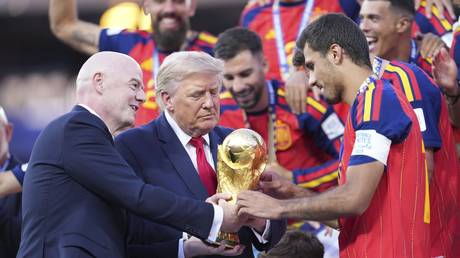
The World Cup final between Spain and Argentina at New Jersey's MetLife Stadium is supposed to be about soccer. It isn't. Instead, the biggest sporting event on earth has transformed into a high-stakes political theater. Activists outside the venue are distributing thousands of mock red cards targeted directly at two men sitting in the luxury suites: FIFA President Gianni Infantino and US President Donald Trump.
If you think sports and politics don't mix, you haven't been paying attention to this tournament. The demonstration hits directly at the core issue plaguing the 2026 tournament—the unprecedented erosion of sporting independence under the guise of executive privilege. Fans aren't just angry about ticket prices or transit delays. They're furious that the integrity of the game was bartered away over a series of long-distance phone calls.
The Phone Calls That Broke World Cup Rules
To understand why activists are handing out red cards today, look back at the shocking intervention that occurred earlier in July. During the United States’ match against Bosnia and Herzegovina in Santa Clara, American forward Folarin Balogun received a straight red card for a dangerous tackle. By standard FIFA disciplinary code, a straight red card carries an automatic, unappealable one-game suspension.
Then the rules changed.
Donald Trump openly admitted during an Oval Office press event that he personally intervened. He made three distinct phone calls to Gianni Infantino to complain about the refereeing, labeling the dismissal a "horrible" decision. Within forty-eight hours, FIFA’s disciplinary committee took the unprecedented step to "suspend" Balogun's mandatory ban, clearing him to play against Belgium in the round of 16.
European soccer’s governing body, UEFA, exploded in anger, calling the U-turn "incomprehensible and unjustifiable". The Belgian soccer federation openly challenged the tournament's fairness. Honestly, can you blame them? If the president of a host nation can pick up the phone and pressure soccer's governing body to alter on-field discipline, the sporting competitive landscape is completely compromised.
What Most People Get Wrong About FIFA Independence
Gianni Infantino quickly issued a public statement defending the decision. He claimed that FIFA's judicial bodies remain independent and simply followed a standard legal process.
It’s a weak defense that nobody is buying.
FIFA historically bans national teams if their local governments interfere with domestic soccer federations. They suspended Nigeria in the past; they threatened Spain. Yet, when the host country is the world's largest economy and the source of massive corporate sponsorships, the rules bend until they break.
The protest outside MetLife Stadium is organized to expose this hypocrisy. Activists are handing out physical cardboards designed to mimic a referee’s red card, encouraging fans inside the stadium to raise them simultaneously during the pre-match ceremonies. It's a visual protest meant to broadcast a clear message to billions of viewers worldwide: soccer belongs to the fans, not politicians.
The Action Plan for True Soccer Reform
The Balogun incident set a dangerous precedent that cannot be ignored as the 2026 cycle closes and preparation begins for future tournaments. True sports governance requires structural isolation from geopolitical influence. If you want to protect the sport from looking like a compromised exhibition, major institutional shifts must occur immediately.
- Insulate Judicial Committees: FIFA must rewrite its statutes to bar any communications between heads of state and the disciplinary committee during an active tournament. Any documented contact should trigger an automatic independent ethics probe.
- Enforce Blind Re-Evaluations: If a red card is reviewed on appeal, the panel should evaluate the footage without team names or identifiers to eliminate implicit bias toward host nations.
- Solidify Unappealable Offenses: Reinstate strict parameters on what can actually be reviewed. On-field disciplinary decisions like standard red cards for dangerous play should never be subject to retroactive political lobbying.
Go check out the fan groups organizing outside the gates at MetLife Stadium or read the full breakdown of the international fallout over executive pressure. The game on the pitch today will crown a world champion, but the real struggle is keeping the sport clean from backroom executive deals.