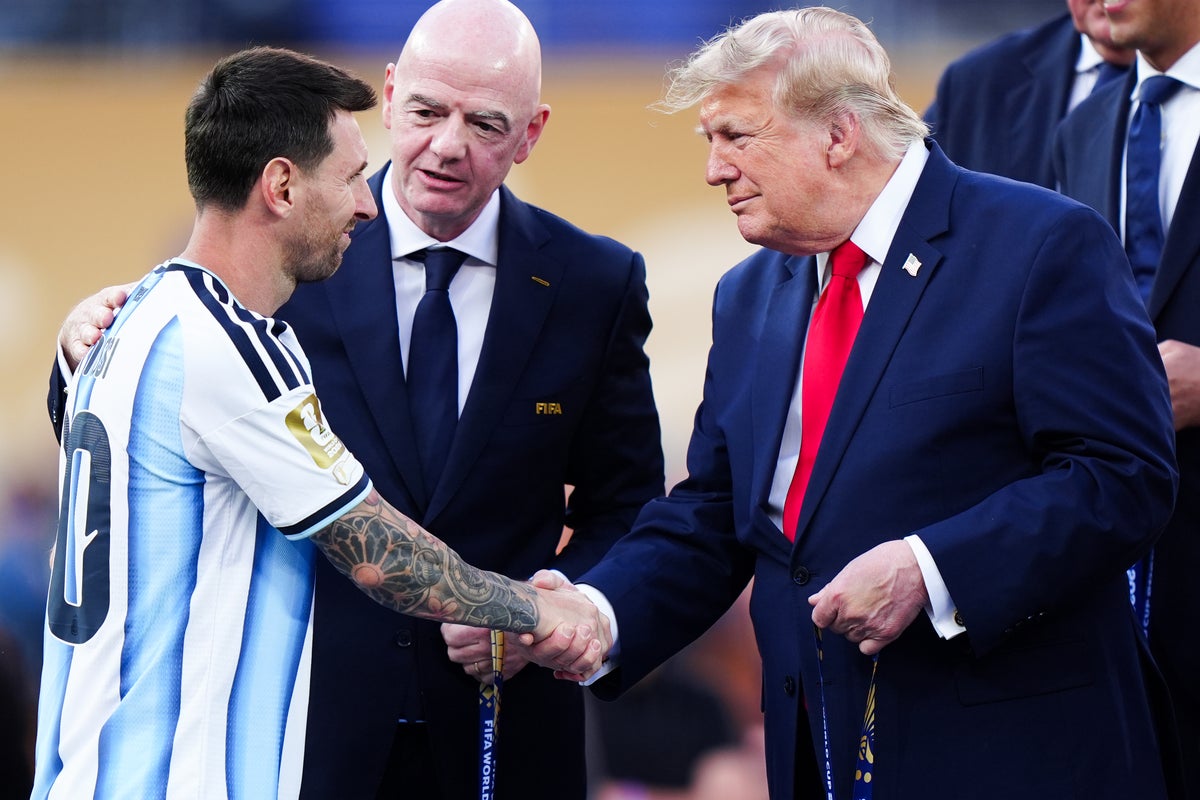
Donald Trump wants the United States to host back-to-back FIFA World Cups, or at least lock down a permanent rotation that keeps the world's biggest sporting event anchored on American soil. Mainstream sports media immediately treated this like standard political bluster—a hyper-patriotic soundbite designed to grab headlines while soccer fans worry about stadium transit logistics for the upcoming tournament.
They are missing the real story. The media is trapped in a lazy consensus that hosting mega-events is a straightforward battle for national prestige and tourism dollars.
The reality is far more cynical. FIFA’s rapidly expanding tournament format is becoming an unsustainable economic burden for most independent nations. The United States isn't just flirting with a vanity project; it is accidentally positioned to become the only entity capable of underwriting FIFA’s reckless growth. But demanding a permanent seat at the hosting table under current conditions is a terrible deal for American taxpayers and a death sentence for the competitive diversity of global sport.
The Myth of the Sovereign Host
For decades, the sports economics establishment relied on a simple premise: a nation bids for the World Cup, builds shiny new stadiums, welcomes millions of tourists, and reaps long-term infrastructure benefits.
That model is dead. FIFA killed it by expanding the tournament to 48 teams and demanding 104 matches per cycle.
Look at the data from recent tournaments. South Africa spent over $3 billion on the 2010 World Cup; many of those stadiums now sit empty, costing millions annually in maintenance. Brazil’s 2014 tournament cost an estimated $15 billion, sparking massive civil protests over the misallocation of public funds while venues like the Estádio Nacional Mané Garrincha became glorified parking lots for buses.
When the media covers a politician demanding "another World Cup right after," they frame it as a logistical impossibility due to FIFA's rotation policy. They should be framing it as financial malpractice.
The 2026 tri-nation hosting model between the US, Canada, and Mexico isn't a beautiful display of North American unity. It is a desperate corporate compromise. FIFA needed the vast, existing stadium infrastructure of the NFL to absorb a 48-team field without causing an immediate sovereign debt crisis.
Why the US Infrastructure Advantage is an Economic Illusion
Proponents of a recurring US World Cup argue that America is different because the stadiums are already built. MetLife Stadium, SoFi Stadium, and AT&T Stadium don't require billions in new concrete. They are cash-generating machines.
This argument ignores the hidden tax of FIFA compliance.
When FIFA rolls into town, they don't just use your stadium; they colonize it. To meet strict pitch dimensions and turf requirements, multi-million dollar retractable field systems must be retrofitted into modern gridiron venues. Luxury suites—the lifeblood of stadium revenue for local owners—are seized for FIFA dignitaries and corporate sponsors.
More importantly, FIFA demands sweeping tax exemptions from host cities. Under standard hosting agreements, the governing body pockets billions in broadcast rights, ticket sales, and marketing sponsorships completely tax-free. Meanwhile, municipal governments are left holding the bill for security, traffic management, and emergency services.
I have analyzed municipal budgets during major sporting events for over a decade. Cities routinely buy into the promise of "economic impact" studies generated by biased consulting firms. These studies use absurd multipliers, assuming every dollar spent by a tourist recirculates through the local economy seven times over. They completely ignore "crowding out"—the phenomenon where regular, high-spending business travelers avoid a city entirely during a mega-event, netting the local economy zero real growth.
The Flawed Questions Everyone Keeps Asking
Go to any sports business forum and you will see the same questions repeated ad nauseam.
Question: "How much tourism revenue will the World Cup bring to host cities?"
Correction: This is the wrong metric. The real question is: "How much tax revenue is legally stripped from the municipality to subsidize FIFA's operational margins?"
Question: "Can the US build enough soccer culture to justify hosting multiple tournaments?"
Correction: Soccer culture is irrelevant to the balance sheet. Major League Soccer franchises are currently valued at hundreds of millions of dollars based on real estate and media rights, not tournament nostalgia. Hosting FIFA repeatedly does not grow the domestic game; it merely extracts capital from it.
If an elite sports market wants to actually extract value from global soccer, it shouldn't beg for the privilege of hosting FIFA's circus. It should force a renegotiation of the revenue split.
Imagine a scenario where the host federation demands 40% of global broadcast revenues generated within their borders during the tournament to fund grassroots youth academies. FIFA would never agree to it. And that is exactly why the US should stop volunteering to build their stage.
The Downside to Going Cold Turkey
To be entirely fair, walking away from the global sporting table has its own costs.
If the US entirely rejects the hosting carousel, it cedes immense soft-power diplomatic leverage to geopolitical rivals. Countries like Saudi Arabia are aggressively utilizing "sportswashing" strategies, investing hundreds of billions into events like the 2034 World Cup to diversify their economies and reshape international perceptions.
If Western democracies opt out due to fiscal responsibility, the global sporting calendar will be exclusively written by authoritarian regimes with bottomless sovereign wealth funds. That shifts the cultural center of gravity away from Western media markets, potentially hurting domestic sports brands in the long run.
But there is a massive difference between strategic participation and demanding back-to-back tournaments like an eager golden retriever.
Stop Playing FIFA's Game
The current consensus views a bid for a mega-event as a prize to be won. It isn't. It is an outsourced liability shift.
FIFA wants the scale, security, and corporate dollars of the American market, but they want it under a governance framework that treats the host nation like a compliant vassal state. Politicians who clamor for permanent hosting rights think they are flexing national dominance. In reality, they are signaling to Zurich that American taxpayers are ready to underwrite the next decade of FIFA's executive bonuses.
If the US wants to actually disrupt the sports landscape, it needs to stop bidding under FIFA's terms entirely. Threaten a boycott of the expanded format. Force the creation of a unified host-nation coalition that bargains collectively for media rights shares.
Until a host nation has the spine to demand a piece of the actual broadcast pie, wanting another World Cup isn't a bold vision. It is an expensive submission.