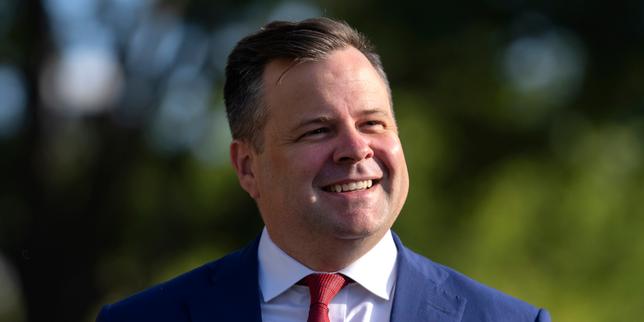
Donald Trump just put a guy who builds houses and manages mortgages in charge of the nation's crown jewel spy agencies.
On Tuesday, the White House announced that Bill Pulte, the current head of the Federal Housing Finance Agency (FHFA), will take over as the acting Director of National Intelligence (DNI). He replaces Tulsi Gabbard, who announced her departure in May to care for her husband following a bone cancer diagnosis. Gabbard officially steps down on June 30, meaning Pulte steps into the role on July 1.
Here is the kicker. Pulte isn't leaving his day job. He will remain the director of the FHFA and the chairman of Fannie Mae and Freddie Mac while overseeing the entire United States intelligence community. He will be balancing a $10 trillion housing finance portfolio with global espionage operations.
The Zero Intelligence Experience Problem
If you look through Pulte's resume, you won't find a single day of intelligence experience. You won't find military deployments, counterterrorism analysis, or time spent in a clandestine station. He graduated from Northwestern University in 2010 with a degree in broadcast journalism, ran a private equity firm, and is the grandson of the founder of PulteGroup, a massive residential home construction company.
The post-9/11 statute that created the Office of the Director of National Intelligence (ODNI) states that the director should possess "extensive national security experience." Pulte has none.
Trump defended the appointment on Truth Social by pointing to Pulte’s financial management. He wrote that Pulte has "deep experience managing the most sensitive matters in America, the safety and soundness of the Markets, and over 10 Trillion Dollars at Fannie Mae/Freddie Mac."
Critics aren't buying the corporate defense. Senate Intelligence Committee Chairman Mark Warner voiced deep concern over the move, stating that Pulte lacks the statutory experience required for the job. According to Warner, the selection signals that the White House wants an official who will provide a specific narrative rather than objective intelligence.
Why Pulte’s Housing Record Matters for Spies
To understand why Trump picked Pulte, look at what he did at the FHFA, not what he knows about satellites or foreign agents.
Since taking over the FHFA in March 2025, Pulte transformed a typically quiet regulatory agency into an aggressive investigative weapon. He launched sweeping campaigns against what he labeled mortgage fraud. He didn't just target standard bad actors; he went after Trump’s prominent political opponents.
Pulte sent criminal referrals to the Justice Department alleging mortgage fraud against heavy-hitting Democrats. The list includes New York Attorney General Letitia James, Senator Adam Schiff, Representative Eric Swalwell, and Federal Reserve Governor Lisa Cook. Cook, the first Black woman to serve on the Fed board, faced intense scrutiny from Pulte, leading Trump to attempt to fire her—a move currently tied up in a Supreme Court battle.
This aggressive posture caught the attention of Capitol Hill. Democrats previously asked the Government Accountability Office (GAO) to investigate whether Pulte used federal authority and resources to target political enemies. The GAO confirmed it is reviewing the FHFA's fraud investigation procedures, with a final report expected in late 2026 or early 2027.
By placing Pulte at the top of the ODNI, Trump gains a proven loyalist who isn't afraid to use bureaucratic machinery aggressively.
The State of a Downsized ODNI
Pulte inherits an intelligence apparatus that looks very different than it did a year ago. Under Gabbard, the ODNI went through a radical restructuring called "ODNI 2.0."
Gabbard cut or reassigned roughly 40% of the agency's staff. She consolidated analytical functions and downsized the central office. The administration framed these cuts as a necessary reduction of bureaucratic bloat. Critics argued the downsizing crippled the agency's ability to coordinate between the CIA, NSA, and FBI, shifting raw power back to standalone agencies.
Pulte now commands this leaner, restructured office. Intelligence insiders are watching several immediate issues.
- The Havana Syndrome Report: Gabbard was expected to declassify and release a sensitive assessment regarding Anomalous Health Incidents before her departure. The fate of that report now rests with Pulte.
- The 210-Day Clock: Under federal vacancy laws, Pulte can serve as acting director for 210 days. This gives him a hard deadline of January 26, 2027, unless Trump formally nominates a permanent replacement.
- The Double-Duty Strain: Managing both the FHFA and the ODNI simultaneously is unprecedented. The sheer volume of daily briefings, policy decisions, and regulatory oversight required for both roles will test the limits of executive management.
What Happens Next
This appointment fundamentally shifts how the administration interacts with its spy agencies. For professionals in both the housing sector and the national security apparatus, the next 30 days require immediate adaptation.
If you are a mortgage industry professional, keep a close eye on the day-to-day operations at Fannie Mae and Freddie Mac. With Pulte splitting his time between housing liquidity and global threat briefs, policy decisions regarding loan pricing or ending the federal conservatorship of Fannie and Freddie may face administrative delays.
If you work within the intelligence community, prepare for a leader who values corporate management structures and absolute loyalty over institutional tradition. Expect Pulte to focus heavily on internal investigations, document declassification, and auditing existing operations rather than traditional geopolitical maneuvering.