The screen glows in the dark. You scroll. A building collapses in a plume of grey dust. Swipe. A drone feed shows a silent explosion in a trench. Swipe. A headline announces a record-breaking casualty count from a distant famine. Swipe. You stop to watch a video of a golden retriever puppy falling asleep in a bowl of kibble.
Our brains weren't built for this. We're living through the most documented era of human suffering in history, yet we've never felt more detached from the reality of the grave. When every tragedy is just another bit of content in an endless feed, the concept of a life ending starts to lose its jagged edges. It becomes smooth. It becomes background noise. We've reached a point where death is everywhere and nowhere at the same time.
The Numbing Effect of the Digital Front Row
You can see a war from your couch. Not just the polished news reports our parents watched, but the raw, unedited, high-definition reality of it. Body cams and telegram channels have turned the most private, horrific moment a human can experience into a public spectacle.
Psychologists call this "compassion fatigue," but that's a polite way of saying our empathy circuits have blown a fuse. When you're exposed to a constant stream of high-intensity trauma, your nervous system does what it must to survive. it shuts down. It dulls the response. You stop seeing a person with a story, a family, and a favorite song. You start seeing a statistic or a digital asset.
The sheer volume of "blood" in our digital world has created a paradoxical vacuum. We're more aware of death than any generation before us, yet we're less moved by it. We've traded the heavy, physical mourning of the past for the "thoughts and prayers" of a three-second interaction.
Statistical Numbing and the Value of One
There's a terrifying glitch in the human brain. We are incredibly good at feeling for one person. We'll move mountains to save a child stuck in a well or a cat trapped in a tree. But the moment that number climbs, our ability to care doesn't scale with it. It actually drops.
Paul Slovic, a leading researcher in decision science at the University of Oregon, calls this "arithmetic of compassion." His research shows that our sympathy begins to decline as soon as the number of victims increases from one to two. By the time you hit a hundred or a thousand, the individual human experience is completely swallowed by the scale of the tragedy.
In 2026, we deal in millions. We talk about displacement figures and casualty rates like we’re discussing quarterly earnings. We’ve turned the end of a human universe into a data point on a spreadsheet. When death becomes a math problem, it stops being a tragedy.
The Sanitized Death vs The Spectacle
We live in a weird duality. On one hand, we're obsessed with violent entertainment and real-world gore via the internet. On the other hand, we've never been more removed from the physical reality of natural death.
A century ago, people died at home. You saw the body. You washed it. You sat with it. You smelled the change in the air. Death was a physical, domestic reality. Today, we've outsourced it to hospitals and funeral homes. We've sanitized the process so thoroughly that most people reach middle age without ever seeing a dead body that hasn't been prepared by a professional.
This creates a massive disconnect. We see "theatrical" death all day—explosions, cinematic kills, grainy combat footage—but we have no relationship with the quiet, inevitable end of a life. Because we don't see the reality, the spectacle becomes our only reference point. It makes the real thing feel fake, and the fake thing feel like a game.
Why the Desensitization Matters
This isn't just about feeling sad. It has real-world consequences for how we vote, how we treat our neighbors, and how we view global policy. If death doesn't mean anything, then the actions that lead to it don't carry much weight either.
When we stop being shocked by the loss of life, we stop demanding accountability. We accept "collateral damage" as an inevitable part of the world’s machinery. We become passive observers in a theater of cruelty, convinced that there's nothing we can do because the tragedy is just part of the landscape.
It also changes how we value our own lives. If life is cheap on the screen, it starts to feel cheap in the mirror. We lose that sense of the "sacred"—not necessarily in a religious sense, but in the sense that a human life is an irreplaceable, non-renewable resource.
Reclaiming the Weight of Life
So how do you fix a broken empathy circuit? You can't just turn off the internet. You can't ignore the world. But you can change how you consume it.
Stop the Infinite Scroll
The "feed" is the enemy of reflection. It’s designed to keep you moving, not thinking. When you encounter a story of loss, stop. Don't scroll to the next video of a recipe or a dance trend. Close the app. Give the information a moment to sit in your physical space.
Focus on the Individual
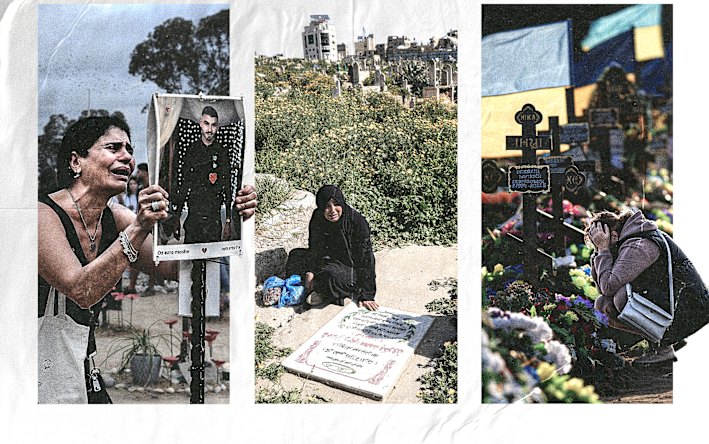
Ignore the big numbers for a second. Look for the individual stories. Read the obituary of one person. Look at their photo. Learn what they loved. By forcing your brain to focus on the "one," you bypass the statistical numbing that happens when you look at the "many."
Engage with Physical Reality
Volunteer. Go to a funeral. Sit with someone who is grieving. Remind your body what human emotion feels like when it isn't mediated by a piece of glass. The physical world has a way of cutting through the digital fog. It's much harder to be cynical or detached when you're looking into someone's eyes.
Practice Intentional Outrage
Don't let your anger be a fleeting "like" or a "share." If something is horrific enough to catch your attention, let it actually bother you. Write a letter. Donate to a specific cause. Do something that requires more effort than a thumb tap.
We’re at a crossroads. We can continue down this path of becoming high-tech observers of our own extinction, or we can choose to re-engage with the heavy, messy, uncomfortable reality of what it means to be alive—and what it means to lose that life.
Stop treating the world like a movie you're watching from a safe distance. You're in it. The blood is real. The loss is permanent. And if we don't start acting like it, we might find that the thing we've truly lost isn't the meaning of death, but the meaning of being human.
Turn off the screen. Look at the people in your room. Acknowledge the terrifying, beautiful fragility of the person sitting next to you. That's the only place where the weight of life starts to return.