The feel-good story of the week is a lie.
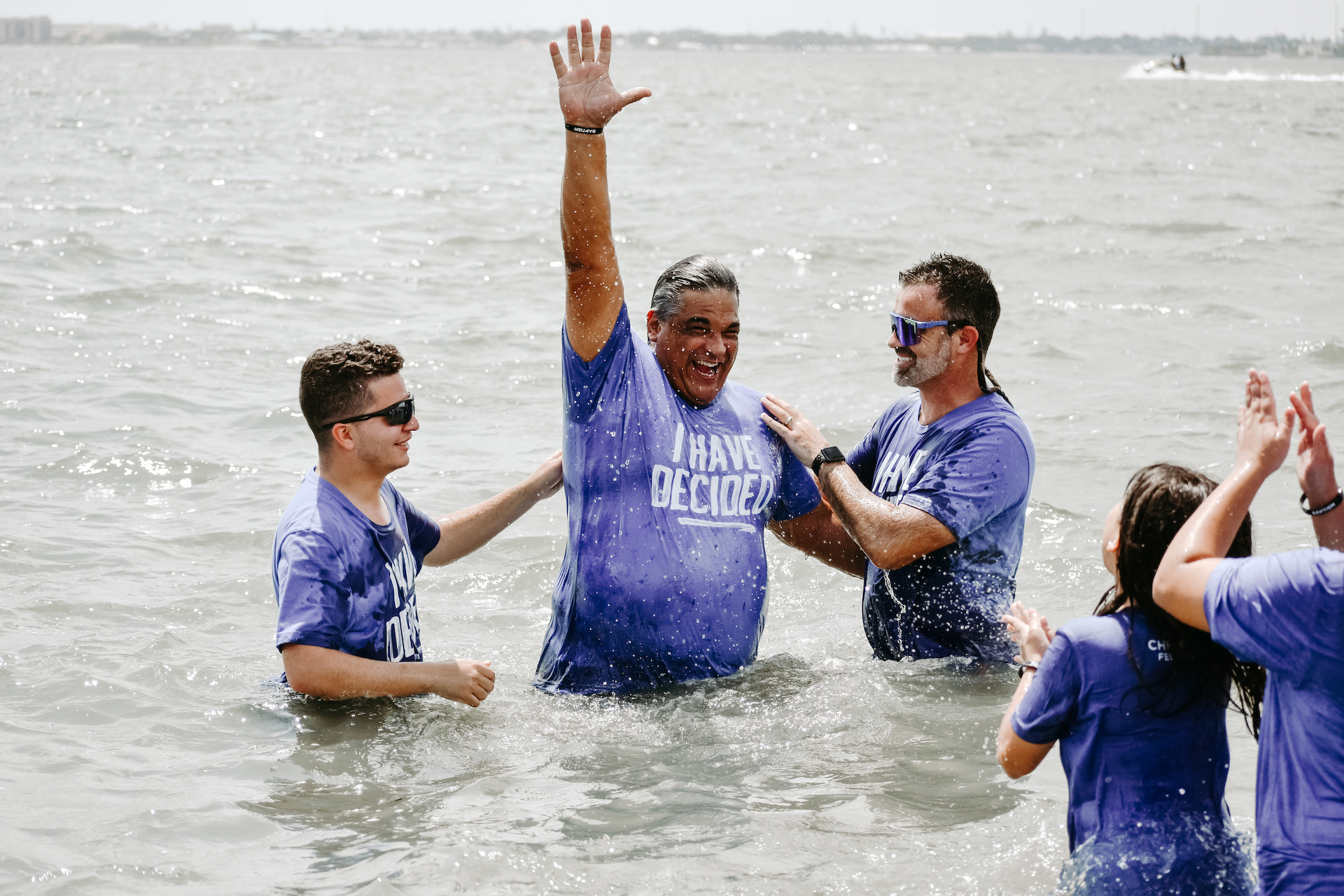
Twenty-two college students in Cancun, surrounded by the stench of tequila and SPF 50, dropped to their knees in the surf to be baptized. The headlines are dripping with sentimentality. They want you to see a "spiritual awakening" amidst the chaos of Spring Break. They want you to believe that the ocean’s salt water somehow scrubbed away a week of poor decisions and cheap regret.
It didn't.
What we witnessed wasn't a revival; it was the ultimate expression of the "Experience Economy." We have reached a point where even the most sacred rituals are being cannibalized by the need for a peak emotional state. If it doesn't happen against a backdrop of turquoise water and 80-degree weather, does the conversion even count?
The Myth of the Instant Pivot
The "lazy consensus" here is that these students found something "real" in the middle of a "fake" environment. The narrative suggests that the contrast between the debauchery of a Cancun resort and the holiness of a baptism creates a profound spiritual truth.
That’s backwards.
Real transformation is boring. It’s a slow, grueling process of habit formation, community accountability, and intellectual rigor. It happens in drafty church basements or quiet libraries, not during a high-octane vacation where the brain is already swimming in dopamine. When you mix the sensory overload of a tropical getaway with the emotional high of a religious ritual, you aren't experiencing "grace." You’re experiencing a physiological spike.
I’ve spent fifteen years watching brands and movements attempt to manufacture "moments." In the marketing world, we call this peak-end rule application. People judge an experience based on how they felt at its peak and at its end. By placing a baptism at the tail end of a week of excess, the organizers are effectively "hacking" the memory of the trip. The students won't remember the hangover or the hollow feeling of a one-night stand; they’ll remember the waves and the clapping.
It’s a brilliant branding exercise. It’s terrible soul-care.
The Geography of Convenience
Why Cancun?
If these students were truly moved to change their lives, they wouldn't need a flight to Mexico to do it. The "Spring Break Baptism" relies on the Geography of Convenience. It suggests that God is more present where the sand is white.
Let’s look at the mechanics. You have a captive audience of young people who are:
- Socially vulnerable.
- Sleep-deprived.
- Feeling the inevitable "crash" of a week-long party.
In psychological terms, this is the "low point" where people are most susceptible to radical shifts in identity. Exploiting that vulnerability on a beach is not "meeting them where they are." It’s a tactical strike.
We see this in "lifestyle" coaching all the time. Retreats in Bali or Tulum promise "breakthroughs" that mysteriously evaporate the moment the attendee hits the TSA line at LAX. The environment does the heavy lifting, which means the internal change is fragile. If your faith requires a Mexican sunset to feel valid, it’s going to crumble the first time you’re stuck in traffic in Tuesday morning rain.
Ritual vs. Performance
There is a technical difference between a ritual and a performance.
- A Ritual is for the participant and the community. It is an inward-facing commitment.
- A Performance is for the observer. It requires an audience.
Look at the footage of these baptisms. Look at the framing. These events are designed to be shared. They are the "spiritual" equivalent of a "Proposal at the Eiffel Tower." They are curated for the digital gaze.
When a religious act becomes "content," it loses its teeth. It becomes another commodity in the marketplace of experiences. We are training a generation to believe that the value of an event is proportional to its "shareability."
The competitor’s article highlights a student saying they were "on their knees right there on the beach." The emphasis is on the location and the optics. It’s about the spectacle of the repentant sinner in the land of sin. But true repentance doesn't need a backdrop. It’s quiet. It’s private. It doesn’t need a PR team or a viral video.
The Danger of Emotional Residue
I’ve seen organizations blow millions on "event-driven" growth. Whether it’s a corporate retreat or a mega-church conference, the result is always the same: The Cliff.
The data on "emotional highs" is clear. Without a structural support system—what sociologists call "plausibility structures"—the "transformed" individual will revert to their mean behavior within weeks.
- Scenario: A student gets baptized in Cancun.
- Reality: They return to a dorm room where their social circle remains unchanged, their habits are identical, and the "high" of the beach is replaced by the stress of midterms.
Without the salt water and the cheering crowd, the "new" identity feels like a costume that no longer fits. This leads to a "spiritual burnout" that is often worse than the original state of "sin." They feel like they failed the ritual, when in reality, the ritual failed them by being untethered to their actual life.
Stop Valorizing the Extreme
We need to stop celebrating these "flashpoint" conversions as if they are the gold standard of human change. They aren't. They are the fast food of spirituality—high in calories, low in actual sustenance.
Instead of asking "How many people got baptized in Cancun?" we should be asking:
- How many of these students are still engaged in their local communities six months from now?
- How many have made tangible changes to their ethics or their treatment of others?
- How much of this was simply a reaction to the guilt of the previous night’s tequila?
We are obsessed with the "start" of the story because the "middle" is where the work happens, and the middle doesn't get clicks.
The Contrarian Path Forward
If you want real change—whether it’s health, business, or faith—you have to kill the "Cancun Mindset."
- Reject the Backdrop: If a decision feels better because of where you are, wait until you get home to make it.
- Verify the Friction: Real change is uncomfortable. If everyone is clapping and the weather is perfect, you aren't changing; you’re enjoying yourself.
- Audit the Aftermath: Stop measuring success by the number of hands raised. Measure it by the number of lives that are unrecognizably different two years later.
The ocean didn't save those students. It just gave them a very expensive place to feel bad about themselves before feeling good again.
Stop looking for "moments" on the beach. Start looking for the discipline in the dirt.
True transformation doesn't need a travel agent.