Most newsrooms treat a delayed death from a mass shooting like a minor housekeeping update. A brief wire notice goes out. Editors slot it into a quiet corner of the afternoon feed. Everyone moves on to whatever fresh outrage is trending that hour.
That editorial reflex is completely broken. Recently making headlines lately: Boston’s Famous Christmas Tree From Nova Scotia Is Not a Charity Gift.
When a 90-year-old Holocaust survivor dies nearly a year after being shot in a Sydney massacre, calling it a belated footnote misses the entire reality of violent trauma, legal accountability, and historical memory. The standard media playbook treats survival as a binary switch. Either a victim dies on the scene and becomes a headline statistic, or they survive the initial emergency room rush and vanish from the public ledger.
Real medicine and real criminal law do not work on a 24-hour news cycle. Additional details on this are detailed by NBC News.
The Illusion Of The Initial Casualty Count
Watch any breaking news broadcast after a mass attack. Reporters obsess over the immediate fatality number as if it were carved in stone before the crime scene tape even goes up.
In trauma medicine, survival past the first 24 hours is only the opening chapter. Gunshot wounds in elderly patients trigger cascading physiological failures that unfold over months, not minutes. Severe ballistic trauma destroys vascular integrity, compromises immune responses, and forces prolonged immobility. For a nonagenarian, every surgical intervention carries compounding risks of secondary infection, organ fatigue, and lethal blood clots.
I have spent years dissecting how media outlets and public agencies track violent crime data, and the blind spot is always the same. Institutions optimize for speed over longitudinal accuracy. Police departments release initial casualty figures to satisfy immediate press briefings, while hospital systems track long-term morbidity behind strict privacy walls. By the time a critically wounded survivor succumbs to complications eleven months later, the newsroom has already closed the file.
Treating that death as an afterthought distorts the public record. It artificially shrinks the true human cost of mass violence and obscures the brutal reality that ballistic injuries frequently execute their victims in slow motion.
Why The Legal Clock Never Stops On A Bullet
The lazy consensus assumes that once a perpetrator is charged or killed at the scene, the legal narrative is settled. Prosecutors and forensic pathologists know better.
Under common law jurisdictions—including Australia's criminal code—causation does not expire simply because a victim fights to stay alive for eleven months. Historically, English common law enforced a "year and a day" rule, barring murder charges if a victim died more than 366 days after an assault. Modern forensic medicine rendered that arbitrary cutoff obsolete decades ago. Jurisdictions across Australia abolished the rule precisely because advanced life support and surgical interventions can sustain critically injured patients for months or years before the original wound proves fatal.
When a bullet initiates an unbroken chain of medical complications that ends a life 330 days later, the cause of death is not old age. It is homicide.
To understand how flawed the public conversation becomes when we ignore delayed mortality, consider the questions readers typically search when these stories surface.
Does a death months later legally count as a massacre victim?
Yes, provided forensic pathology establishes an unbroken chain of causation between the gunshot wound and the eventual fatal complication. A victim who dies from sepsis, pulmonary embolism, or organ failure directly triggered by ballistic trauma is just as much a homicide victim as someone who died on the pavement.
Why do news outlets wait until death to revisit survivors?
Because modern digital journalism rewards novelty over endurance. Covering a survivor's grueling eleven-month battle through physical rehabilitation, chronic pain, and recurring hospitalizations requires sustained reporting budgets and patience. Writing a 200-word obituary wire costs almost nothing.
Isn't a 90-year-old already near the end of their natural life?
That argument is a textbook logical fallacy known as the eggshell skull rule in reverse. In law, a perpetrator takes their victim as they find them. The fact that an elderly person had fragile health before being shot does not absolve the shooter or reduce the lethality of the weapon. Accelerating a person's death through violent trauma is still killing them.
The Double Erasure Of A Holocaust Survivor
There is a second, deeper failure in how standard coverage frames a story like this. When the victim is a 90-year-old Holocaust survivor, reducing their death to a routine crime brief commits a double erasure.
Consider the sheer historical arc of a life that endured the industrialized slaughter of European Jewry in the 1940s, rebuilt itself across oceans in Australia, reached nine decades of resilience, and was then cut down by modern gunfire in a city street. Most coverage mentions the survivor's background as a poignant biographical detail—a tragic irony meant to tug at heartstrings for thirty seconds before the reader scrolls to the next tab.
That framing misses the structural warning staring us in the face.
Holocaust survivors are living primary sources of what happens when dehumanization, ideological extremism, and unchecked violence are normalized in civil society. When one of the last remaining witnesses to the twentieth century's worst atrocity dies from a bullet fired in a twenty-first-century public massacre, it is not merely a sad coincidence. It is an indictment of our failure to absorb the very history they lived through.
Imagine a scenario where a museum preserves a priceless, irreplaceable artifact through world wars, floods, and fires, only for a visitor to smash it with a hammer in the lobby because security left the doors unguarded. You would not write a three-sentence blurb blaming the fragility of the glass. You would interrogate every failure that allowed the hammer inside the building.
The Flaw In Pushing For Permanent Crisis Coverage
Admittedly, demanding that newsrooms and public registries track every shooting survivor indefinitely comes with real friction.
Medical privacy laws exist for good reason. Survivors and their families deserve the right to grieve, heal, and die in peace without reporters camping outside hospital wards tracking their white blood cell counts. Furthermore, establishing absolute medical causation in nonagenarians can be genuinely complex when pre-existing cardiac or respiratory conditions overlap with trauma recovery.
Those are legitimate constraints. They are not excuses for institutional amnesia.
How Journalism And Public Records Must Change
If we want an honest accounting of mass violence, editors, researchers, and policymakers need to abandon the 24-hour casualty mindset and adopt three concrete standards:
- Maintain living casualty ledgers for mass-casualty events. Major news organizations and public health trackers must update official fatality counts whenever a wounded survivor dies from verified trauma complications, regardless of how many months have passed.
- Audit longitudinal survival rates, not just ER arrivals. Public health reporting on gun violence should routinely publish one-year and five-year mortality rates for gunshot survivors alongside immediate fatality numbers.
- Report the mechanics of prolonged trauma. Journalists must stop sanitizing gun violence into instant, clean outcomes and accurately document the multi-month medical devastation inflicted on survivors and their families.
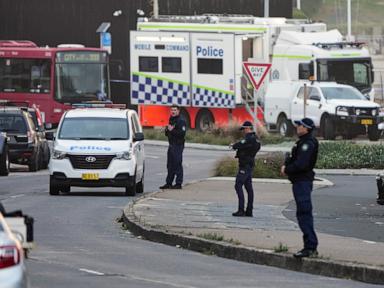
A bullet fired in a Sydney street does not stop moving when the sirens fade. Sometimes it takes nearly a year to finish what it started—and pretending otherwise only protects the violence from its full accounting.