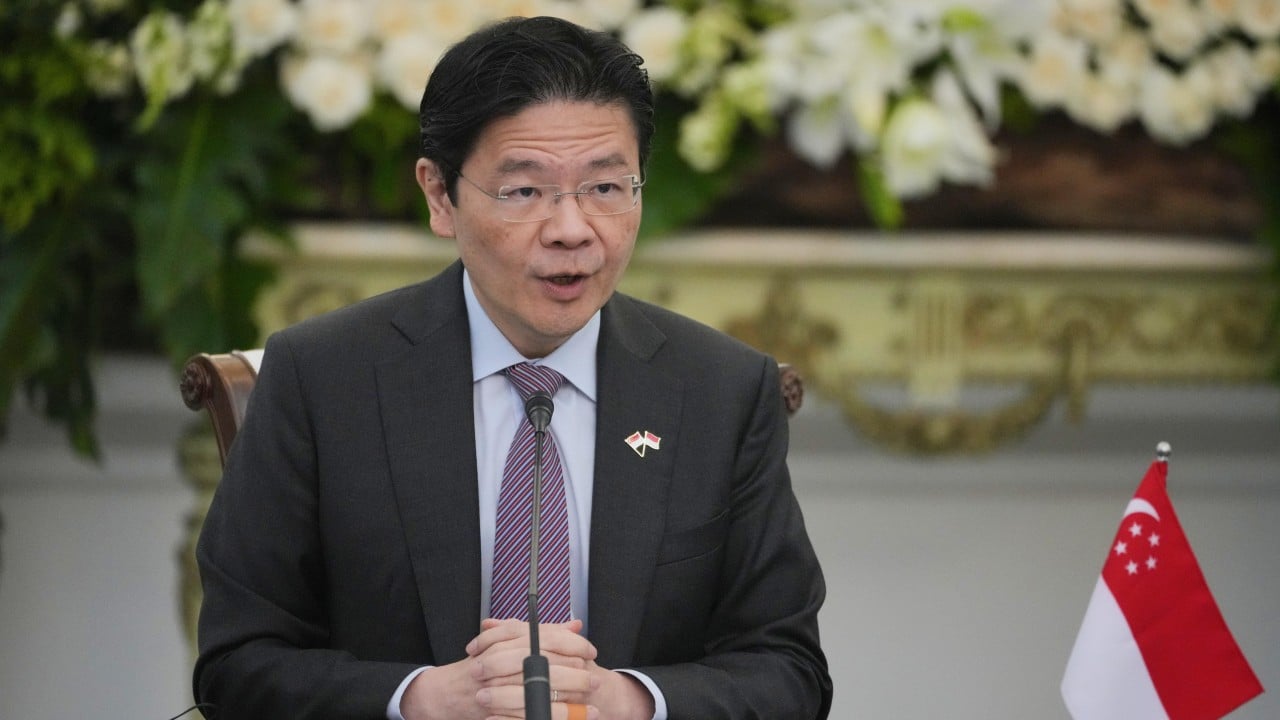
Singapore’s decision to push through a long-awaited raise for its political officeholders—boosting the benchmark annual pay for an entry-level minister to S$1.8 million and initiating an immediate 9 percent adjustment—has once again exposed an uncomfortable governance friction. Prime Minister Lawrence Wong defended the move in Parliament, arguing that the city-state cannot indefinitely insulate its political remuneration from private-sector reality without risking institutional decay. Critics counter that money alone fails to guarantee public-service ethos, pointing to a widening empathy chasm between multimillion-dollar administrators and citizens navigating cost-of-living pressures. Yet, focusing solely on the moral optics of the paycheck misses the structural architecture of the crisis. The core issue is not simply how much a minister takes home. The deeper flaw lies in an outdated talent pipeline that assumes corporate titans automatically translate into effective state architects.
For decades, the Lion City operated on a straightforward, transactional premise: pay top dollar to deter corruption and attract the sharpest minds from law, medicine, finance, and the military. This formula built a gleaming modern economy. It produced efficient public transport, sovereign wealth funds envied globally, and a gleaming urban skyline. But governance has grown infinitely more complex since the framework was last overhauled fifteen years ago. Modern statecraft requires navigating polycrises, managing sharp wealth inequality, and pacifying a digitally empowered citizenry that questions institutional authority. Throwing seven-figure salaries at the problem is no longer a functional recruitment strategy. It is an expensive band-aid over a fractured social contract.
The Private Sector Mirage
The prevailing state logic assumes that executive talent in multinational corporations or elite law practices transfers seamlessly to public office. Experience tracking leadership transitions reveals a starkly different reality. Running a private enterprise with thousands of employees and a singular profit motive is structurally distinct from managing municipal dissent, social equity, and ideological pluralism.
Take a hypothetical chief executive accustomed to dictating corporate strategy with minimal public friction. Placed inside a ministry, that same leader often struggles with the messy, iterative compromises required of democratic or consultative governance. Corporate competence emphasizes speed, shareholder returns, and proprietary control. Public leadership demands radical transparency, relentless stakeholder management, and an acceptance of public hostility. When compensation is marketed as the primary lure, it risks attracting candidates whose primary incentive alignment leans toward performance metrics rather than sacrificial public stewardship.
The government acknowledges that it cannot match Wall Street or top-tier consulting earnings. A S$1.8 million base is substantial for ordinary citizens, but to a senior partner at a global law firm or a regional bank head, it can represent a severe pay cut. Consequently, the pool of willing private-sector recruits is already self-selecting. Those who step forward often do so despite the financial penalty, driven by a genuine sense of duty. By obsessing over the top-end benchmark, policymakers obscure the fact that financial compensation is a weak filter for vocation.
The Meritocracy Trap
Singapore’s administrative apparatus rests on a rigid, test-based meritocracy. Young scholars are identified early, funneled through elite universities, and placed into administrative service pipelines. They rise through the civil service, occasionally transitioning into political roles. This closed-loop system creates a profound homogeneity of thought.
When ministers share identical educational backgrounds, institutional conditioning, and worldview frameworks, blind spots multiply. They understand spreadsheets, macroeconomic forecasts, and systemic efficiency. They frequently struggle to comprehend the psychological weight of precarious employment or the visceral anxiety of generational housing shifts for working-class families. Raising their pay does nothing to diversify this cognitive gene pool. In fact, it hardens it. It signals that those at the apex of the administrative pyramid deserve an ever-wider financial buffer from the populace they serve, deepening the psychological distance between governors and governed.
An executive compensation structure tied to the median income of the top 1,000 earners mathematically guarantees that political salaries will accelerate away from general wage growth during economic booms. While a 40 percent discount is applied to account for public service sacrifice, the underlying tether remains anchored to the hyper-rich. This creates a perpetual optics loop where every economic adjustment becomes a lightning rod for class resentment.
Structural Realities of Modern Statecraft
The parliamentary debates surrounding the pay adjustment revealed a defensive posture from the ruling establishment. Leaders emphasized that clean government is not a natural state and must be bought and maintained. There is historical validity to this claim. Early post-independence cabinets recognized that systemic corruption destroys nations faster than external shocks. Generous compensation was designed to make bribery economically irrational.
Yet, institutional integrity in the twenty-first century requires more than well-paid ministers. It requires psychological resilience, emotional intelligence, and an ability to absorb fierce public criticism without retreating into defensive legalism. These attributes cannot be purchased via a benchmark salary formula. They are cultivated through grassroots immersion, intellectual humility, and a culture of genuine accountability.
The administration has attempted to soften the blow by introducing tiered adjustments and performance-linked metrics rather than an immediate leap to the full benchmark, with Prime Minister Wong even pledging to donate his raise to charity. These gestures are politically astute, designed to mitigate immediate populist backlash. They treat the symptom while leaving the underlying disease untouched.
Leadership renewal cannot be solved by recalculating benchmarks every five years. The talent pipeline is congested because political life in a dominant-party system carries profound personal costs, intense scrutiny, and little room for error. Talented individuals who might make exceptional policy architects often look at the toxic social media environment and the complete erasure of private life, and they quietly opt out. No salary package compensates for the systematic erosion of privacy and the constant demand for performative perfection.
Reforming the system requires dismantling the assumption that political leadership is an extension of corporate executive management. It demands widening the intake valve to embrace community organizers, unorthodox thinkers, and local innovators whose credentials do not fit neatly on a corporate resume. Until the political establishment broadens its definition of competence beyond elite paper credentials and corporate balance sheets, adjusting the ministerial paycheck will remain an exercise in expensive futility. The state is paying top dollar for elite administration, yet struggling to buy the one thing it actually needs: leaders who truly feel the pulse of the street.