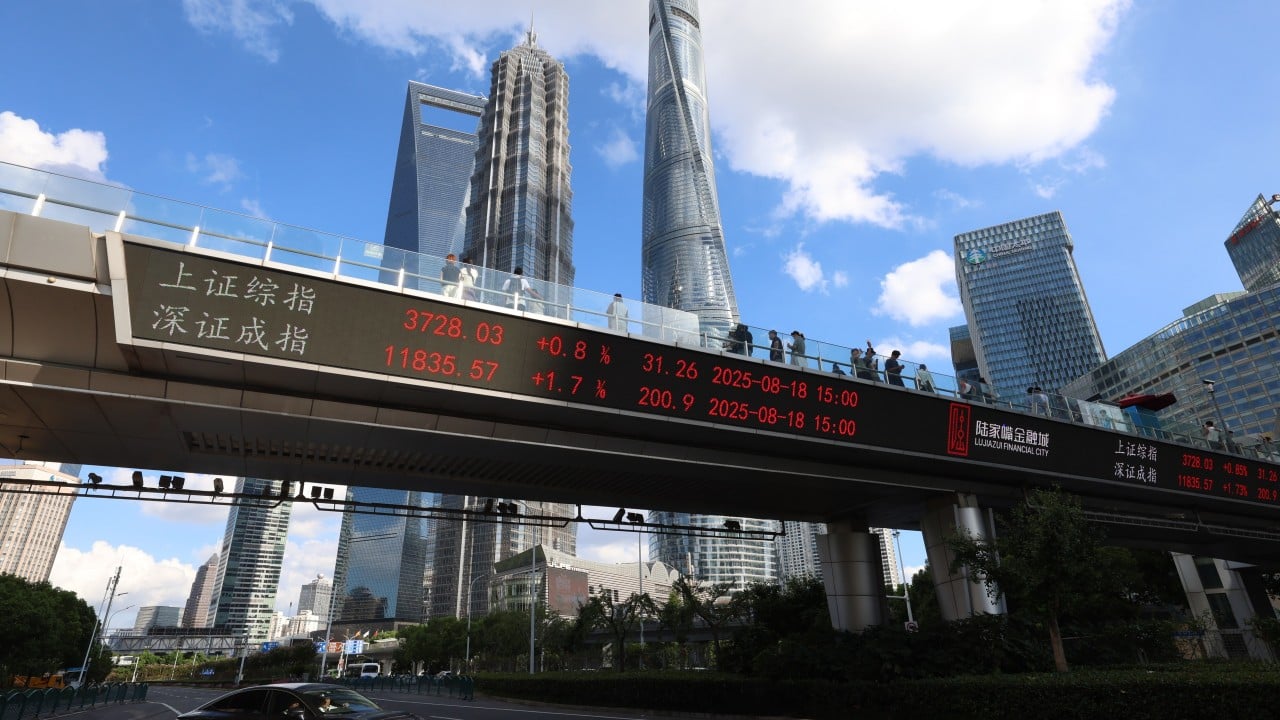
The trading floors of Hong Kong are experiencing a profound financial revival, fueled heavily by mainland Chinese enterprises seeking offshore capital. While public narratives frame this phenomenon as a simple charm offensive by mainland bourses and regulators, the reality on the ground is far more calculated. Beijing is orchestrating a strategic valve release, channeling liquidity-starved domestic tech and artificial intelligence champions toward the city's exchange to bypass domestic valuation caps while keeping foreign capital firmly within reach.
For months, the numbers have pointed to a structural divergence. Domestic fundraising pipelines on mainland exchanges faced stringent hurdles under tighter regulatory scrutiny, leaving private enterprises grappling with domestic price wars and squeezed margins. To prevent a prolonged drought of capital for key technology sectors, authorities encouraged a massive migration of high-profile listings southward. This migration relies heavily on the A+H share model, allowing companies to maintain a domestic footprint while securing hard currency from international institutional investors through the Hong Kong Stock Exchange.
This dynamic reveals a deeper economic imperative. Mainland regulators are not merely losing initial public offerings to their southern neighbor; they are actively steering them there. By utilizing Hong Kong as a controlled pressure valve, the mainland financial system can absorb foreign investment without exposing its domestic capital account to destabilizing outflows. International funds, hesitant to deploy direct capital into mainland-listed equities due to structural opacity and intensifying regulatory friction, find the familiar legal architecture and pegged currency of Hong Kong far more palatable.
Yet, this arrangement introduces notable operational friction. Recent months have seen heightened tax queries and retroactive financial demands directed by mainland authorities at companies attempting to pivot toward Hong Kong. Firms are discovering that offshore ambition does not exempt them from onshore compliance burdens. Regulatory compliance officers in Shenzhen and Shanghai are examining cross-border capital allocations with unprecedented granularity, ensuring that intellectual property and core assets remain tethered to national strategic priorities.
Simultaneously, the structural mechanics of these offerings are shifting. Major exchange reforms have accelerated review timelines for dual-listed candidates, compressed public float minimums, and curtailed retail allocation percentages. These adjustments favor large institutional participants over individual speculators, prioritizing efficient capital absorption and massive deal sizes over broad public participation. The resulting market environment rewards scale, institutional backing, and strict alignment with state-backed technological mandates.
As transaction volumes continue to swell, the long-term implications for regional financial geography become clear. Hong Kong is cementing its status as an indispensable offshore liquidity bridge, but its autonomy remains tethered to policy decisions made north of the Shenzhen River. The current surge is less a spontaneous market recovery than a managed transition—one that highlights how financial architecture is bent to serve broader industrial policy.