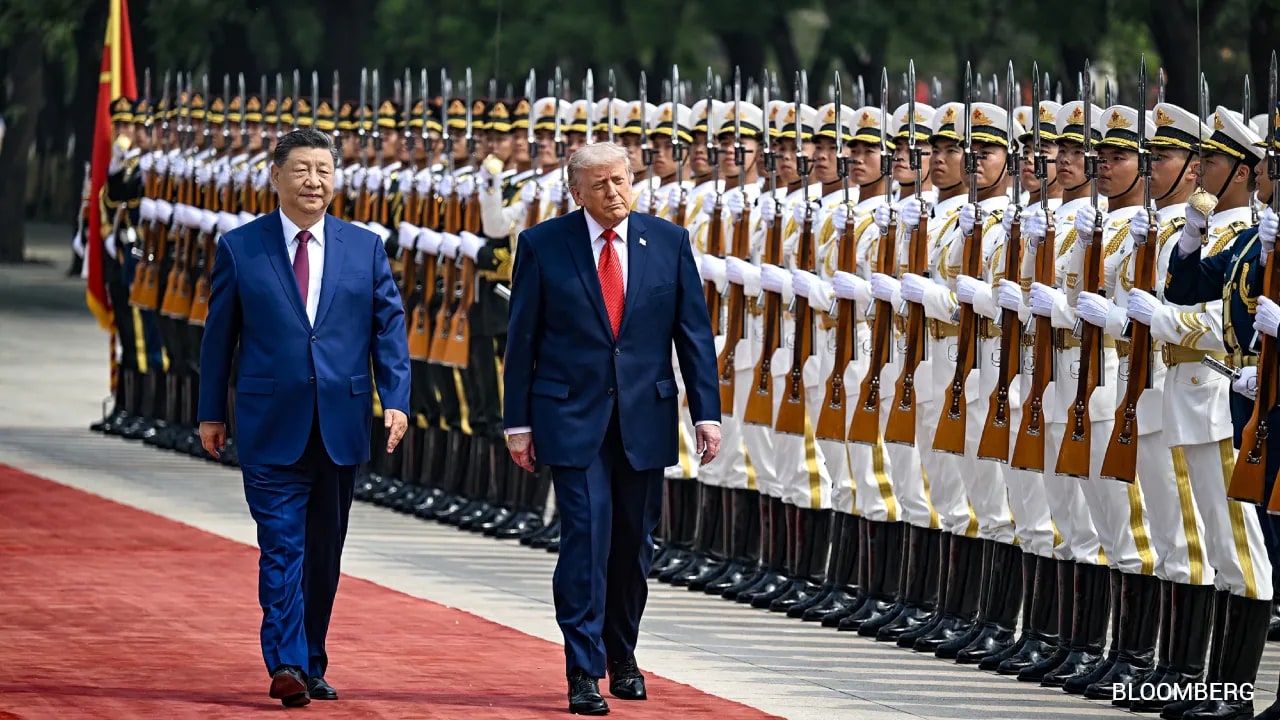
The global economy is not collapsing under the weight of a sudden catastrophe, but it is slowly choking on unfulfilled promises and retaliatory math. When Donald Trump and Xi Jinping meet, financial markets instinctively brace for impact, treating each summit like a weather vane for international trade. Yet beneath the diplomatic handshakes and high-stakes posturing lies a far more exhausting reality: a multi-billion-dollar tariff package stalled in bureaucratic limbo, leaving corporations, manufacturers, and logistics planners to navigate a permanent state of high-cost ambiguity.
The primary driver of this ongoing friction is not an abstract ideological clash, but a very concrete mechanics of implementation failure. Following bilateral agreements establishing a framework for reciprocal tariff reductions covering roughly sixty billion dollars in goods, markets anticipated an easing of commercial pressures. Instead, domestic procedures, administrative friction, and mutual distrust have kept these cuts suspended. Beijing links expanded agricultural purchases—such as U.S. soybean and meat imports running at multi-year lows—directly to Washington executing the agreed-upon tariff rollbacks. Washington, meanwhile, presses for immediate concessions on critical minerals, rare earths, and structural trade imbalances without offering a clear roadmap for tariff removal. You might also find this connected story interesting: Why Pakistan Economic Protests Are Actually a Distraction From the Real Corporate Crisis.
This tit-for-tat dynamic creates an operational nightmare for global supply chains. Consider a hypothetical mid-sized electronics manufacturer sourcing components across Southeast Asia and mainland China. Every time trade talks stutter, compliance costs spike. Logistics managers must constantly re-evaluate shipping routes, maintain redundant inventory buffers against sudden customs crackdowns, and absorb the deadweight loss of tariffs that function effectively as a regressive tax on production.
The Transshipment Trap and Regional Fallout
As direct trade lanes face regulatory hurdles, secondary manufacturing hubs have become pressure cookers. Countries like Vietnam and Malaysia absorbed a massive wave of capital investment during earlier phases of trade escalation, operating under the promise of a reliable "China plus one" diversification strategy. As extensively documented in detailed coverage by Harvard Business Review, the implications are worth noting.
That strategy is now hitting a structural wall. U.S. regulatory scrutiny regarding transshipment and the origin of high-tech components has intensified sharply. Watchlists targeting third-country routing mean that goods passing through secondary ports face aggressive audits to ensure they do not incorporate restricted Chinese materials or state-subsidized inputs.
Building a resilient supply chain takes years of capital allocation, specialized workforce training, and infrastructure development. By contrast, tariff gaps can and do shift overnight. This asymmetry punishes long-term industrial planning. Companies that spent the past several years relocating assembly lines find themselves caught in regulatory crossfires, forced to prove compliance down to the raw material tier under tightening Section 301 enforcement mechanisms.
Technology Restrictions and the Limits of Negotiation
While trade diplomats haggle over agricultural quotas and manufactured goods, the high-end technology sector remains walled off from any meaningful compromise. Advanced semiconductors, artificial intelligence processors, and cross-border data governance are treated as matters of absolute national security rather than commercial bargaining chips.
Recent political controversies in Washington surrounding technology leadership and export compliance have only narrowed the political space for moderation. Lawmakers from both parties view restrictions on advanced computing hardware as non-negotiable. For multinational tech firms, this means the bifurcation of the digital economy is no longer a risk scenario; it is the operating baseline. Operating two distinct technological ecosystems—one compliant with strict Western export controls and another adapted for restricted markets—drives up research and development overhead while stifling global economies of scale.
The Fiscal Burden on Domestic Markets
The domestic toll of this protracted trade friction is becoming increasingly difficult to mask behind macroeconomic data. Across-the-board tariffs and targeted duties generate headline revenue for governments, but they impose immediate, compounding costs on domestic businesses that rely on imported raw materials and intermediate goods.
When industrial consumers face inflated prices for steel, aluminum, and specialized technical components, their profit margins compress. They respond by delaying capital expenditure, slowing hiring, and passing the added costs down to the consumer. Despite aggressive administrative efforts to slash trade deficits through bilateral pressure, goods trade deficits persist at historic highs, demonstrating that blunt tariff instruments cannot easily override deep-seated macroeconomic structures.
The structural deadlock between the world's two largest economies shows no sign of dissolving into genuine free-market harmony. Instead, global commerce has adapted to survive inside a permanent tariff architecture, pricing political unpredictability directly into the cost of doing business worldwide.