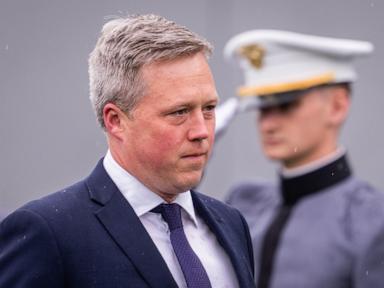
Federal prosecutors have issued a grand jury subpoena to Daniel Richman, a Columbia Law School professor and long-standing adviser to former Federal Bureau of Investigation Director James Comey. This development revives a dormant legal battle over the transmission of sensitive information to journalists. Understanding the mechanics of this subpoena requires examining the intersection of executive branch communication channels, investigative authorities, and the procedural history of electronic evidence collection.
The Mechanics of the Proxy Communication Channel
The central focus of the investigation involves how information moved from the office of the Director of the Federal Bureau of Investigation to external media outlets. During his tenure, Comey drafted memoranda detailing private interactions with administration officials. Rather than releasing these documents through formal bureaucratic channels or official public affairs mechanisms, the material was transmitted to Richman.
Richman functioned as an informational intermediary, or operational cut-out. The structural utility of this arrangement rests on three distinct operational layers:
- Insulation from Direct Attribution: Transmitting documents through a designated confidant allows the primary source to maintain plausible deniability regarding immediate media contact.
- Status Manipulation: Richman previously held a designation as a Special Government Employee within the bureau, creating complex jurisdictional and privilege questions regarding communications handled under that tenure.
- Narrative Control: Direct feeds to selected reporters shape initial public reporting before formal institutional audits or inspector general reviews can process the underlying events.
When prosecutors evaluate whether these transmissions violated federal statutes regarding the handling of sensitive government materials, the inquiry centers on whether the intermediary acted as an extension of the agency or as a private citizen exercising independent First Rights.
The Evidentiary Choke Point and Fourth Amendment Constraints
The revival of the grand jury proceeding directly follows years of litigation concerning the government's seizure and retention of Richman’s electronic data. In preceding enforcement phases, federal investigators obtained multiple search warrants targeting electronic devices, cloud storage accounts, and university email servers.
This evidence collection created a distinct procedural bottleneck. Legal challenges focused on whether the Department of Justice overstepped constitutional boundaries by retaining complete forensic images of personal and professional devices long after initial indictments or investigations stalled. A federal district court ruled that retaining unscoped copies without rigorous adherence to filter protocols constituted an unreasonable seizure.
The current grand jury subpoena bypasses some of the stale physical media disputes by compelling direct testimony. However, prosecutors must navigate the strict boundaries established by prior judicial rulings regarding privileged communications, attorney-client overlap, and the permissible scope of evidence derived from those contested forensic images.
Collateral Prosecutorial Pressures
The subpoena issued to Richman does not occur in an isolated vacuum. It operates alongside parallel legal actions involving the former bureau director. These concurrent tracks multiply the defense resource allocation requirements and alter the strategic calculus of all parties involved:
- The electronic communication and social media liability track, focusing on statements interpreted by prosecutors as direct threats against executive leadership.
- The historical leak investigation track, centered squarely on Richman's testimony regarding the dissemination of administrative memoranda.
- The institutional oversight track, involving congressional committees and internal department task forces dedicated to prosecuting unauthorized disclosures with maximum statutory penalties.
By deploying a grand jury subpoena at this specific operational juncture, the Department of Justice forces a binary choice for the witness: assert Fifth Amendment protections against self-incrimination, which carries distinct tactical drawbacks in public perception and collateral proceedings, or testify under oath, thereby risking exposure regarding the precise mechanics of the historical leaks.
Strategic Execution Path
Federal prosecutors will utilize the grand jury framework to establish a direct chain of custody and intent regarding the leaked memoranda. To counter this, the defense must enforce rigid compliance with existing judicial parameters governing filter protocols, ensuring that no tainted materials derived from the 2019 and 2020 warrantless device retentions influence current grand jury questioning. The ultimate trajectory of the probe depends on whether Richman's testimony exposes direct directives from Comey to disclose specific non-public documents, shifting the evidentiary standard from circumstantial coordination to explicit instruction.