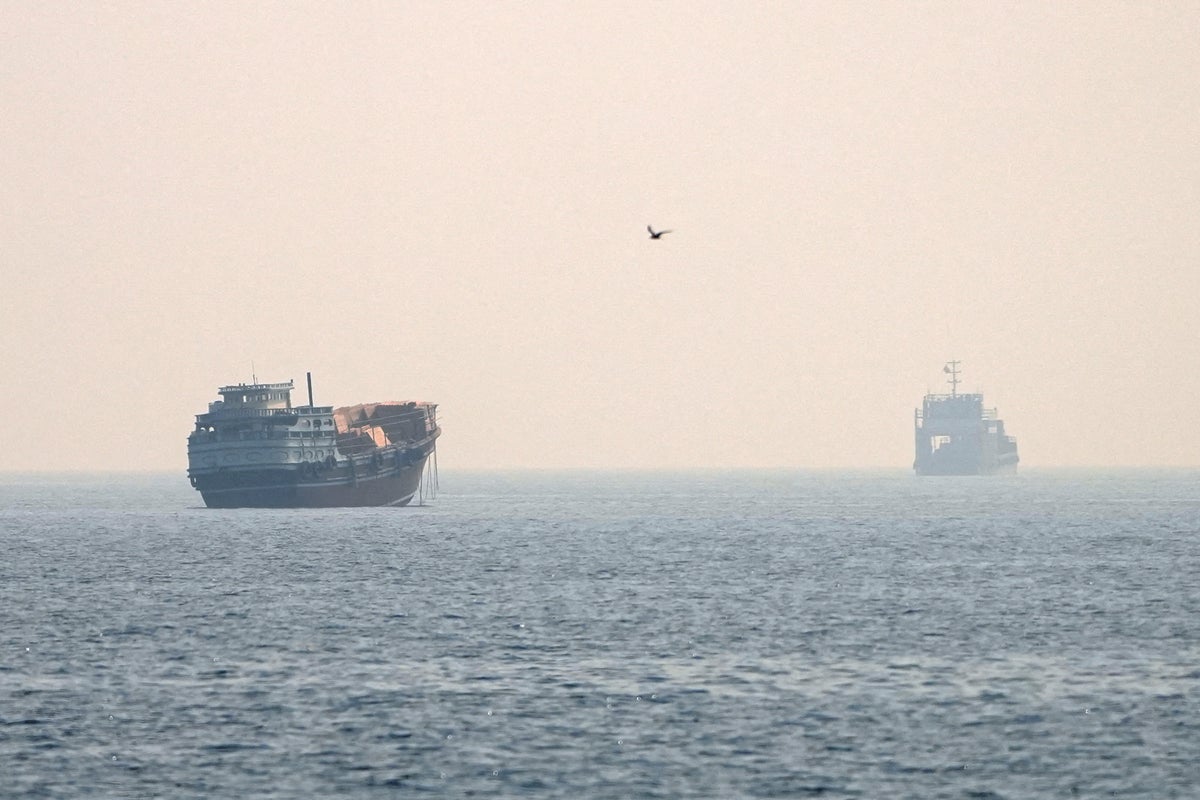
The sustained Russian bombardment of Odesa, which recently resulted in three civilian fatalities and substantial damage to harbor facilities, represents a deliberate system-level assault on Ukraine’s sovereign economic capacity rather than a series of isolated tactical events. By focusing kinetic energy on Odesa, Russian military planners are executing a highly calculated attrition strategy targeting three critical nodes: maritime logistics, Western air defense inventories, and regional labor stability.
To understand the trajectory of this conflict, analysts must look beyond the immediate humanitarian tragedy and examine the cold economic and military equations driving the bombardment. Odesa is not merely a city; it is the primary economic valve for Ukrainian agricultural and industrial exports. Restricting or closing this valve imposes severe financial strain on Kyiv, reduces the tax base available for military spending, and forces Western allies to subsidize Ukraine's baseline budget at higher rates.
The Economics of Cargo Risk and Maritime Insurance
The primary objective of the Odesa strikes is to make maritime shipping economically non-viable through indirect cost imposition. While direct physical destruction of vessels is a viable tactic, the escalation of insurance risk represents a far more scalable and cost-effective mechanism for Russia to halt Ukrainian exports.
The War Risk Insurance Equation
Commercial shipping operates on tight margins where profitability is highly sensitive to insurance premiums. Lloyd's of London and other global underwriting syndicates price risk based on the frequency and severity of kinetic strikes within a defined geographic zone.
- The Baseline Premium: Under normal operating conditions, hull and machinery insurance, alongside Protection and Indemnity (P&I) coverage, represents a predictable, minor percentage of a vessel's operating expense.
- The War Risk Surcharge: Once a port is classified as an active combat zone subject to routine missile and drone attacks, underwriters apply a "war risk additional premium." This surcharge is typically calculated as a percentage of the ship’s total value for a specific transit window (usually seven days).
- The Cost-Out Effect: When Russian missiles strike Odesa, even if they miss the actual cargo ships, the perceived probability of a hull loss increases. Insurers respond by raising the war risk premium. If the premium rises to 2% or 3% of the vessel's value per voyage, the cost of shipping grain or metals exceeds the market value of the cargo itself, effectively freezing the port without Russia needing to establish a physical naval blockade.
Port Infrastructure Degradation
A secondary economic target is the specialized machinery required to load and unload bulk carriers. While a concrete pier is difficult to destroy permanently, the highly specialized machinery surrounding it is fragile and difficult to replace.
- Grain Elevators and Silos: Modern agricultural export relies on high-speed vertical elevators to move grain from railcars to storage silos and then to ship holds. Shrapnel from a single drone strike can puncture silo walls, exposing stored grain to moisture, rot, and vermin, rendering entire shipments worthless.
- Ship-to-Shore Gantry Cranes: These large, complex steel structures are the literal bottlenecks of container and bulk shipping. They cannot be easily hidden, armored, or quickly replaced. A single missile strike on a gantry crane can take a berth offline for months, reducing the maximum daily throughput of the entire port complex.
- Pneumatic Loading Systems: Used for rapid grain transport, these systems rely on complex electrical grids and air compressors. Precision strikes on local electrical substations disable these loaders, forcing ports to rely on slower, manual loading methods that increase a ship’s "dwell time" in the harbor—extending its exposure to subsequent attacks.
The Mathematics of Air Defense Attrition
The offensive-defensive balance over Odesa reveals an asymmetric cost ratio that heavily favors the attacker. Russia utilizes a mixed-aviation strike package designed to exploit the physical and financial limitations of Ukraine's air defense network.
The Attack Vector Mix
Russian forces deploy a tiered array of munitions to saturate and penetrate Odesa's air defenses:
- Shahed-136/131 Loitering Munitions: These low-cost, slow-moving propeller drones have a unit cost of approximately $20,000 to $50,000. Their primary military utility is not necessarily hitting a target, but forcing Ukrainian air defense units to reveal their positions, activate their radars, and expend highly limited, expensive interceptor missiles.
- Kalibr Cruise Missiles: Launched from submarines or surface vessels in the Black Sea, these low-flying, maneuvering missiles present a difficult target profile for traditional radar networks.
- P-800 Oniks Supersonic Missiles: Originally designed as anti-ship weapons, these missiles are fired from coastal defense systems in Crimea. Traveling at speeds exceeding Mach 2.5 at low altitudes, they offer Odesa-based air defenses less than two minutes of detection-to-intercept reaction time.
- Iskander-M Ballistic Missiles: Fired from land-based launchers, these missiles follow a quasi-ballistic trajectory, diving at extreme speeds and performing terminal maneuvers to evade defenses.
The Interceptor Disparity
To defend Odesa, Ukraine must deploy a multi-layered air defense umbrella. The cost imbalance of this arrangement is unsustainable over a long timeline:
- High-Tier Systems (Patriot, SAMP/T): Excellent at intercepting ballistic and supersonic missiles like the Iskander and Oniks. However, a single Patriot interceptor (PAC-3) costs between $3 million and $4 million. Firing a $4 million missile to destroy a $40,000 Shahed drone is a losing economic proposition.
- Medium-Tier Systems (NASAMS, IRIS-T): Highly effective against cruise missiles but reliant on finite Western production lines. The global supply of these interceptors is severely bottlenecked, meaning Ukraine cannot replace spent missiles as quickly as Russia can produce or import strike munitions.
- Low-Tier and Mobile Fire Groups (Gepard, Zu-23-2, Searchlight Teams): These systems use kinetic gunfire or short-range man-portable missiles (MANPADS) to shoot down Shahed drones at a highly favorable cost ratio. Russia counters this by launching drone waves at night or during heavy cloud cover, severely reducing the visual targeting capabilities of mobile fire groups and forcing the activation of radar-guided, medium-tier systems.
The systemic bottleneck for Ukraine is not just the financial cost of the interceptors, but the rate of industrial production. Western defense contractors produce interceptors at a fraction of the rate required to match Russian domestic missile production combined with Iranian drone transfers. Russia's targeting of Odesa is designed to drain these interceptor stockpiles, eventually leaving the airspace completely undefended.
Human Capital Erosion and the Labor Bottleneck
The human cost of the Odesa strikes, represented by the three lives lost in the latest bombardment, has a direct cascading effect on the operational capacity of the port. A port cannot function without a highly trained, specialized workforce.
Technical Skill Attrition
Operating a modern port requires years of technical training. Crane operators, marine pilots, logistics coordinators, and hazardous materials handlers cannot be rapidly replaced.
- The Skills Deficit: When skilled workers are killed or injured, the overall efficiency of the port drops. Simple maneuvers, such as aligning a bulk carrier with a loading chute, take longer, increasing the time vessels must spend in the high-risk harbor zone.
- Evacuation and Migration: Persistent bombardment leads to domestic displacement. Workers relocate their families away from Odesa to safer regions in western Ukraine or central Europe. This migration drains the local talent pool, forcing port authorities to rely on less experienced, temporary labor.
Psychological Fatigue and Labor Law Constraints
The constant threat of kinetic strikes creates a high-stress working environment that degrades cognitive function and physical safety standards over time. Under Ukrainian labor regulations and international maritime safety standards, port operations must halt during active air raid sirens.
With Russia launching multi-hour drone and missile waves, port workers must spend significant portions of their shifts in bomb shelters. This intermittent shutdown of operations destroys logistical predictability. Rail lines carrying grain from western agricultural regions back up, creating a secondary logistics crisis inland as trains sit idle on tracks, waiting for the port terminals to clear their backlogs.
Structural Adaptations and Counter-Strategic Initiatives
To break this cycle of economic and logistical attrition, Ukraine and its partners cannot rely solely on static air defense systems. A multi-pronged counter-strategy is required to decentralize risk and reduce the vulnerability of the Odesa export hub.
Decentralization via the Danube River Ports
To mitigate the risk of Odesa being completely cut off, logistics operators have increasingly diverted cargo to Ukraine's Danube River ports, such as Izmail and Reni.
[Agricultural Regions]
       │
       ├─► Rail/Road ─► Odesa Ports (High Capacity / High Risk)
       │
       └─► Rail/Barge ─► Danube Ports (Low Capacity / Lower Risk) ──► Black Sea (via Romanian waters)
This structural shift offers several strategic advantages:
- Geographic Proximity to NATO: The Danube ports sit directly on the Romanian border. Russian missiles missing their targets by even a few hundred meters risk striking NATO territory, creating a powerful geopolitical deterrent that limits the types of weapons Russia can deploy against these facilities.
- Decentralized Barging: Instead of loading massive bulk carriers at a single, highly visible Odesa berth, grain is loaded onto smaller barges. These barges navigate the Danube to the Romanian port of Constanţa, where the grain is transferred to ocean-going vessels. While this increases transport costs per ton, it bypasses the high war risk premiums associated with entering the northern Black Sea.
Passive Defense and Engineering Resilience
Since offensive interceptors are scarce, physical protection of infrastructure is a highly effective alternative.
- Concrete Hesco Bastions and Berms: Surrounding electrical substations and fuel storage tanks with sand-filled barrier walls localizes the blast radius of drone strikes. This ensures that even if a strike occurs, the damage is contained to a single component rather than causing a cascading facility-wide failure.
- Rapid-Repair Protocols: Establishing localized depots of pre-fabricated steel beams, crane components, and electrical transformers allows maintenance crews to bypass global supply chains and repair damaged port infrastructure within days rather than months.
Strategic Recommendation
To secure Odesa's long-term viability, Western defense assistance must pivot from reactive air defense procurement to proactive deterrence and infrastructure hardening. Kyiv and its allies must prioritize the deployment of electronic warfare (EW) networks capable of jamming GLONASS and GPS guidance systems over the Black Sea, rendering low-cost loitering munitions highly inaccurate before they reach the coastline. Simultaneously, international financial institutions must establish a state-backed maritime insurance pool to artificially subsidize war risk premiums, ensuring that commercial shipping remains economically viable even under the persistent threat of Russian bombardment.