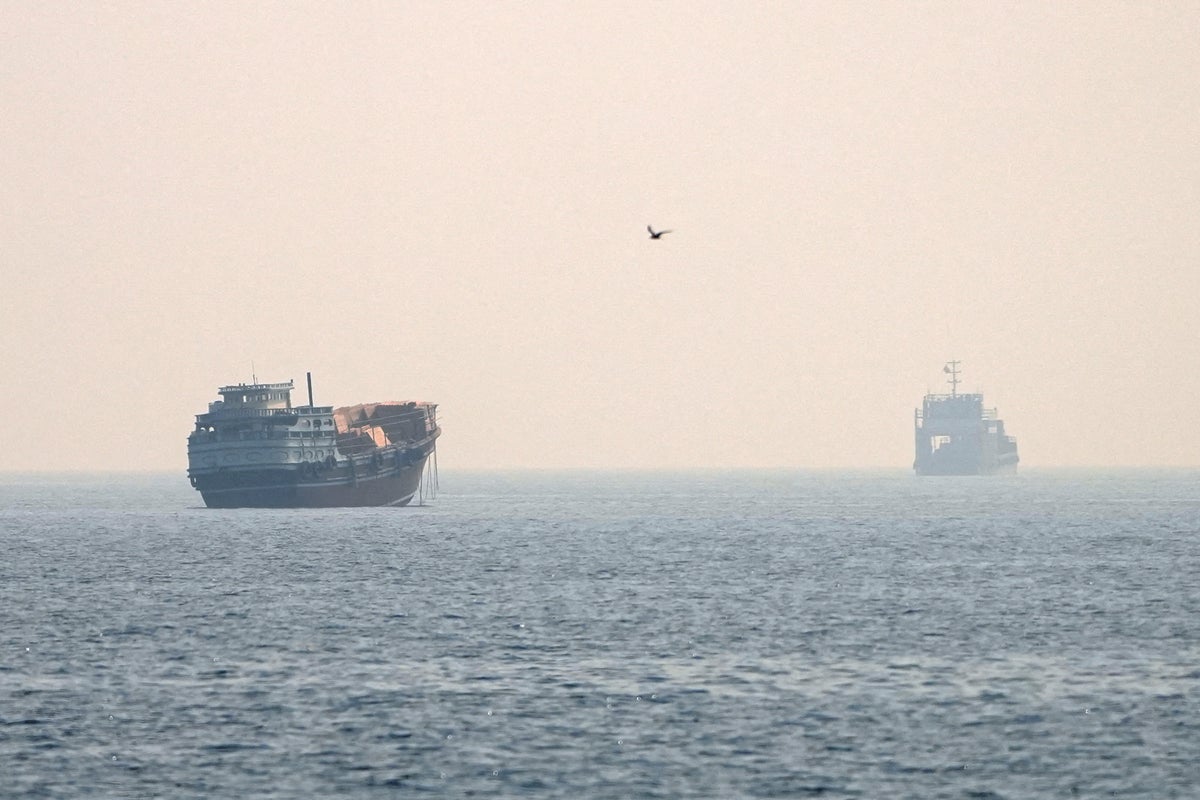
The death of a merchant mariner in a localized maritime chokepoint represents a structural breakdown in global supply chain risk insulation. It converts geopolitical posturing into direct operational liabilities for international commerce. When a commercial vessel is targeted in the Strait of Hormuz or the Bab el-Mandeb, the immediate human tragedy obscures a deeper systemic failure: the inability of international legal frameworks and sovereign naval coalitions to guarantee freedom of navigation against asymmetric threat vectors. Commercial shipping operators can no longer treat regional instability as an externalized, low-probability risk. The threat has materialized into a predictable operational tax defined by escalating insurance premiums, labor shortages, and structural disruptions to global trade routes.
The Asymmetric Threat Vector Matrix
Commercial vessels are fundamentally unsuited for high-threat environments. Designed for volumetric efficiency and fuel economy, the modern container ship, bulk carrier, or oil tanker possesses a massive radar cross-section, minimal structural redundancy against kinetic impacts, and zero defensive capabilities. Asymmetric actors exploit these vulnerabilities through specific operational mechanisms.
Low-Cost Unmanned Aerial Vehicles
The proliferation of one-way attack unmanned aerial vehicles (UAVs) has altered the economics of maritime interdiction. A state actor or proxy force can deploy a loitering munition costing less than 20,000 USD to inflict millions of dollars in structural damage to a commercial hull, or worse, neutralize the vessel's crew. These platforms target the superstructure, specifically the bridge, living quarters, or engine casing, maximizing human casualties and operational incapacitation rather than attempting to sink the vessel outright.
Command-and-Control Boarding Operations
Fast attack craft and helicopter-borne boarding teams represent a different operational mechanism: the state-sanctioned seizure. In these scenarios, the vessel is not destroyed but hijacked to serve as geopolitical leverage. The proximity of the shipping lanes in the Strait of Hormuz to hostile coastlines reduces the reaction window for Western naval assets to minutes. Once a boarding team gains access to the deck, the crew is effectively neutralized, and the vessel is diverted into sovereign waters, removing it from the jurisdiction of international maritime law.
Anti-Ship Ballistic and Cruise Missiles
While less frequent in the Strait of Hormuz compared to the Bab el-Mandeb, the threat of anti-ship cruise missiles (ASCMs) and anti-ship ballistic missiles (ASBMs) forces commercial operators to recalculate their routing entirely. The velocity and payload of these systems ensure that any successful strike results in catastrophic hull breaches, uncontrollable fires, and high mortality rates among the crew.
The Economic Calculus of Maritime Risk Insurance
The immediate financial consequence of maritime insecurity is the restructuring of the maritime insurance framework. Shipping operations rely on three primary insurance pillars, all of which react violently to kinetic incidents in critical chokepoints.
Hull and Machinery Premium Escalation
Hull and Machinery (H&M) insurance covers physical damage to the vessel. Under standard operating conditions, H&M premiums are calculated based on the asset's age, maintenance history, and valuation. However, when the Joint War Committee (JWC) designates a body of water—such as the Strait of Hormuz—as a Listed Area, underwriters invoke the right to charge an additional War Risk Premium.
This additional premium is calculated as a percentage of the vessel’s total value for a specific transit window, typically seven days. During periods of heightened kinetic activity, War Risk Premiums can spike from 0.05% to over 1.0% of the vessel's hull value per transit. For a modern Very Large Crude Carrier valued at 120 million USD, a single transit through a high-risk zone can incur an additional insurance cost of 1.2 million USD, completely eroding the profit margin of the voyage.
Protection and Indemnity Club Liabilities
Protection and Indemnity (P&I) Clubs operate as mutual insurance associations providing cover for open-ended risks, including third-party liabilities, environmental pollution, and crew injury or death. Kinetic attacks trigger complex liability clauses. If a vessel is struck and leaks hazardous materials, the P&I club must absorb the clean-up costs, subject to war-risk exclusions.
The death or injury of a seafarer requires immediate financial compensation, repatriation logistics, and long-term support for families. When these events transition from statistical anomalies to recurring operational realities, P&I clubs respond by raising their general calls, distributing the financial burden across the entire global shipping fleet.
| Cost Vector | Baseline Condition | High-Risk Escalation Mechanism |
|---|---|---|
| War Risk Premium | Standard annual rate | Applied as a percentage of hull value per 7-day transit window |
| Crew Wages | Standard contractual scale | Double-time hazard pay triggered by High Risk Area entry |
| Fuel / Bunkering | Optimized transit speed | Increased consumption via high-speed evasion or long-route diversion |
| P&I Club Calls | Predictable mutual rates | Surcharges to cover expanded third-party liability and pollution risks |
Labor Economics and Seafarer Vulnerability Dynamics
The global merchant marine relies on a highly stratified labor supply chain. The disproportionate representation of specific nationalities—primarily India, the Philippines, and Eastern Europe—in the seafarer pool means that localized maritime violence has immediate geopolitical ramifications in these labor-exporting nations.
[Geopolitical Kinetic Incident]
               │
               ▼
[Joint War Committee Designates Listed Area]
               │
               ▼
[ITF Triggers High Risk Area Rights]
         /            \
        ▼              ▼
[Double Hazard Pay]   [Right to Refuse Transit]
        │              │
        ▼              ▼
[Increased Operating] [Crew Shortages &]
[Expenditure (OPEX)]  [Logistical Bottlenecks]
The human cost of an attack on an Indian or Filipino sailor immediately disrupts the recruitment and retention pipelines. The International Transport Workers' Federation (ITF) and various national maritime unions negotiate specific designations for High Risk Areas. When a vessel enters these zones, specific labor mechanisms take effect.
- The Right to Refuse Transit: Seafarers have the legal right to refuse transit through an active war zone without facing termination or disciplinary action. The shipowner is obligated to repatriate the seafarer at the owner's expense. When entire crews exercise this right simultaneously, vessels are stranded at transshipment hubs, creating severe supply chain bottlenecks.
- Mandatory Hazard Pay: Vessels operating within designated high-risk zones must pay double the basic wage for the duration of the transit. While necessary to compensate mariners for life-threatening risks, this mandate significantly inflates the operational expenditure (OPEX) of the voyage.
- Psychological Attrition: The psychological toll of operating under constant threat of drone strikes or boarding operations reduces the career longevity of experienced mariners. The resulting drain of qualified officers and specialized engineers creates a structural competency deficit that increases the likelihood of navigational errors and operational accidents elsewhere in the global fleet.
Geopolitical Proxies and the Breakdown of Maritime Law
The United Nations Convention on the Law of the Sea (UNCLOS) establishes the legal framework for the "right of innocent passage" through international straits. However, the asymmetric warfare models deployed in the Middle Eastern chokepoints expose the systemic weakness of international law when confronted with non-state proxies or revisionist regional powers.
The Failure of Sovereign Deterrence
Sovereign naval coalitions attempt to secure shipping lanes through convoy escorts and area defense operations. The operational limitation of this strategy is scale. The volume of commercial traffic passing through the Strait of Hormuz—approximately 20% of global petroleum consumption—makes individual hull protection impossible.
Naval forces are forced to prioritize state-flagged vessels or strategic commodities, leaving flags of convenience (such as Panama, Liberia, and the Marshall Islands) vulnerable. Asymmetric actors exploit this selective enforcement by identifying and targeting vessels with subtle commercial connections to adversarial states, regardless of the flag flying on the stern.
The Strategic Value of Chokepoint Denial
For regional powers, the ability to close or disrupt a chokepoint is a potent diplomatic lever. They do not need to sustain a total blockade to achieve their strategic objectives. By executing intermittent, highly visible attacks that result in the death or capture of international mariners, they achieve a state of calculated volatility. This volatility induces artificial spikes in global energy prices, drives up shipping costs, and forces Western powers to expend significant military resources on defensive patrols, achieving a highly favorable asymmetric return on investment.
Strategic Operational Mitigation Framework
To survive in this environment, maritime shipping companies must abandon passive compliance and adopt an active risk-mitigation framework. Relying solely on naval protection or luck is an unviable long-term corporate strategy.
Dynamic Route Optimization and Strategic Diversion
The most definitive method to mitigate chokepoint risk is geographic avoidance. For voyages originating in Asia and bound for Europe or North America, bypassing the Middle Eastern chokepoints via the Cape of Good Hope eliminates the threat of localized drone and missile strikes.
This decision, however, introduces a different set of economic penalties. A diversion around Africa adds 10 to 14 days to the transit time, increases fuel consumption by hundreds of metric tons per voyage, and disrupts the predictable weekly schedules required by container liner services.
The decision matrix must balance the certain cost of increased fuel and capital tied up in transit against the probabilistic cost of war risk premiums and potential hull loss.
Vessel Hardening and Passive Defense Deployment
For operators that must utilize high-risk straits due to contractual obligations or fixed supply chains, physical vessel hardening is mandatory.
- Physical Barriers: Installing heavy-duty chain-link fencing and concertina wire along the gunwales prevents boarding actions from low-profile fast craft.
- Safe Rooms (Citadels): Creating a reinforced, blast-resistant space within the vessel's interior equipped with independent communication systems, emergency life support, and control over the main engines allows the crew to retreat during a boarding attempt, denying the hijackers operational control of the ship.
- Electronic Countermeasures: Deploying non-lethal deterrents, including long-range acoustic devices (LRADs) and high-intensity lasers, can disrupt the targeting capabilities of small boat crews and low-altitude drones.
Structural Reformation of Charter Party Agreements
Shipowners must legally insulate themselves through the inclusion of robust war risk clauses in time-charter and voyage-charter agreements. Standard clauses, such as the BIMCO CONWARTIME 2013, grant the owner and master the absolute discretion to refuse to proceed to any port or place where the vessel is exposed to war risks.
Future charter contracts must go further by explicitly defining the financial allocation of risk. The contract must stipulate that all additional expenses incurred by entering a designated high-risk area—including inflated H&M premiums, P&I surcharges, hazard pay for crews, and the cost of private armed security teams—are transferred entirely to the charterer. Without these contractual protections, the shipowner carries the full operational risk while the charterer reaps the commercial reward of the cargo transport.