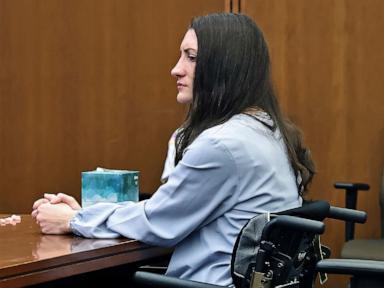
Prediction markets are having a massive cultural moment, but politicians keep forgetting the cardinal rule of trading on your own election. You cannot wager on an outcome you directly control. The regulated prediction exchange Kalshi recently handed down a three-year suspension and a $2,589.96 fine to Republican congressional nominee Laurie Buckhout after discovering she bought contracts tied to her own race.
Buckhout dropped less than $1,000 on contracts predicting her own victory in North Carolina's 1st District. When the compliance division caught the activity, she didn't try to hide it. She called it a dumb mistake. Don't miss our earlier article on this related article.
"I bet on myself. Literally," Buckhout said in a public statement. "Safe to say my career as a Kalshi trader was short-lived."
The Rules of Insider Trading in Politics
Kalshi Rule 5.17(z) explicitly forbids anyone from trading on an event if they possess direct or indirect influence over the outcome. If you are running for office, your day-to-day campaign choices, fundraising efforts, and public appearances directly move the needle. That counts as inside influence. If you want more about the background of this, Associated Press provides an informative summary.
Platforms regulated by the Commodity Futures Trading Commission face strict oversight to maintain market integrity. When candidates buy shares in their own political survival, it creates a bizarre conflict of interest. It blends campaign finance mechanics with speculative gambling.
Jacki McGavick, a spokesperson for Kalshi, explained that the platform uses political data and monitoring systems to flag unusual trading patterns. While the surveillance architecture catches most infractions, it relies heavily on compliance reviews that flag sudden retail activity originating from known campaign circles.
A Growing Trend of Candidate Infractions
Buckhout is far from the first political figure to test these boundaries. Prediction markets have exploded in popularity, drawing high-profile blunders from candidates across the country.
Earlier enforcement actions targeted several other figures. Former U.S. Representative George Santos of New York was hit with a massive $71,356 fine and a permanent ban from the platform. Other candidates, including former congressional hopefuls and state-level nominees, have pulled similar stunts, racking up multi-year suspensions and cash penalties.
The temptation makes some sense on a psychological level. If you are pouring millions of your own dollars into a competitive race—as Buckhout did by loaning her campaign more than $2 million—speculating on a cheap contract might feel like buying an insurance policy or showing confidence. But legally and ethically, the exchange treats it the corporate equivalent of an executive trading stock in their own company right before an earnings report.
The Broader Impact on Prediction Markets
The stakes for prediction markets are rising beyond simple internet chatter. State governments are starting to institutionalize them. In North Carolina, lawmakers established a formal tax framework for prediction markets, introducing a 6% tax on net trading-fee revenue.
As these platforms integrate deeper into the financial mainstream, regulators have zero tolerance for self-dealing or conflict-laden bets. Exchanges must aggressively police their order books to prove they are legitimate financial instruments rather than unregulated wild west casinos.
If you are running for office, keep your cash in your campaign account and stay off the retail trading apps. The market will price your odds just fine without your help.