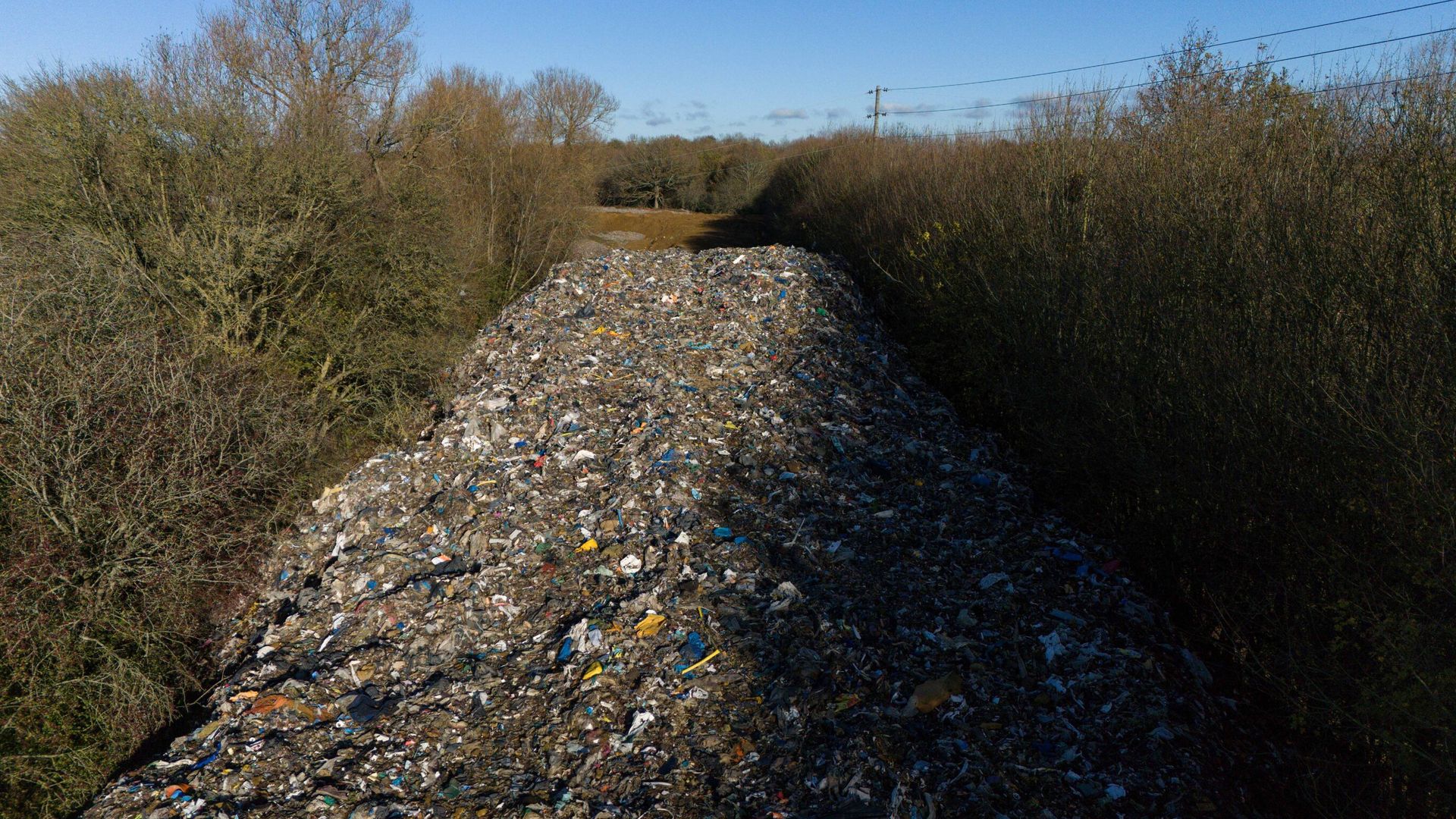
The Planning Trap
Britain is currently locked into a cycle of waste management that prioritizes massive, centralized infrastructure over actual environmental recovery. The reason these "mega" waste sites—typically sprawling Energy from Waste (EfW) incinerators or massive landfill expansions—appear unstoppable isn't due to a lack of public outcry. It is the result of a rigid planning framework designed to favor long-term capital certainty over local dissent or shifting green technologies.
When a multi-million-pound waste facility receives the green light, it isn't just a building permit. It is a twenty-five-year financial commitment. These sites are underpinned by "put-or-pay" contracts. This means local authorities are legally bound to supply a specific tonnage of trash to the facility or pay a heavy fine. We have built a system that requires a steady stream of rubbish to remain solvent. If citizens actually succeed in recycling more, the taxpayer often ends up footing the bill for the "missing" waste.
Institutional Inertia and the Planning Inspectorate
The democratic process at the local level is often an illusion in the face of National Infrastructure projects. While a local council might reject a massive waste site based on air quality concerns or traffic congestion, the developer simply appeals to the Planning Inspectorate. At this level, the decision is stripped of emotion. It becomes a box-ticking exercise focused on "Need" and "National Policy Statements."
The government's National Policy Statement for Waste sets the bar so high that local opposition rarely clears it. If a developer can prove that a region lacks "sufficient capacity" to handle its projected waste, the inspectorate almost always overrides local democracy. This creates a gold rush for private equity firms and waste giants. They target areas where the "capacity gap" is widest, knowing that once they get a foot in the door, the legal momentum is nearly impossible to reverse.
The Myth of Recovery
We are told that incineration is a "green" alternative to landfill because it generates electricity. This is a half-truth that masks a deeper failure in the circular economy. While burning plastic and paper does produce heat and power, it also releases significant carbon emissions. More importantly, it destroys materials that could have been reused or recycled.
By building these mega-sites, the UK has effectively disincentivized innovation. Why invest in sophisticated chemical recycling or compostable packaging when you have a billion-pound furnace that needs to be fed 24 hours a day? The sheer scale of these operations creates a gravitational pull. They suck in waste from hundreds of miles away, clogging roads with heavy goods vehicles and ensuring that the "carbon savings" of the plant are neutralized by the logistics of the supply chain.
http://googleusercontent.com/image_content/238
Financial Lock-in and the Private Finance Initiative Legacy
Much of the current infrastructure was born from the remnants of the Private Finance Initiative (PFI). These deals were structured to get infrastructure built without appearing on the government’s immediate balance sheet. The trade-off was a decades-long surrender of control to private operators.
Even as technology moves toward a zero-waste future, these contracts remain frozen in time. Breaking a waste contract can cost a local authority tens of millions in compensation. Most councils, already pushed to the brink of bankruptcy by social care costs, simply cannot afford to fight. They are passengers in a vehicle driven by waste companies whose primary duty is to their shareholders, not the local ecology.
The Problem with "Regional Need"
Developers often use flawed data to justify new sites. They point to "projected" waste growth, often ignoring the downward trend in household waste production. By inflating these projections, they create a phantom "need" that justifies another 500,000-tonne-per-year plant. Once the plant is built, the need becomes a self-fulfilling prophecy.
The Toxic Perimeter
Living near a mega-waste site isn't just about the smell or the noise. It is about the systemic devaluation of a community. Property prices stagnate, and the "community benefits" offered by developers—often small grants for park benches or community centers—are a pittance compared to the health anxieties felt by residents.
Studies on ultra-fine particles and nitrogen dioxide levels around these sites are often dismissed by developers as "within legal limits." However, legal limits are often lagging behind the latest medical research. The cumulative impact of living downwind from a mega-incinerator for thirty years is a data point that won't be fully understood until it's too late for the current generation of residents.
The Export Loophole
When the UK can’t burn or bury its waste at home, it exports the problem. For years, we have shipped our plastic "recycling" to nations with far looser environmental regulations. When those countries eventually ban our exports, the pressure to build more mega-sites at home intensifies. This creates a "siege mentality" in the waste industry. They argue that we must build these sites now to avoid a "waste gap," conveniently ignoring that the gap only exists because we refuse to mandate a reduction in packaging at the source.
Why Small-Scale Solutions Fail
Small-scale, localized waste processing—such as anaerobic digestion for food waste or local repair hubs—struggles to compete with the sheer efficiency of a mega-site. The economy of scale favors the giant. It is cheaper for a waste company to run one massive furnace than twenty specialized recycling centers. Without significant government intervention to tax incineration and subsidize true recycling, the market will always choose the biggest, dirtiest option.
The Legal Shield
The final reason these sites can't be stopped is the "Permit." Once the Environment Agency grants an operational permit, the legal focus shifts from whether the site should exist to how it is managed. Proving a breach of a permit is notoriously difficult. It requires expensive, independent monitoring that most local groups cannot afford. The regulator is often under-resourced, relying on the operator’s own data to ensure compliance. It is the definition of the fox guarding the henhouse.
The UK's waste strategy is not a plan for a cleaner future; it is a defensive wall built to protect the sunk costs of an aging industrial model. To stop the spread of these mega-sites, the "put-or-pay" contract must be outlawed, and the Planning Inspectorate must be stripped of its power to override local environmental rejections. Until the financial risk is shifted from the taxpayer to the developer, the chimneys will keep rising.