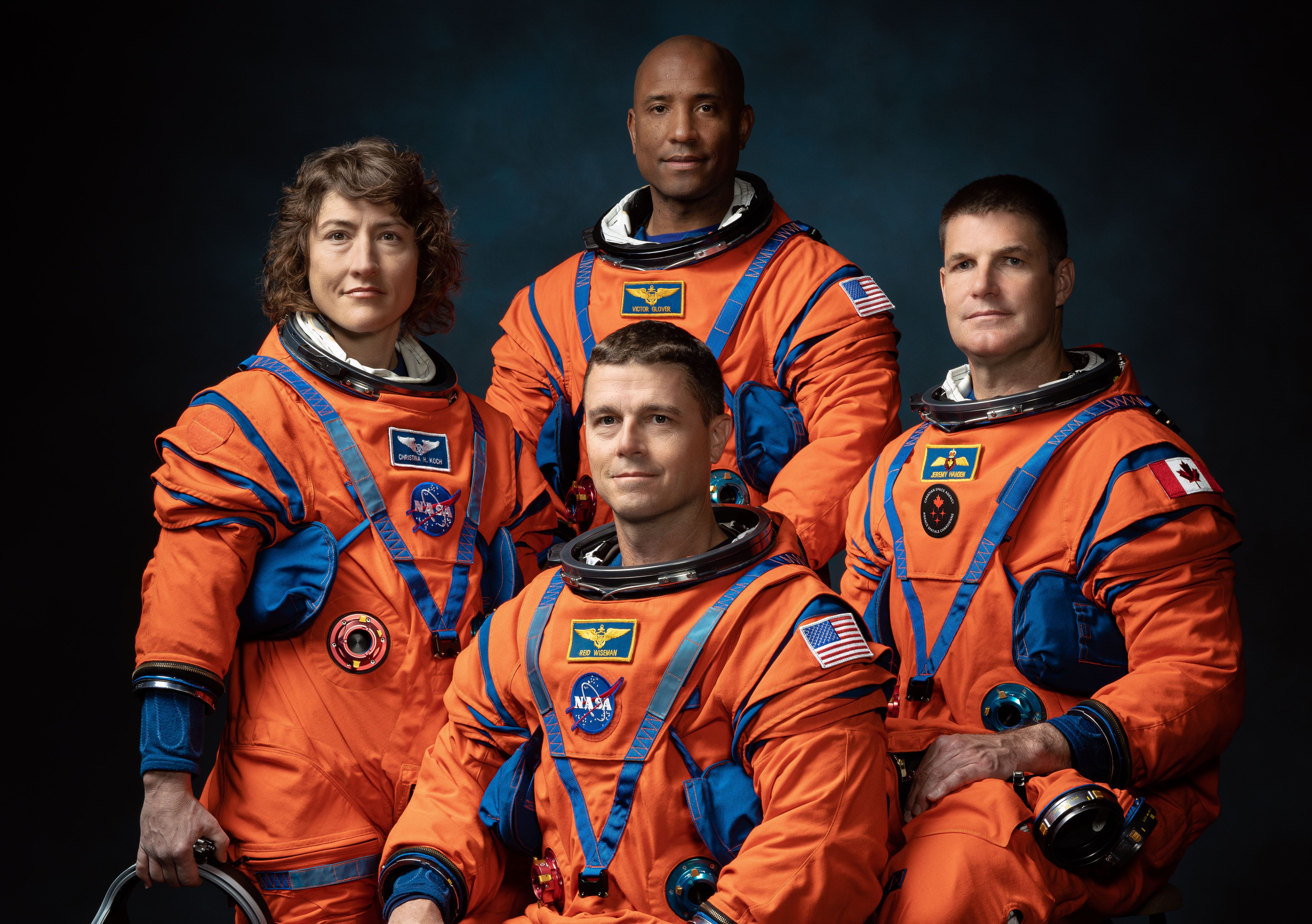
The Artemis II mission represents the first high-stakes transition from theoretical deep-space capability to operational execution. While public discourse focuses on the symbolic return of humans to the vicinity of the Moon, the mission’s true value lies in its role as a stress test for the integrated Space Launch System (SLS), the Orion spacecraft, and the ground infrastructure required for a sustained lunar economy. This crewed flight test is not a standalone event; it is the critical path milestone that validates the safety margins required for the Artemis III landing and the subsequent establishment of the Lunar Gateway.
The Technical Taxonomy of the Artemis II Profile
Artemis II serves as a non-landing validation flight, utilizing a Hybrid Free Return Trajectory. This specific orbital design serves as a fail-safe; the spacecraft uses the Moon’s gravity to "whip" back toward Earth without requiring a large engine burn for the return leg. The mission architecture is segmented into three primary technical objectives:
- Life Support System (LSS) Saturation: Unlike the uncrewed Artemis I, which tested structural integrity and heat shield resilience, Artemis II must maintain a closed-loop environment for four humans for approximately ten days. This involves the first real-world stress test of the Environmental Control and Life Support System (ECLSS), specifically the atmospheric revitalization and nitrogen/oxygen recharge systems.
- Manual Proximity Operations: A pivotal phase of the mission involves the crew performing proximity operations using the spent Interim Cryogenic Propulsion Stage (ICPS). This isn't just for pilot proficiency; it validates the handling qualities of the Orion capsule during docking maneuvers—a capability essential for future integration with the Starship Human Landing System (HLS) and the Lunar Gateway.
- High-Velocity Re-entry Dynamics: Upon return, Orion will enter the Earth's atmosphere at speeds exceeding 24,500 mph (approx. 11 kilometers per second). The skip-entry maneuver—where the capsule "bounces" off the atmosphere to bleed off velocity and heat—is a complex aerodynamic feat that reduces the G-loads on the crew and provides more precise control over the splashdown location.
The Strategic Logic of the NASA-CSA Partnership
The inclusion of a Canadian Space Agency (CSA) astronaut on Artemis II is not a gesture of diplomatic goodwill, but a calculated exchange within the framework of the Gateway Treaty. Canada’s contribution of the Canadarm3—an advanced AI-driven robotic servicing system for the Lunar Gateway—granted the nation a seat on this mission. This creates a precedent for international resource-sharing that differentiates the Artemis program from the Apollo era.
The partnership operates on a "Barter for Access" model. NASA provides the launch vehicle and primary spacecraft (high capital expenditure), while international partners like the CSA and ESA (European Space Agency) provide critical subsystems (high specialized utility).
- ESA’s Role: The European Service Module (ESM) provides the primary power and propulsion for Orion.
- CSA’s Role: Robotics and autonomous maintenance.
- NASA’s Role: Systems integration, heavy-lift launch, and mission control.
This interdependence ensures that the program is politically insulated. By weaving the supply chain and mission roles across international borders, the program becomes more resistant to domestic budget cuts within any single nation.
Quantifying the Risk Variables
Deep space exploration is governed by a set of physiological and mechanical constraints that grow exponentially the further a craft moves from Low Earth Orbit (LEO).
The Radiation Exposure Threshold
Outside the protection of the Van Allen belts, the crew is exposed to Galactic Cosmic Rays (GCRs) and potential Solar Particle Events (SPEs). Artemis II will pass through the inner and outer Van Allen belts twice. The Orion spacecraft is equipped with the Crew Interactive MAtrix Device (MARE) and specialized shielding in the hull, but the primary mitigation strategy for an SPE is the "storm shelter" method—reconfiguring cargo and water supplies to create a high-density barrier around the crew.
The Thermal Gradient Challenge
The Orion capsule must withstand temperature fluctuations from -250°F in shadow to 250°F in direct sunlight. The thermal protection system (TPS) uses an ablative heat shield made of Avcoat. The Artemis I mission revealed minor "charring" patterns that differed from sub-scale modeling. Artemis II’s primary mission success metric is the data-validated performance of this shield under the added mass of a full crew and life-support hardware.
The Economic Implications of Lunar Proximity
The Artemis II mission is the first step in moving the "Moon interest" from a scientific curiosity to a logistical reality. By proving that humans can safely navigate the Earth-Moon transit, NASA is de-risking the environment for private contractors.
The mission acts as a catalyst for the Lunar Economy in three phases:
- Phase 1: Delivery Services (CLPS): The Commercial Lunar Payload Services program uses smaller robotic landers to deliver scientific instruments. Artemis II provides the high-level communications and navigation infrastructure required to support these distributed assets.
- Phase 2: Infrastructure Hardening: The success of Artemis II triggers the launch of the first modules of the Lunar Gateway (Power and Propulsion Element and the Habitation and Logistics Outpost).
- Phase 3: Resource Extraction (In-Situ Resource Utilization - ISRU): Future missions depend on the ability to mine water ice from the lunar south pole. Artemis II maps the orbital pathing that will eventually allow tankers and transport ships to shuttle between the lunar surface and the Gateway.
Computational Redundancy and Ground Control
A significant bottleneck in deep-space missions is the communication latency. While LEO missions enjoy near-instantaneous feedback, Artemis II will experience a delay of approximately 1.3 seconds each way. This necessitates an increase in onboard edge computing. The Orion's flight computers are designed to handle autonomous abort scenarios without ground intervention, a shift from the ground-heavy architecture of the Space Shuttle.
The mission also utilizes the Deep Space Network (DSN), a global array of giant radio antennas. The capacity of the DSN is currently a limiting factor in deep-space exploration. As more nations and private companies launch lunar missions, the "bandwidth contention" becomes a strategic risk. Artemis II will utilize the first high-bandwidth optical (laser) communication systems, which offer data rates significantly higher than traditional radio frequency (RF) systems.
The Human Factor: Physiological Resilience in Deep Space
The Artemis II crew faces a unique set of stressors compared to International Space Station (ISS) residents. ISS crews are protected by Earth's magnetosphere and can return home in hours if a medical emergency occurs. The Artemis II crew is several days away from medical intervention.
The mission focuses on monitoring:
- Fluid Shifts: In microgravity, fluids move toward the head, increasing intracranial pressure. This can lead to Spaceflight Associated Neuro-ocular Syndrome (SANS), which affects vision.
- Bone Density and Muscle Atrophy: While the mission is short (approx. 10 days), the intensity of the environment requires the use of the Orion’s compact exercise device to maintain cardiovascular health.
- Psychological Isolation: The "Earth-out-of-view" phenomenon, while not fully expected on this mission, begins to take root as the craft moves 230,000 miles away.
Structural Bottlenecks and Potential Failure Points
The primary risk to the Artemis timeline is not the technology itself, but the production rate of the SLS core stages and the integration of the ESM. The SLS is a non-reusable rocket; each launch consumes a multi-billion dollar asset. This "expendable" model creates a launch cadence bottleneck. Currently, NASA can only produce roughly one SLS per year. If Artemis II encounters a significant delay or anomaly, the downstream effects on Artemis III and IV will be measured in years, not months.
The second bottleneck is the mobile launcher (ML-1). The damage sustained by the launcher during the Artemis I lift-off was significant, requiring extensive repairs and shielding upgrades. The ground infrastructure must prove it can withstand the 8.8 million pounds of thrust generated by the SLS without requiring a six-month refurbishment cycle.
Strategic Forecast: The Lunar Gateway Pivot
The data gathered from Artemis II will dictate the final design specifications for the Lunar Gateway. If the radiation levels or thermal loads exceed the predicted 15% margin of error, the Gateway’s shielding requirements will need to be increased, adding mass and potentially requiring additional launches.
Furthermore, the mission will validate whether the Orion-ESM stack can maintain the "near-rectilinear halo orbit" (NRHO) intended for the Gateway. This orbit is a gravitational "sweet spot" that allows for constant communication with Earth and easy access to the lunar south pole. Successful navigation of this orbit during Artemis II will confirm the viability of the Gateway as a permanent staging point for Mars.
The mission's conclusion will shift the focus from "can we go" to "how do we stay." The transition from the Artemis II flight to the Artemis III landing depends entirely on the performance of the life support systems during the lunar flyby. If the ECLSS maintains nominal oxygen and pressure levels with low power consumption, the path to a sustainable lunar presence is clear. If not, the lunar architecture will require a fundamental redesign of the habitation modules, potentially delaying human landings into the 2030s.
The final strategic move involves the integration of the Human Landing System (HLS). Following the splashdown of Artemis II, the priority shifts to the uncrewed Starship demo landing. The Orion capsule's docking data from the ICPS maneuver will be the baseline for the first ship-to-ship transfer in lunar orbit. This interoperability is the cornerstone of the multi-provider model NASA has adopted to ensure redundancy and cost-control in the second space race.