Western media loves a neat, cinematic narrative. When journalists look at Ukraine’s modern climbing community, they see an easy angle: a direct parallel to the golden age of California’s Camp 4. They write glowing profiles about a resilient subculture building a new outdoor identity inspired by Yvon Chouinard, Royal Robbins, and the dirtbag philosophy of Yosemite.
It is a beautiful story. It is also entirely wrong. For a deeper dive into this area, we suggest: this related article.
Comparing the brutal reality of Eastern European climbing under the shadow of a prolonged war to the counter-cultural leisure of 1960s California is worse than lazy journalism. It fundamentally misunderstands both history and the raw mechanics of psychological survival. Yosemite was born out of postwar American abundance, an escape from an overly comfortable society. Ukraine’s climbing boom is the exact opposite. It is an aggressive reclamation of agency in a environment defined by scarcity, violence, and existential threat.
Stop trying to fit Ukrainian mountaineering into a Western box. The reality is far more intense, far more pragmatic, and completely upends what we think we know about outdoor recreation during wartime. For further information on this topic, comprehensive analysis is available at NBC Sports.
The Camp 4 Delusion: Abundance vs. Survival
To understand why the Yosemite comparison fails, you have to look at the baseline economics. The dirtbags of Camp 4 were opting out of a booming American economy. They were middle-class youth refusing corporate desk jobs to subsist on cat food and cheap wine while spending months scaling pristine granite walls. They had the luxury of choosing poverty as a form of rebellion.
Ukrainian climbers do not have the luxury of opting out.
When a climber in Kyiv packs a crash pad or a rack of cams, they are not escaping a consumerist paradise; they are navigating blackouts, air raid sirens, and the logistics of a nation under siege. They are not defying their parents' suburban expectations; they are actively mourning dead gym partners and checking their military draft status before heading to the crag.
- Yosemite Counter-Culture: A rebellion against safety, predictability, and societal expectations.
- Ukrainian Wartime Culture: A stubborn insistence on normalcy, physical mastery, and mental endurance amidst chaos.
Imagine a scenario where your local climbing gym isn't just a place to train, but a community center that has survived rolling grid failures by running on diesel generators. You don't go there to "find yourself" in the wilderness. You go there because controlling your movement on a 45-degree wall is the only thing you can control when the broader world is fractured.
The Geography of Danger: No Such Thing as an Escape
The core premise of Western outdoor literature is the concept of the wilderness as a sanctuary. You leave the city, you enter the national park, and the rules of modern civilization fade away.
In Ukraine, that boundary does not exist. The war has redefined the country's geography.
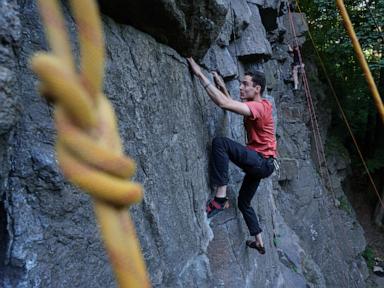
The Crimean peninsula, once the historic cradle of Soviet and Ukrainian traditional rock climbing, is occupied territory. The spectacular limestone cliffs of the south are inaccessible. Meanwhile, the crags and forests in the north and east are littered with unexploded ordnance and landmines. Even the relatively safe granite quarries in central Ukraine or the peaks of the Carpathian Mountains require intense logistical planning, military checkpoints, and constant situational awareness.
Citing heavy hitters in international mountaineering who view the outdoors as a blank canvas for personal glory misses the point entirely. For a Ukrainian climber, the rock is not a blank canvas. It is contested space. Going climbing isn't an act of romantic escapism; it is a declaration of territorial right. It is saying, This land is ours, and we will live on it, even if we have to check a demining app before we tie into the rope.
The Illusion of the Dirtbag Lifestyle
The competitor narratives obsess over the "new outdoor culture" as if it is a lifestyle brand being exported from the American West. They focus on the gear, the aesthetics, and the youthful energy.
Let's look at the actual mechanics of this community.
Building a climbing culture during a war means dealing with disrupted supply chains, hyperinflation, and a massive drain on human capital. The young men and women who would typically be setting routes, opening new sectors, and coaching the next generation are often on the front lines. The gear isn't bought casually at a flagship store; it is scraped together, imported through grueling volunteer networks, or repurposed.
More importantly, the psychological function of the sport has inverted.
In normal times, climbing is about calculated risk. You push your limits, risk a fall, and manage fear to achieve a flow state. But when your daily life already involves managing high-stakes, uncalculated risks—like drone strikes or the loss of loved ones—the risk profile of climbing changes. The sport stops being a way to introduce controlled danger into a boring life. It becomes a way to introduce controlled order into a dangerous life.
On the rock, the system is clear: gravity is predictable, the friction of the stone is honest, and your partner either catches you or they don't. That structural clarity is an addictive antidote to the unpredictable randomness of artillery fire.
The Dark Side of Romanticism
There is a distinct downside to my contrarian view. By stripping away the romantic Yosemite veneer, we are left with a harsher, less marketable reality. It is much easier to sell magazines and generate clicks with headlines about "The Yosemite of the East" than it is to look at the grim, grueling psychological maintenance keeping these athletes alive.
When we romanticize wartime climbing as a cool, edgy subculture, we risk minimizing the trauma that drives it. We treat the war as a gritty backdrop for an inspirational sports story rather than an ongoing catastrophe that forces people to find desperate outlets for their sanity.
The Western gaze craves inspiration. It wants to see people singing in bomb shelters and climbing rocks between attacks because it makes the observer feel good about human resilience. But the climbers I know aren't doing this to be your inspiration. They are doing it to keep their minds from fracturing.
Dismantling the Premier Questions
Is climbing in a war zone irresponsible?
The predictable, risk-averse critic asks this constantly. They look at the logistics and the potential burden on emergency services and declare it reckless.
This premise is completely flawed. It assumes that total paralysis is the only responsible response to crisis. If civilians stop living, stop moving, and stop engaging in the things that make them human, the enemy wins without firing a shot. The risk of climbing is meticulously managed by these athletes; it is a calculated investment in mental health that allows them to return to their jobs, their volunteer work, and their defense duties with a cleared head.
How can Western climbers best support Ukraine?
The lazy answer is to send old gear or post hashtags of solidarity.
The brutal reality is that the Ukrainian outdoor community doesn't need your patronizing pity or your hand-me-down ropes. They need institutional recognition, direct financial support for athletes who have lost training facilities, and an acknowledgment of their unique context. Stop viewing them as students trying to copy American traditions. They are currently pioneering a high-stakes philosophy of movement that Westerners, living in absolute safety, cannot even begin to comprehend.
The Hard Truth
Ukraine's climbing scene isn't the reincarnation of Yosemite's Camp 4.
Yosemite was a luxury product of a peaceful empire. Ukraine's outdoor culture is something entirely new, forged in the crucible of modern conflict. It is pragmatic, scarred, and deeply serious. It does not look West for validation or inspiration; it looks inward to survive.
Stop looking for American ghosts in the crags of Eastern Europe. The climbers there aren't trying to be the next Royal Robbins. They are too busy trying to remain themselves.