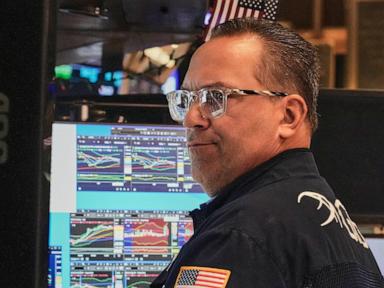
Global trading floors feel like ghost towns today. With much of Europe and Asia stepping away for May Day, the pulse of the financial world has slowed to a crawl. You’ve probably noticed the headlines trying to find drama in the silence. They’ll tell you markets are "mixed." Honestly, that’s just a polite way of saying nothing is happening because nobody is at their desk.
While most traders are enjoying a holiday, those still staring at screens in the US and Tokyo are left to deal with the leftovers of a messy week. We’re seeing a tug-of-war between tech earnings optimism and the persistent fear that interest rates aren't coming down anytime soon. It’s a boring stalemate. But boring doesn't mean safe.
The May Day Ghost Town Effect
It’s hard to get a real read on market sentiment when the London Stock Exchange, the DAX in Frankfurt, and the CAC 40 in Paris are all dark. These aren't just local holidays. They represent a massive chunk of global liquidity. When these players go offline, the remaining volume is thin.
Thin markets are dangerous. Why? Because it takes a lot less capital to move the needle. A single large trade that would barely register on a normal Tuesday can send ripples through the S&P 500 futures on a day like today. If you’re looking for a clear trend, don't. You won't find one until the full global cohort returns to their terminals.
In Tokyo, the Nikkei 225 managed to eke out some gains, but it felt hollow. Investors there are still reeling from the yen’s wild swings. Everyone is trying to guess if the Bank of Japan stepped in to save their currency or if it was just market exhaustion. Without the rest of the world to provide a sounding board, these movements are just noise.
Crude Oil and the 111 Dollar Floor
While stocks are idling, the energy sector is putting up a fight. Crude oil is sitting heavy at $111 a barrel. It’s a number that makes central bankers sweat. We’ve seen oil fluctuate, but it seems to have found a home in this triple-digit range. This isn't just about supply chains anymore. It's about a fundamental shift in how we price risk in a fractured world.
If you think $111 is high, remember where we were a few years ago. The problem now isn't just the price; it’s the stubbornness of it. High energy costs act as a hidden tax on every single person reading this. It makes shipping more expensive. It makes plastic more expensive. It makes your grocery bill climb.
When oil stays this high, it keeps inflation "sticky." That’s the word of the year for economists. It means inflation isn't falling fast enough for the Federal Reserve to feel comfortable cutting rates. If oil doesn't drop, your mortgage rates aren't dropping either. It’s that simple.
Why the Fed Still Holds All the Cards
Every move in the market right now is a reaction to what people think the Federal Reserve will do next. We’ve moved past the "inflation is transitory" lie. Now, we’re in the "higher for longer" era.
I’ve talked to plenty of analysts who thought we’d have three rate cuts by now. They were wrong. They ignored the fact that the US labor market is still surprisingly strong and consumer spending hasn't cratered. Jerome Powell and his team are in no rush to lower rates while the economy is still humming.
Today’s mixed market reflects that hesitation. Investors are paralyzed. They want to buy the dip, but they’re scared of getting caught in a downward spiral if the Fed stays hawkish. It’s a game of chicken where the Fed has the bigger truck.
Tech Earnings Are the Only Life Raft
The only reason we aren't seeing a massive sell-off right now is because Big Tech continues to print money. We’ve seen incredible numbers from the giants that dominate the indexes. These companies have managed to grow despite the high interest rates, mostly by cutting costs and leaning into the hype of artificial intelligence.
But here is the catch. The bar for "good" earnings is now impossibly high. A company can report record profits and still see its stock price tumble if its guidance for the next quarter is even slightly soft. We saw this with some of the major chips and software players recently. The market is unforgiving.
If you’re invested in the broad market, you’re basically a tech investor whether you like it or not. The concentration of power in a few stocks means that if one of them trips, the whole index falls. That’s a lot of eggs in one very expensive basket.
Navigating the May Lull
Historically, traders have a saying: "Sell in May and go away." It’s an old-school strategy that suggests the market underperforms during the summer months. While it’s not a hard rule, there’s some logic to it. Volume tends to drop. People go on vacation. Big moves become rarer.
This year feels different though. We have an election cycle looming in the US. We have geopolitical tensions that could flare up at any moment. The idea of "going away" seems risky when the world is this volatile.
Instead of walking away, smart investors are tightening their stops. They’re looking at their portfolios and asking if they can handle another six months of high rates. If your strategy depends on a rate cut happening by June, you need a new strategy.
Watch the Bond Market Instead
If you want to know what’s actually happening, stop looking at the Dow and start looking at the 10-year Treasury yield. That’s the real scoreboard. When yields spike, stocks suffer. It’s an inverse relationship that has been remarkably consistent lately.
Yields are currently signaling that the bond market doesn't believe inflation is under control. Bond traders are usually smarter than stock traders. They’re less prone to emotional swings and more focused on the cold, hard math of debt. Right now, the math says we’re stuck in this high-interest environment for the foreseeable future.
Don't let a quiet May Day fool you. The underlying tensions in the global economy are still there. They’re just bubbling under the surface while everyone is at the park or a parade. When the full market returns tomorrow, expect the volatility to come roaring back.
Check your exposure to energy stocks. If oil stays at $111, those companies are going to continue to be cash cows. On the flip side, look at your debt-heavy small-cap stocks. They are the ones feeling the most pain from these interest rates. Clean up your portfolio now while the volume is low and you have time to think clearly. The summer is going to be a lot noisier than today suggests.