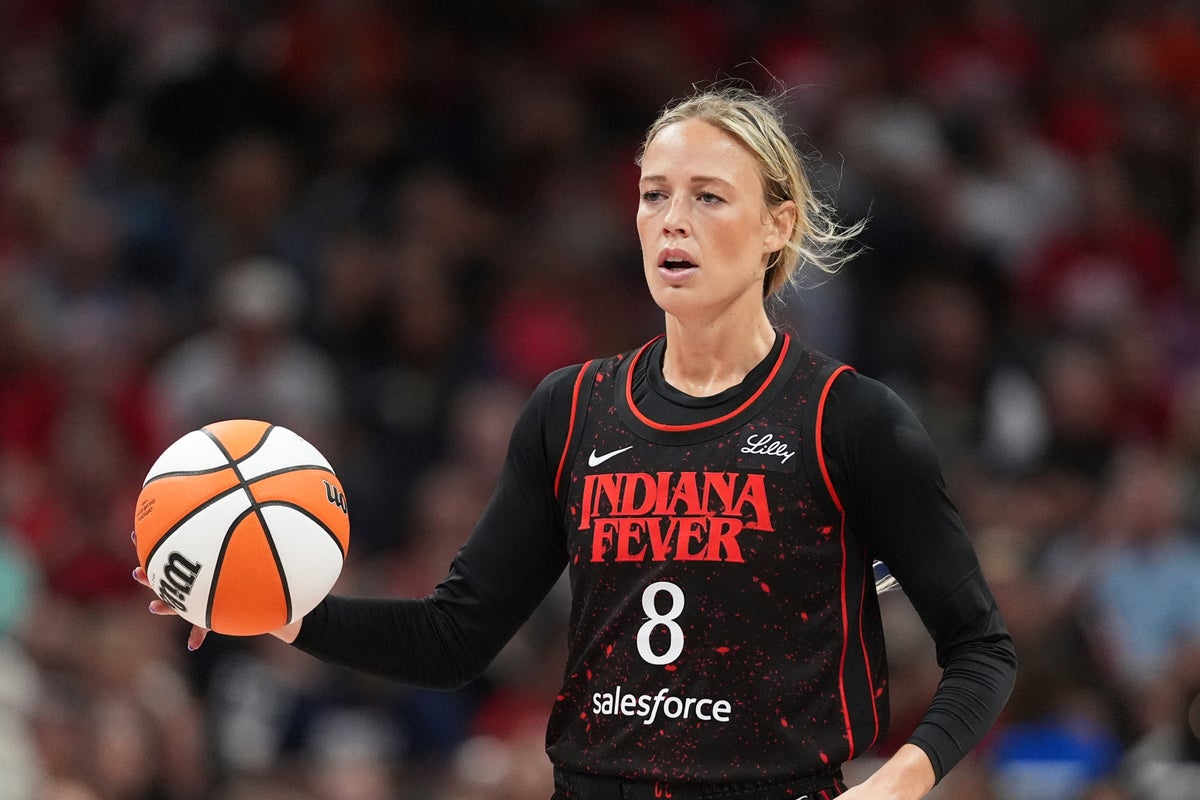
Professional athletes deal with intense pressure on the court, but nobody signs up to live in fear outside the arena. The recent arrest of Kevin Singh highlights a dark reality that women's basketball has been forced to confront. An Indiana man charged after being accused of stalking WNBA player Sophie Cunningham shows that the boundaries between fan appreciation and dangerous criminal behavior have completely broken down.
This isn't an isolated incident. It's a systemic failure in how public figures, particularly women in sports, are protected from online and physical harassment. If you think social media obsession is harmless, the details of this specific case will change your mind quickly. Building on this idea, you can find more in: Why Moroccos Comeback Against Haiti Signaled The End Of Their World Cup Ambitions.
Inside the Investigation of Kevin Singh
On June 24, 2026, Marion County Prosecutor Ryan Mears announced serious criminal charges against 48-year-old Kevin Singh of Indianapolis. The legal breakdown includes a Level 6 felony charge for stalking, another Level 6 felony for intimidation, and a Class B misdemeanor for harassment. Singh was arrested by the Marion County Sheriff's Office on June 23 after months of escalating behavior that left Indiana Fever guard Sophie Cunningham fearing for her safety.
According to court documents, Cunningham told law enforcement that the constant barrage of terrifying messages caused her severe distress. She experienced frequent nightmares and felt compelled to alter her daily routine, choosing to stay confined to her home rather than risking public exposure. Experts at ESPN have also weighed in on this matter.
The trouble didn't just start yesterday. The timeline reveals a pattern of behavior that built up over nearly a year. Investigators tracked the initial physical interaction back to September 2025 at Gainbridge Fieldhouse, the home arena for the Indiana Fever.
During that time, Singh allegedly bypassed standard boundaries by hand-delivering a package addressed directly to Sophie. He lied to arena staff, claiming the gift came from his young daughter. When security personnel inspected the package, they discovered a Guns N' Roses band shirt heavily sprayed with men's cologne. Along with the shirt was a handwritten note detailing his obsession.
The note openly admitted that he had never watched a single WNBA game or viewed TikTok videos before Cunningham arrived in Indiana. He claimed the beads included in the package were blessed by a Cardinal at the Scottish Rite Cathedral in Indianapolis. He signed his real name and left his actual phone number, showing a blatant lack of concern about tracking or consequences.
The Failure of Digital Boundaries
By early 2026, the obsession migrated completely to digital spaces. Singh allegedly flooded Cunningham's social media accounts on X and Instagram with explicit, highly inappropriate messages. The direct messages included in the probable cause affidavit paint a terrifying picture of an individual who completely detached from reality.
In April 2026, the messages escalated from bizarre declarations of love to explicit geographic tracking. On April 23, Singh messaged Cunningham stating that she was literally down the street from his location. He followed up with comments indicating he knew the specific layout of her apartment building, implying that while her building claimed to be safe, he could still gain access.
Later that month, the digital messages turned explicitly sexual and monitoring in nature. He questioned her actions inside a hotel room and made crude remarks about wanting to grow with her intimately. For any athlete trying to focus on a demanding sports season, receiving continuous proof that an unstable individual is actively watching your hotel rooms and tracking your physical movements is psychological torture.
Why Cease and Desist Orders Do Not Stop Stalkers
When a sports organization realizes a player is under threat, the standard legal playbook usually begins with a formal warning. On April 30, 2026, the Vice President of Security for Pacers Sports & Entertainment issued a formal cease-and-desist letter to Singh. The directive was completely clear. He was barred from contacting Cunningham, prohibited from interacting with any Fever employees, and officially banned from entering Gainbridge Fieldhouse or attending any team-sanctioned events.
In a logical world, a formal threat of legal action from a massive sports entertainment firm would make someone back off. In the world of criminal stalking, it often acts as fuel.
Immediately after receiving the letter, Singh turned his anger toward the security team itself. On May 1, he posted an angry rant on X, accusing the security staff of being the real stalkers for monitoring his public accounts. He expressed rage over being threatened with jail time, complaining that his own mental state was being impacted because he could no longer attend concerts or comedy shows at the arena.
By June 10, the online rhetoric turned into a direct challenge against the Pacers security personnel. Singh posted a message naming a specific security officer, asking what they planned to do about his posts and laughing off the idea that he would get caught. This behavior shows why traditional corporate security measures are completely inadequate against determined harassers. A piece of paper cannot stop an individual who views a legal boundary as a personal challenge.
A Dangerous Trend for the Indiana Fever
If this story sounds familiar, it's because the Indiana Fever locker room has been forced to deal with this exact nightmare before. The franchise has become the epicenter of a massive surge in WNBA popularity, but that spotlight has brought terrifying consequences.
Just last year, a Texas man named Michael Lewis was sentenced to two and a half years in prison after pleading guilty to stalking and harassing Fever star Caitlin Clark. Lewis had sent a series of threatening messages that required heavy intervention from law enforcement and team security.
Having two separate players targeted by high-level stalkers within a two-year span is not a coincidence. It is proof that the security infrastructure surrounding women's professional sports needs a massive overhaul. For decades, female athletes flew under the radar of extreme fan obsession because the media coverage wasn't there. Now that the WNBA is pulling in millions of viewers, breaking attendance records, and generating massive digital engagement, the risks have matched those faced by the NBA, NFL, and global pop stars.
The legal system in Indiana is starting to treat these situations with more urgency, but the penalties still don't match the psychological damage inflicted on victims. A Level 6 felony in Indiana carries a maximum sentence of just two and a half years.
Fortunately, prosecutors are pushing harder in the Singh case. Because Singh was already on probation in Hendricks County after pleading guilty to two felony counts of invasion of privacy in July 2025, the state has leverage. In that previous case, ten other charges—including stalking and harassment—were dropped as part of a plea agreement. Marion County prosecutors successfully argued for a higher-than-standard bond and a seven-day hold to revoke his probation entirely, ensuring he stays behind bars while awaiting trial.
Step by Step Actions to Upgrade Personal Security
If you are an athlete, influencer, or public figure dealing with an escalating fan interaction, you cannot afford to wait for the system to catch up. Relying solely on corporate security or standard block buttons doesn't work when dealing with a criminal mindset. You need an aggressive, proactive strategy to protect your physical and digital life.
1. Document Everything Without Engaging
The biggest mistake victims make is responding to a stalker to tell them to stop. Any response, even a negative one, validates their effort. Instead, create a digital folder immediately. Take full screenshots of every single message, comment, and mention. Ensure the timestamps, account handles, and unique profile URLs are completely visible. Do not delete the messages from the platform until you have secured copies, as they serve as primary evidence for a probable cause affidavit.
2. Force a Professional Buffer
Never handle security threats through personal channels. The moment an interaction shifts from enthusiastic fandom to tracking or personal boundary crossing, hand the situation over to professionals. Let team security, a talent manager, or legal counsel issue the warnings. This shifts the target away from you personally and establishes a clear legal paper trail that prosecutors can use later to prove intentional harassment.
3. Lockdown Location Data and Digital Footprints
Stalkers feed on real-time information. Stop posting live locations on social media. If you are at a restaurant, a gym, or a hotel, wait until you have completely left the venue before uploading any photos or videos. Check your device settings and disable precise location sharing for all social media applications. Ensure that family members and friends understand they cannot tag you in real-time posts that reveal your current geographic location.
4. Engage Law Enforcement Early
Do not wait for a physical confrontation to involve the police. A cease-and-desist letter is a civil tool, not a criminal one. Take your documented evidence directly to local law enforcement to file an official report. Building a case takes time, and establishing a police record early makes it substantially easier for prosecutors to secure arrest warrants and high bonds if the behavior escalates, just as it did in Indianapolis.
The arrest of Kevin Singh shouldn't be viewed as a successful resolution to a single case. It must serve as a stark warning to the sports industry. Player safety cannot be treated as an afterthought or a secondary expense. When athletes are forced to live with nightmares just for doing their jobs, the entire system needs to change.