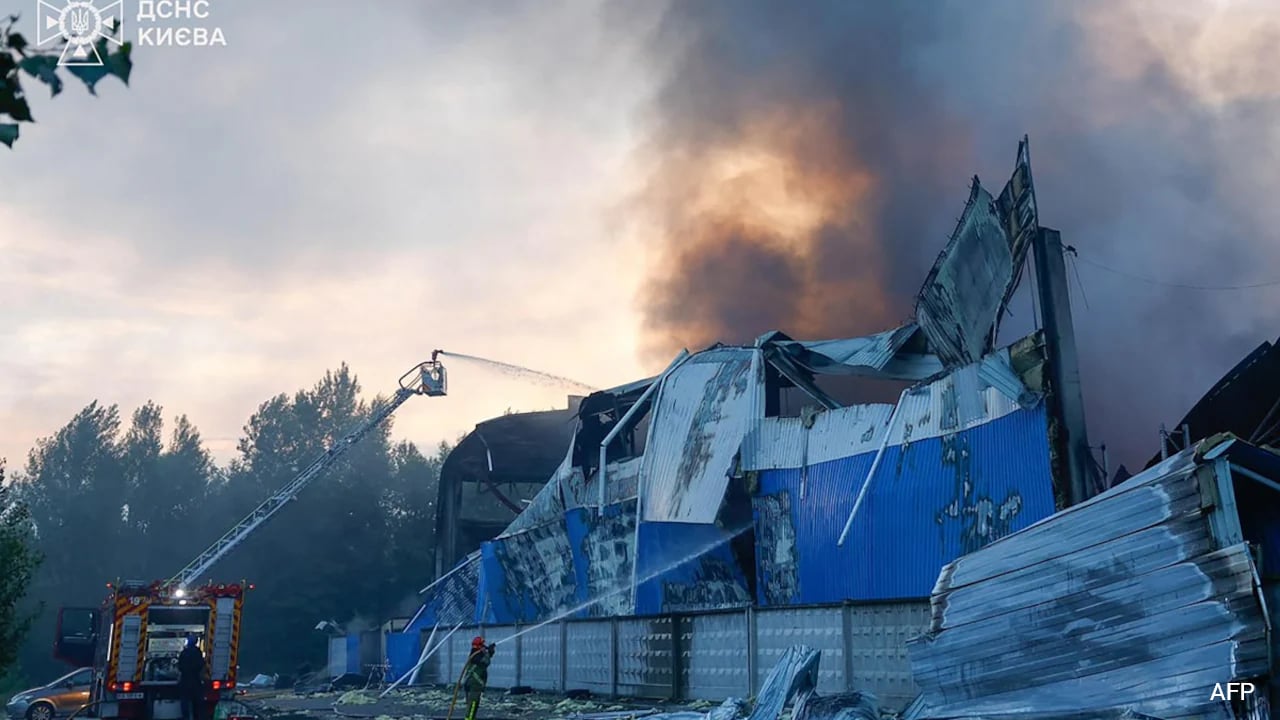
Every headline follows the exact same template. A strike hits Kyiv. Numbers are counted. Dead, injured, devastation. The automatic reflex across Western newsrooms is to treat each event purely as a standalone humanitarian tragedy divorced from the cold mechanics of modern attrition warfare. That reaction is emotionally understandable. It is also analytically useless.
If you want to understand why these strikes keep happening, you have to stop reading the casualty tallies as isolated moral atrocities and start looking at them as systemic signals in a grinding war of logistics, industrial capacity, and air defense scarcity. The mainstream narrative wants you to believe this is random terror. The brutal truth is that it is calculated resource depletion.
The Lazy Consensus Of Endless Outrage
The consensus view preached by pundits is straightforward. Russia fires missiles at civilian centers. Ukraine intercepts as many as possible. The remainder hit targets, causing casualties. The policy prescription is always more sanctions, more Patriot systems, and more rhetorical condemnation.
This framing creates a comfortable illusion that the conflict is a moral play where good slowly corners evil, provided the West keeps writing checks. I have spent years analyzing defense economics and industrial mobilization, and I can tell you that this moralizing blinds people to the math on the ground.
Wars of this scale are solved by subtraction, not addition.
When long-range munitions slam into Kyiv, the primary objective on the launching end is rarely the dramatic footage you see on cable news. It is the exhaustion of interceptor stockpiles. A single air defense battery consumes multimillion-dollar interceptors faster than Western defense contractors can assemble them in peacetime manufacturing loops. Every time an incoming projectile forces the activation of urban air defense, an asymmetric economic equation plays out. Cheap airframes force expensive reactions.
The Air Defense Trap Nobody Wants To Discuss
We need to talk honestly about the math of scarcity.
Ukraine's metropolitan centers rely heavily on sophisticated Western-supplied shield networks. These systems are marvels of engineering, but they are finite. The defense industrial base of the United States and Europe is built for boutique, high-tech intervention, not prolonged peer-to-peer industrial war.
When analysts look at a morning strike in Kyiv, they focus entirely on the immediate structural damage. They ignore the second-order effect: the depletion curve of surface-to-air missiles.
Imagine a scenario where a high-volume saturation attack forces a city's defense network to expend twenty percent of its remaining specialized interceptors in a single night. Even if every single incoming threat is intercepted, the strategic victory belongs to the side imposing the consumption rate.
The Western media refuses to frame it this way because it forces an uncomfortable realization. Pumping more aid into a theater without fixing the underlying production bottleneck is like bailing out a sinking cruiser with a teaspoon while the hull is cracking wider.
Dismantling The Targeting Myth
Another persistent myth is that these strikes are erratic lashings out born of battlefield frustration. This attributes emotional chaos to a military apparatus that operates on cold, bureaucratic doctrine.
Target selection in prolonged campaigns follows predictable patterns of infrastructure degradation. Power grids, transit nodes, industrial repair facilities, and command nodes are hit to compound friction. When a strike lands in Kyiv, it disrupts the administrative heartbeat that coordinates logistics to the front lines hundreds of miles to the east.
By hyper-focusing on residential collateral damage—which undeniably occurs and extracts a devastating human toll—coverage obscures the systemic targeting of dual-use capabilities. Rail yards, electrical substations that power military manufacturing, and communications relays are legitimate targets under the harsh logic of total war. Pretending that the strikes serve no military purpose other than cruelty prevents leaders from forming an adequate defense strategy.
The Cost Of Strategic Complacency
For over two years, political leaders in capitals far from the sirens have promised that support would continue for as long as it takes. That phrase is a political crutch, not a strategy.
It ignores the hard ceiling of manufacturing reality. Artillery shells, guidance chips, rocket motors, and propellant components cannot be wished into existence by parliamentary votes. When production lines take years to scale up, local exhaustion of air defense umbrellas in major hubs like Kyiv becomes a terrifyingly real possibility.
The mainstream press acts as if willpower alone can substitute for tons of steel and chemical propellant. It cannot. History is littered with the wreckage of nations that fought brave, morally righteous defensive campaigns while running out of the very materials required to keep the lights on and the skies clear.
Breaking The Cycle
If the objective is to protect urban populations, the current approach of reactive outrage combined with trickle-down military packages is failing the test of time.
Stopping the devastation in Kyiv will not happen through harsher press releases or another round of diplomatic theater. It requires an honest reckoning with industrial capacity, a massive acceleration of domestic European and Ukrainian defense manufacturing, and a brutal acknowledgment that attrition favors the side with deeper manufacturing reserves unless the technological paradigm shifts entirely.
Until policymakers drop the comforting fiction that this war can be managed through moral superiority alone, the sirens over Kyiv will keep sounding, and the cost will continue to be paid in blood and concrete.