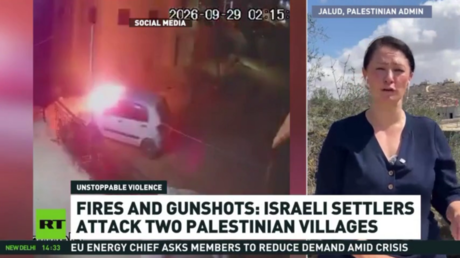
Videos circulate across social media showing masked groups setting vehicles ablaze, throwing stones at residential windows, and torching agricultural fields. These aren't isolated pranks or spontaneous street brawls. They are coordinated incursions by West Bank occupation groups targeting Palestinian villages under the cover of military presence. When entire neighborhoods go up in smoke while emergency services struggle to reach burning properties, the silence from international observers speaks volumes.
You rarely see heavy diplomatic pressure or urgent emergency sessions called when homes turn to ash in villages like Huwara, Turmus Ayya, or Jit. Instead, the footage surfaces online, garners thousands of views, and fades into the digital noise while families sift through charred rubble.
The Anatomy of a Settler Incursion
Let's look at how these attacks actually unfold on the ground. They don't happen in a vacuum. A typical incident starts with rumors or a localized flashpoint, followed by a sudden mobilization of dozens of armed individuals moving into Palestinian agricultural lands or residential outskirts.
Security analysts tracking the region note a predictable pattern. The incursions often arrive shortly after specific flashpoints or security incidents, serving as collective punishment against entire communities. Homes, vehicles, and olive groves bear the brunt of the destruction.
- Advance Mobilization: Groups coordinate rapidly via encrypted messaging apps to gather at specific junctions or outposts.
- Coordinated Entry: Participants move into target villages in groups, frequently masked and carrying clubs, stones, or flammable materials.
- Destruction Phase: Property is systematically vandalized or set on fire, with cars and ground-floor rooms serving as primary targets to maximize psychological terror.
- Delayed Intervention: Local residents report that military forces stationed nearby often arrive late or stand by as observers while the property damage takes place.
This dynamic creates an atmosphere of total impunity. When perpetrators realize there are zero consequences for destroying private property, the threshold for violence drops even lower.
The Economic and Psychological Toll
Property destruction goes far beyond scorched paint and shattered glass. For rural families in the West Bank, an olive grove isn't just a scenic view—it's generational livelihood. When centuries-old trees are chainsawed or torched, families lose their primary source of income in a matter of hours.
The psychological impact on children growing up in these environments is devastating. Sleeping in a room with barred windows because you expect a midnight firebombing changes how a person views safety. It breeds a permanent state of hyper-vigilance.
Human rights monitors have documented hundreds of these incidents annually, noting a steady upward trend in intensity. Yet, accountability remains close to zero. Investigations rarely lead to indictments, and convictions are practically nonexistent. That institutional shield is precisely why the violence continues to escalate year after year.
Why the International Response Falls Short
Diplomats issue statements expressing concern. Capitals call for calm on both sides. That language fundamentally misrepresents the power dynamic at play. You cannot equate an occupied population with armed ideological groups backed by state infrastructure.
Sanctions have been slapped on a handful of individual figures by various Western nations, but these measures remain symbolic. They don't halt the flow of funding, stop the expansion of illegal outposts, or alter the calculus
Why West Bank Settler Violence Is Accelerating Unchecked
news
Flames don't just consume homes; they consume futures. When organized settler groups move through Palestinian villages in the West Bank torching cars, livestock sheds, and residential properties, the immediate damage is obvious. Blackened masonry, charred olive trees, and terrified families standing in the smoke tell a clear story. But the broader reality is far worse. This isn't random vigilantism. It's a systematic campaign designed to displace communities through sheer terror, and the world is largely watching it happen in slow motion.
If you follow international news headlines, you've likely seen the video footage. Masked mobs descending on villages under the protective gaze or outright indifference of armed forces. Homes set on fire with families still inside. You hear the screams, you see the red glare of the blaze against the night sky, and you wonder how this is allowed to persist. Let's look at the mechanics behind these attacks, why accountability is almost non-existent, and what this means for anyone trying to survive on the ground.
The Anatomy of a West Bank Raid
These incursions follow a predictable, chilling pattern. Armed groups of young men, often heavily coordinated via encrypted messaging apps, mobilize quickly. They enter Palestinian villages under the cover of darkness or late afternoon, targeting properties on the periphery. Their goals are straightforward: inflict maximum physical damage, terrorize the residents into fleeing, and make daily life impossible.
Houses are primary targets. Attackers smash windows, hurl Molotov cocktails, and slash water tanks. Vehicles parked outside are routinely torched to destroy any means of escape or emergency transport. Farmers watching their olive groves burn face an impossible choice. Rush out to save their livelihood and risk gunfire, or stay inside and watch generations of investment turn to ash.
The speed of these raids shocks eyewitnesses. By the time emergency services or international monitors manage to navigate the maze of checkpoints and roadblocks, the attackers have vanished back into nearby unauthorized outposts. These outposts act as logistical hubs, operating with near-total impunity.
Accountability Gaps and Institutional Blindness
Impunity breeds repetition. That's the baseline rule of conflict zones, and the West Bank serves as a textbook example. When property is destroyed or families are attacked, victims file police reports. The vast majority of these reports lead nowhere. Investigations stall, evidence vanishes, and arrests are rare.
Human rights organizations like Yesh Din and B'Tselem have documented thousands of ideologically motivated crimes by settlers against Palestinians over the past decade. Their data reveals a staggering conviction rate failure. Less than three percent of police investigations into settler violence result in indictments. When a system fails to prosecute violent offenders, it sends a clear signal. It tells the perpetrators that their actions carry no consequences, and it tells the victims that they are entirely on their own.
Military escorts present a separate layer of complexity. International law dictates that occupying powers must protect the civilian population under their control. Yet, video evidence frequently captures soldiers standing nearby while property burns, sometimes even firing tear gas or stun grenades at the Palestinian residents trying to put out the fires rather than stopping the attackers. This dynamic shifts the role of state forces from neutral arbiters to passive enablers.
The Economic and Psychological Toll
Displacement rarely happens all at once. It happens through economic strangulation and psychological exhaustion. When a family wakes up to find their tractor burned, their winter hay stores ruined, and their front door smashed, the calculus of staying changes.
The psychological impact on children is profound. Night terrors, chronic anxiety, and a constant hyper-vigilance become normal parts of childhood in vulnerable communities like Masafer Yatta or the villages surrounding Nablus and Ramallah. Schools report drops in attendance following major attacks because parents are terrified to let their kids walk down unpaved roads where confrontations routinely happen.
Agriculture takes the heaviest hit. Olive harvesting season, which should be a time of community celebration and economic relief, has transformed into a high-risk operation requiring international solidarity activists and Israeli human rights volunteers to act as human shields. When trees are chainsawed or set ablaze, the economic fallout lingers for decades. An olive tree takes years to mature. Destroying an orchard isn't just property damage; it's the eradication of an economic foundation.
Documenting the Unseen
Footage matters because denial is cheap. For years, official statements could easily dismiss incidents of violence as isolated brawls or minor property disputes between neighbors. Smartphones and helmet cameras changed that equation. Today, high-definition video captures the scale, the organization, and the coordination of these assaults.
Yet, having the footage doesn't automatically translate to political action or legal protection. Social media algorithms push these horrors into feeds for a few hours before cycling them out for the next news cycle. The victims remain behind in the ash, sweeping up glass and trying to patch roofs before the next round begins.
To understand the trajectory of the region, you have to look past the high-level diplomatic summits and focus on these burning doorsteps. As long as property destruction yields zero political or legal costs for the perpetrators, the fires will keep burning, and the map of the West Bank will continue to be redrawn one charred home at a time.