The marble of the courtyard is always cool, even when the desert air bakes the valleys of the Hejaz into a furnace. At three in the morning, the noise of the world recedes. There is only the low murmur of footsteps, the soft rustle of white cotton ihram garments, and the heavy, rhythmic breathing of humanity turned toward a single, black-draped cube. For over a billion people across the earth, this courtyard is the quiet center of the universe. It is the place where noise stops. It is the place where fear is meant to dissolve into absolute surrender.
Then came the sound.
It was not a thunderclap. It was something sharper, a metal-ripping tear across the upper atmosphere that made the glass rattle in the hotels overlooking the sanctuary. High above the illuminated minarets, a streak of white fire punctured the velvet black of the night. A Patriot missile, launched with ferocious, automated haste, intercepted an incoming ballistic projectile miles before it could find its mark. Debris rained down in the empty hills outside the city limits.
Silence rushed back in, but it was a different kind of silence now. It was the terrified quiet of a threshold crossed.
When a government in Riyadh officially declared that targeting the holy sanctuary of Mecca was an absolute, uncrossable red line, they were not just speaking the language of modern military deterrence. They were invoking a primal boundary. For centuries, empires have risen and crumbled in the dust of the Arabian Peninsula, shifting trade routes, redrawing borders, and rewriting treaties. Yet through every dynasty, every colonial scramble, and every modern border dispute, the sanctity of the sanctuary remained the one unwritten law that even the most desperate warlords dared not break.
Until now. Or, at least, until the sky lit up with fire.
To understand why a single missile trajectory over the western mountains can send tremors from Jakarta to Casablanca, you have to look past the cold mechanics of radar cross-sections and telemetry data. You have to look at how humanity anchors its sense of safety. When people feel powerless against the grinding wheels of geopolitical proxy wars, they look to symbols that outlast nations. Mecca is more than a geographic coordinate on a navigation chart. It is an emotional anchor. When someone fires a rocket toward an anchor, they are not just trying to strike a military installation or a political capital. They are trying to sever the cord of collective peace.
Yet, hundreds of miles away in the rugged, stone-terraced mountains of Yemen, a very different narrative was being written.
The Houthis denied it. Completely. Flatly. Categorically.
In the high-stakes theater of modern asymmetric warfare, denial is as much a weapon as a ballistic warhead. When you are fighting a technologically superior coalition backed by billions in hardware, your arsenal includes not only drones and missiles, but the dense, opaque fog of plausible deniability. Who launched it? Was it an off-course projectile? Was it a miscalculated trajectory? Or was it a deliberate escalation designed to test the resilience of the kingdom’s air defense systems and the nerves of its leadership?
The technical analysts poured over satellite imagery and trajectory projections. They talked about Quds-2 cruise missiles, about range capabilities, about launch sites hidden deep within the Saada governorate. They mapped out fuel capacities and guidance systems with clinical detachment.
But numbers on a spreadsheet cannot measure the chill that ran down the spine of an ordinary pilgrim standing in the courtyard that night.
War has its own grammar, and usually, it follows a grimly predictable syntax. Armies fight armies. Airfields strike supply depots. Ports blockade cargo ships. These are terrible, violent transactions, but they operate within a shared, recognizable logic of conflict. They are calculated risks taken by men in command bunkers who weigh cost against benefit.
Aiming toward Mecca breaks the grammar entirely.
It moves the conflict from the realm of political strategy into the terrifying domain of the sacred and the profane. When a sanctuary is threatened, compromise becomes nearly impossible. You cannot negotiate with a missile headed for a holy site. You can only destroy it or brace for the impact. And when it is intercepted, the political fallout does not dissipate with the smoke. It hardens. It crystallizes into an unyielding resolve that makes future peace talks infinitely more distant.
Consider what happens next in a region already teetering on the edge of exhaustion.
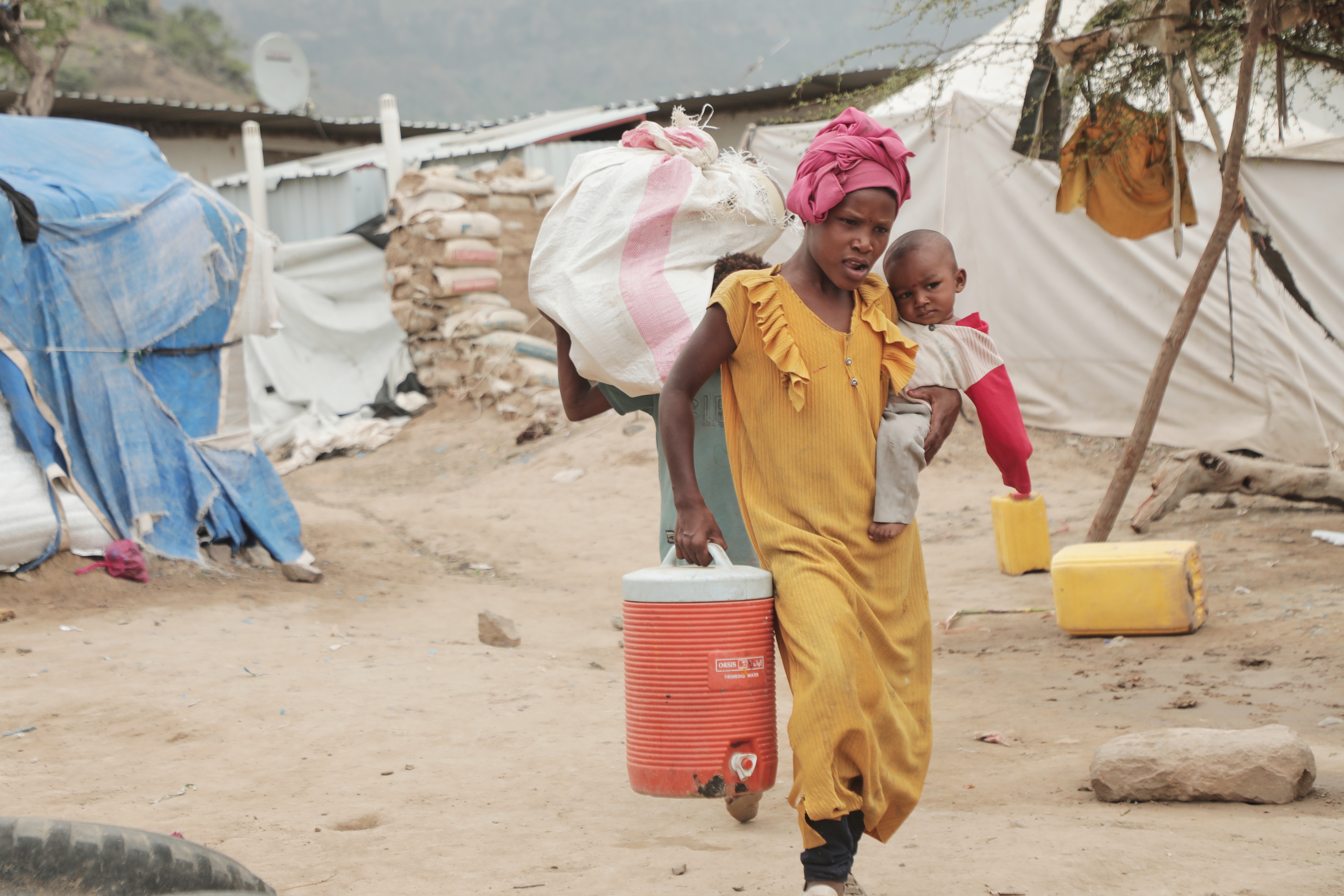
The Yemen civil war is often described in diplomatic dispatches as a forgotten tragedy, a complex web of tribal loyalties, foreign interventions, and devastating humanitarian crises. Millions go hungry while children navigate rubble that used to be schools. It is a conflict defined by quiet suffering, overshadowed by bigger headlines in distant capitals. Yet, every so often, the war reaches out of its mountain hideouts and grabs the international stage by the throat.
An attempted strike toward the birthplace of Islam does precisely that. It forces the world to look. It transforms a localized, grinding insurgency into an existential flashpoint that pulls regional heavyweights deeper into the mire.
In Riyadh, the response was swift and uncompromising. To call something a red line is to draw a chalk mark in a hurricane. It is a warning that the next violation will not be met with interception alone, but with a retaliation so absolute that the rules of engagement will be rewritten permanently. It is a dangerous game of chicken played with millions of lives as passengers in the back seat.
Meanwhile, the denials from Sanaa ring through the media channels like a challenge. They suggest that the invisible hands pulling the triggers are either untraceable or entirely indifferent to the consequences. In the age of drone swarms and proxy militias, accountability has become a ghost. Everyone has a weapon, and no one owns the trigger.
This is the modern nightmare. We have built a world where unimaginable destructive power rests in the hands of actors who can vanish behind layers of plausible deniability, while the rest of us watch the night sky, waiting to see if the next streak of white fire is the one that gets through.
Back in the courtyard, the morning call to prayer begins. The sound rises from the minarets, rich, resonant, and ancient, cutting through the damp air of dawn. Millions of faces turn toward the center. Shoulders touch. Feet align. In this moment, the geopolitical maneuvers, the ballistic telemetry, the fierce denials, and the stern warnings from palace offices seem impossibly far away.
For a few brief hours, the world is quiet again.
But the smoke from the interception has not entirely cleared from the atmosphere, and high above the mountains, the radar screens are still blinking in the dark, keeping watch over a fragile peace that hangs by a thread.