Paper trails do not bleed. They do not shake. They do not carry the dry, metallic taste of fear that lingers in the back of a throat long after the fluorescent lights of a campus security office have buzzed off for the night.
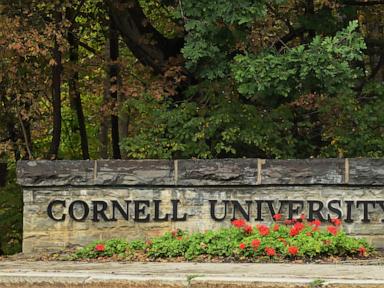
To read a transcript is to read a ghost. You see the black-and-white ink. Question. Answer. Timestamp. 100% confident. Those three syllables sit on the page like stones dropped into a pond, heavy and absolute, yet the ripples they create are flattened by the bureaucratic geometry of margins and line numbers. Two years ago, a student sat across from Cornell University police and handed them her reality, stripped of doubt, polished by the terrifying clarity of trauma. She did not say maybe. She did not say I think. She said one hundred percent.
And then, the transcript ended. The file was closed, shelved, or left to gather the slow dust of institutional delay, while the world outside kept spinning on its predictable axis.
We live in a culture obsessed with the aftermath of tragedy, yet entirely allergic to its middle. We want the cinematic climax—the arrest, the headline, the swift and righteous verdict. But justice, particularly within the walled gardens of elite higher education, rarely moves like lightning. More often, it moves like glaciers grinding over granite, slow enough to convince you that nothing is happening at all, while the landscape underneath is being irrevocably torn apart.
Consider what it takes to utter those words to an officer of the law. You are sitting in a room where every surface is hard and gray. You are acutely aware that your future, your social standing, your academic standing, and your own fragile sense of safety are hanging by a thread that feels thinner than a spider’s silk. You are recounting moments you would give anything to un-live. And you look the badge in the eye and stake your entire credibility on a single percentage.
One hundred.
There is no room for error in that number. There is no hedging. Yet, when transcripts surface years later—pulled into the harsh glare of public scrutiny or legal discovery—they arrive stripped of the breathing human being who spoke them. They become fodder for debate boards, talking points for pundits, and legal chess pieces.
Why does it take years for a voice on a transcript to find its way into the light?
The machinery of campus safety is complicated by design. Universities are small cities with their own police forces, their own PR departments, their own institutional survival instincts. When a report is filed, the initial intake is rarely just an act of care; it is an assessment of liability. Every word is weighed, measured, and filed away against the possibility of a lawsuit, a media storm, or a blow to the endowment. The student is a victim, yes, but in the cold calculus of institutional risk management, they are also a variable.
And variables are managed. They are delayed. They are processed through internal Title IX investigations that run parallel to criminal probes, creating a bewildering labyrinth of hearings, advisors, and cross-examinations that can stretch across semesters and graduation ceremonies. By the time the transcripts are made public, the person who spoke those words has often aged five years in five months. They have had to explain their trauma to three different investigators, rewrite their narrative for panels of professors, and watch as the calendar strips them of their institutional ties.
This is the hidden tax of reporting an assault on a college campus. The initial bravery—the 100 percent certainty required to walk into that station—is met not with immediate sanctuary, but with an endurance test.
Let us be entirely honest about how human memory works, and how the legal system weaponizes it. Psychologists tell us that trauma alters encoding. High-stress events freeze details in amber while blurring the peripheral edges. Perpetrators and defenders know this. They exploit the inevitable discrepancies in how a victim recalls a sequence of events months down the line. You said it was a Tuesday; the logs show it was a Wednesday. You said the door was locked; the master key log says it was open.
Yet, in this specific case, the transcript records something remarkably stubborn. A baseline. A direct, unequivocal declaration made while the memory was still hot, still burning with the immediate shock of violation. Two years ago, she knew. She knew with the terrifying mathematical precision that only a survivor possesses.
So why are we only reading about it now?
Because transparency in institutional safety is almost never proactive. It is reactive. It requires leaks, investigative journalism, persistent public records requests, and the relentless pressure of advocates who refuse to let the filing cabinets stay shut. It takes a monumental effort to pry open the records of a private Ivy League police department, to drag the quiet conversations of intake rooms into the public square where accountability might finally have a fighting chance.
When a document like this emerges, it acts as a mirror. It forces us to ask uncomfortable questions about what happens between the moment a survivor speaks and the moment the institution responds. Did the police treat that 100 percent certainty as a call to urgent action, or as a puzzle to be solved and filed away? Did the university wrap its arms around the student, or did it circle the wagons to protect its brand?
The tragedy of the Cornell transcript is not just the event it describes. The tragedy is the silence that stretched for twenty-four months afterward. It is the vast, echoing canyon between what a survivor knows to be true and what an institution is willing to acknowledge under the weight of its own inertia.
We treat these stories as anomalies, as rare glitches in an otherwise smooth system of higher education. They are not glitches. They are features of a system designed to insulate itself from the messy, agonizing reality of human harm. Universities were built to foster intellect, to debate philosophy, to incubate the future leaders of the world. But when it comes to the physical and emotional safety of the bodies sitting in their lecture halls, they have repeatedly proven themselves ill-equipped to handle the truth without a subpoena forcing their hand.
Imagine the courage it takes to rebuild your life after uttering those words. You pack your backpack. You walk past the building where it happened. You sit in a seminar room and pretend that your mind is on the reading assignment, when in reality, it is trapped in a permanent loop inside a police interview room from two years ago. You graduate, or you leave, carrying a secret history that is codified in a manila folder sitting in a drawer you will never be allowed to open.
Until someone else opens it.
Until a reporter, or a lawyer, or a leaked record forces the institution to look at its own reflection.
We owe it to the people behind these transcripts to look past the bureaucratic formatting. We owe them more than sympathy; we owe them a system that does not require a two-year waiting period to validate what they knew with absolute, unshakable certainty on day one.
The paper trails may not bleed, but the people who create them do. And long after the ink has dried on the page, the voice remains, ringing out from a sterile room in Ithaca, refusing to be quieted by time or bureaucracy.
One hundred percent.
It is time the institutions started listening.