Cold rain in Ottawa does not merely fall; it settles into the wool of a winter coat until the fabric feels like wet iron against your shoulders.
Stand at the base of the National War Memorial on a November morning, and you will hear the silence before you hear the bugle. Thousands of people pack the surrounding streets, yet the air carries a strange, suspended quiet—the sound of breath held in unison, of boots shifting on slick granite, of old brass medals clicking softly against chests as veterans stand at attention. Recently making waves recently: Why Tabloid Outrage Over Care Home Placements Completely Misses How Federal Investigations Actually Work.
At the center of that stillness stands one woman.
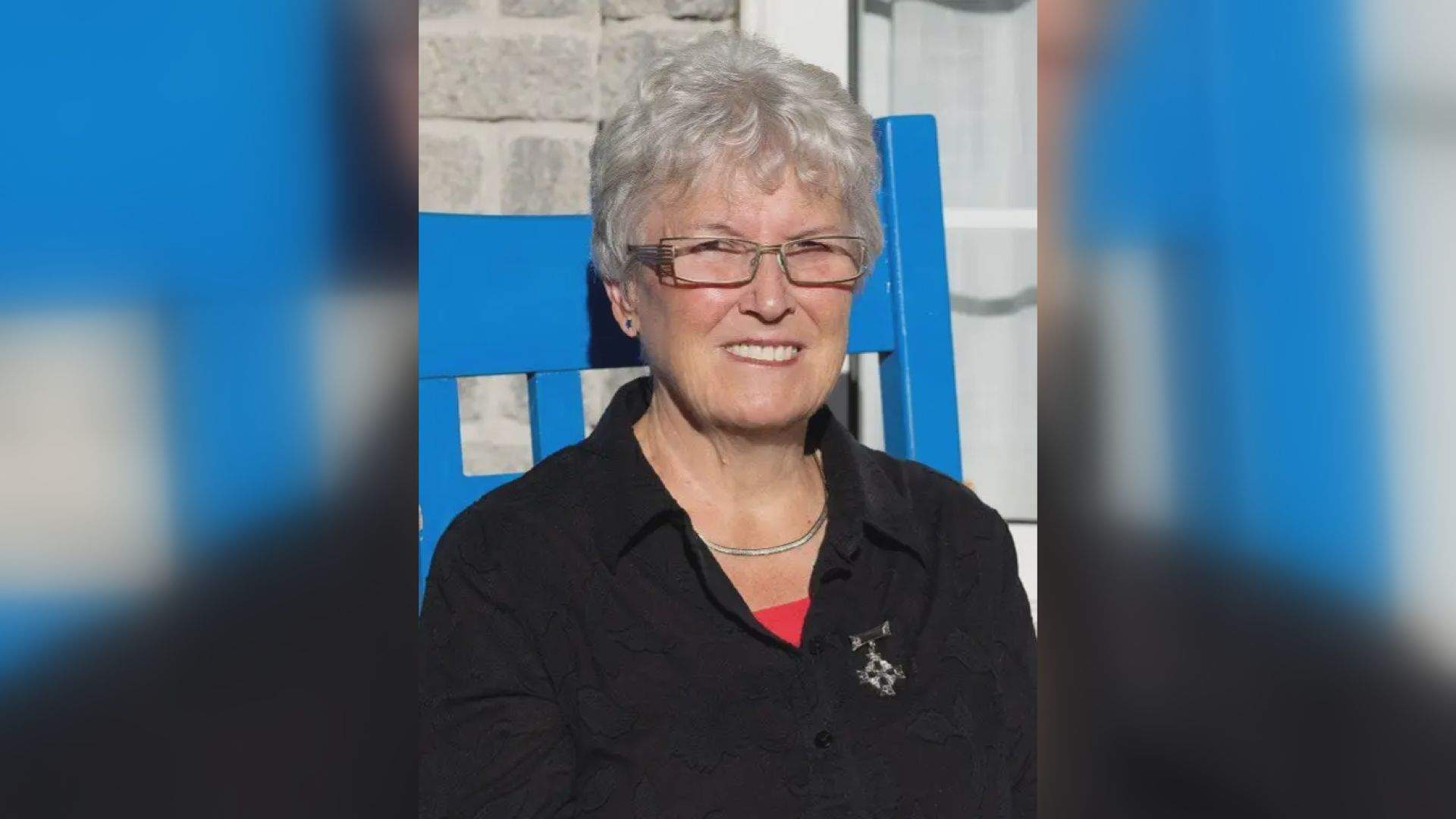
She wears a small, unadorned silver pin near her collarbone. To a passerby who does not know the history, it looks like a modest piece of heritage jewelry. To anyone who has ever worn a uniform, or watched someone they love board a transport plane at dawn, that small piece of metal is the heaviest object in the country. Further insights on this are covered by NPR.
She is the National Memorial Silver Cross Mother. Every year, the Royal Canadian Legion selects one mother to represent every parent across Canada whose child died in military service. She lays a wreath on behalf of all of them. She stands in the rain so the rest of the nation has a focal point for its grief.
Usually, when we picture that woman, our minds reach for a familiar, cinematic script. We imagine a mother who waved goodbye to a son or daughter bound for a distant desert, a mountain pass, or a bombed-out European square. We picture hostile fire. We picture an enemy across a trench or behind a ridge.
This year, that script broke.
When the Legion named a Canadian Armed Forces veteran—a mother who served in uniform herself—as the National Silver Cross Mother after her daughter died during a military training exercise, the announcement forced a quiet, uncomfortable reckoning. There was no foreign ambush. There was no declared war zone. There was no enemy combatant pulling a trigger.
There was only a training ground, a routine exercise, and a phone call that turned a mother’s world to ash.
The Myth of the Safe Return
If you have never spent years inside military culture, it is easy to draw a neat, comforting line in your head. On one side of the line sits deployment—dangerous, chaotic, unpredictable. On the other side sits training—controlled, scripted, safe.
I used to believe in that line, too.
Years ago, watching family members cycle through bases from Trenton to Petawawa, I learned the unspoken hierarchy of worry. You kept your breath tight during overseas rotations. You checked the news feeds at three in the morning when a convoy hit an improvised explosive device halfway around the world. Yet the moment their boots touched Canadian soil again, your shoulders dropped. They were home. They were just doing field exercises now. Just night navigation. Just live-fire drills. Just routine readiness.
That mental division is a survival mechanism for military families, and it is a lie.
Think of military training like rehearsing a high-wire act without a net because the performance itself will never have one. To prepare young men and women to survive the worst days of human conflict, armed forces have to simulate the friction, exhaustion, darkness, and lethal force of combat right here at home. You cannot learn to operate heavy armored vehicles in pitch blackness by reading a manual in a classroom. You cannot master live artillery, parachute drops, deep-water rescues, or tactical aviation in a simulation pod alone.
Eventually, the steel has to be real. The speed has to be real. The weight has to be real.
And because the tools are real, the margin for error is razor-thin.
Consider what happens in a hypothetical night-maneuver exercise on a sprawling training range—the kind of scenario military safety boards investigate every decade. Picture a twenty-two-year-old corporal, four hours into a cold rain, running on three hours of broken sleep. Visibility is down to a few meters. Heavy vehicles are moving across uneven terrain with blackened-out lights to avoid detection. Every radio channel is crowded with clipped commands. One misjudged incline, one obscured trench, one split-second mechanical failure, and thirty tons of steel shifts where it was never meant to go.
Nobody fired a shot. No adversary crossed a border. Yet a life ends just as permanently as it would on any battlefield.
Between 2000 and 2020 alone, dozens of Canadian Armed Forces personnel died not in combat overseas, but in training accidents, vehicle rollovers, aviation crashes, and domestic exercises. Across NATO militaries, peacetime training fatalities frequently rival or outnumber combat deaths during years without major ground wars.
Yet when a soldier dies in training, the grief enters a strange, silent limbo.
Grief Without a Headline
When a service member falls in combat, the nation knows how to mourn. Flags drop to half-mast on the evening news. Politicians deliver solemn speeches about defending freedom on foreign soil. There is a clear, terrible narrative that makes sense to civilians: They went to fight, and they gave everything.
Now strip away the foreign soil. Strip away the enemy.
When a daughter dies in a training exercise, the public rarely knows what to say. Neighbors hesitate at the end of the driveway, stumbling over condolences that feel clumsy in their mouths. Was it an accident? Whose fault was it? Why was it even happening if we aren't at war?
For a mother who is herself a veteran, that silence cuts twice as deep.
She knows both sides of the uniform. She knows the pride her daughter felt pinning on her rank, the quiet camaraderie of the barracks, the fierce sense of purpose that pulls young people toward service even when the world is ostensibly at peace. She also knows the bureaucracy that follows a non-combat death—the boards of inquiry, the technical reports, the months or years of waiting for an official explanation of how a routine Tuesday turned fatal.
Imagine sitting at a kitchen table with a binder full of military safety regulations you once followed yourself, reading a clinical summary of your own child’s final minutes.
That is the invisible weight behind this year’s Silver Cross selection. By naming a veteran mother whose daughter died in training, the Royal Canadian Legion did something radical in its quietness: it refused to let peacetime service be treated as second-class sacrifice.
A Century of Small Silver Pins
To understand why that recognition matters, you have to go back to 1919, in the raw aftermath of the First World War.
More than sixty thousand Canadians had died in the mud of France and Belgium. Tens of thousands of bodies never came home; they were buried in overseas cemeteries most working-class families could never afford to visit. Mothers were grieving in isolation, wearing black armbands that faded with the seasons while the rest of the country tried to return to normal life.
On December 1, 1919, King George V authorized the Memorial Cross—a small cross pattée made of silver, topped with a crown, bearing the royal cypher at its center and a laurel wreath woven through the arms. Unlike medals awarded for bravery on the battlefield, this cross was never meant to be worn by a soldier. It was created exclusively for mothers and widows.
The inscription engraved on the back of every cross was never ornate. Just the service number, rank, and name of the person who did not come back.
In 1936, the Canadian government appointed the first National Silver Cross Mother—Charlotte Susan Wood of Winnipeg, who had lost two sons in the Great War—to lay a wreath at the National War Memorial on behalf of all bereaved mothers. For decades afterward, the women who stood at that granite monument represented the massive, visible wars of the twentieth century: the Somme, Vimy Ridge, Juno Beach, the hills of Korea.
Later came peacekeepers who never returned from Cyprus, the Balkans, or Rwanda. Then came the mothers of Afghanistan—women whose children died on dusty roads outside Kandahar, bringing war back into Canadian living rooms for the first time in half a century.
Every single one of those eras stretched the public’s understanding of what military sacrifice looks like. Yet even after a hundred years, the civilian imagination still struggles with the deaths that happen when the guns are only firing blanks, or when a training flight never returns to base.
We like our heroes neatly framed by history books. Real service is messier. It happens on muddy ranges in New Brunswick, on frozen lakes in Manitoba, in hangar bays in Nova Scotia, and in cramped armored carriers at two in the morning.
What Readiness Actually Costs
Here is the truth most civilians never have to confront: peace is not passive.
When a country maintains a military during years without major foreign wars, the public tends to view the armed forces as a kind of insurance policy sitting quietly in a drawer. We assume soldiers spend their days marching on parade squares, polishing boots, and waiting until something goes wrong somewhere else in the world.
In reality, readiness is an unrelenting physical test.
A military that does not train at the edge of its capability is a military that gets its people killed the moment a real crisis hits. Whether it is responding to catastrophic wildfires, rescuing fishermen in thirty-foot North Atlantic swells, or deploying to deter aggression abroad, troops rely on muscle memory forged under extreme stress.
That muscle memory is bought with risk. Every time a young crew straps into an aircraft or rolls out onto a live-fire range, they are accepting danger on behalf of people who will never know their names, on an ordinary weekday when nothing is trending on the news.
When a mother who served in those very ranks loses her daughter to that invisible price tag, she carries a double burden. She understands why the training had to happen. She believes in the institution her daughter loved. And at the exact same time, she wakes up every morning in a house that is permanently too quiet.
There is no clean resolution to that contradiction. No policy reform eliminates every hazard from military service, and no ceremony brings a daughter back through the front door. Anyone who pretends otherwise is offering cheap comfort.
What a nation can do—what the Silver Cross was designed to do more than a century ago—is refuse to look away.
The Pin Near the Collarbone
Watch the broadcast on November 11, and look closely at the woman standing beside the wreath.
Do not look only at the television cameras, the honor guard, or the officials standing a few paces back. Look at her posture. That straight spine is not theatrical; it is the muscle memory of a veteran who spent years standing on parade squares long before she ever stood there as a grieving mother.
When she steps forward to lay the wreath, she is not merely honoring her own daughter. She is standing in for the mother in Halifax whose son died in a helicopter crash off the coast of Greece during a NATO exercise. She is standing in for the mother in Edmonton whose child never came back from a winter training maneuver. She is standing in for every parent who got a knock at the door on an ordinary, unremarkable afternoon when the country thought it was at peace.
Sacrifice does not ask whether there was a headline attached to the date. It does not check whether a border was crossed or a treaty was broken. It asks only what was given, and who was left behind to carry the absence.
The rain keeps falling on the granite at Confederation Square. The bugler lowers the brass horn from his lips. And on a dark winter coat, a small silver cross catches the gray light—a quiet, unyielding reminder that the cost of keeping a nation ready is paid long before the first shot is ever fired.


