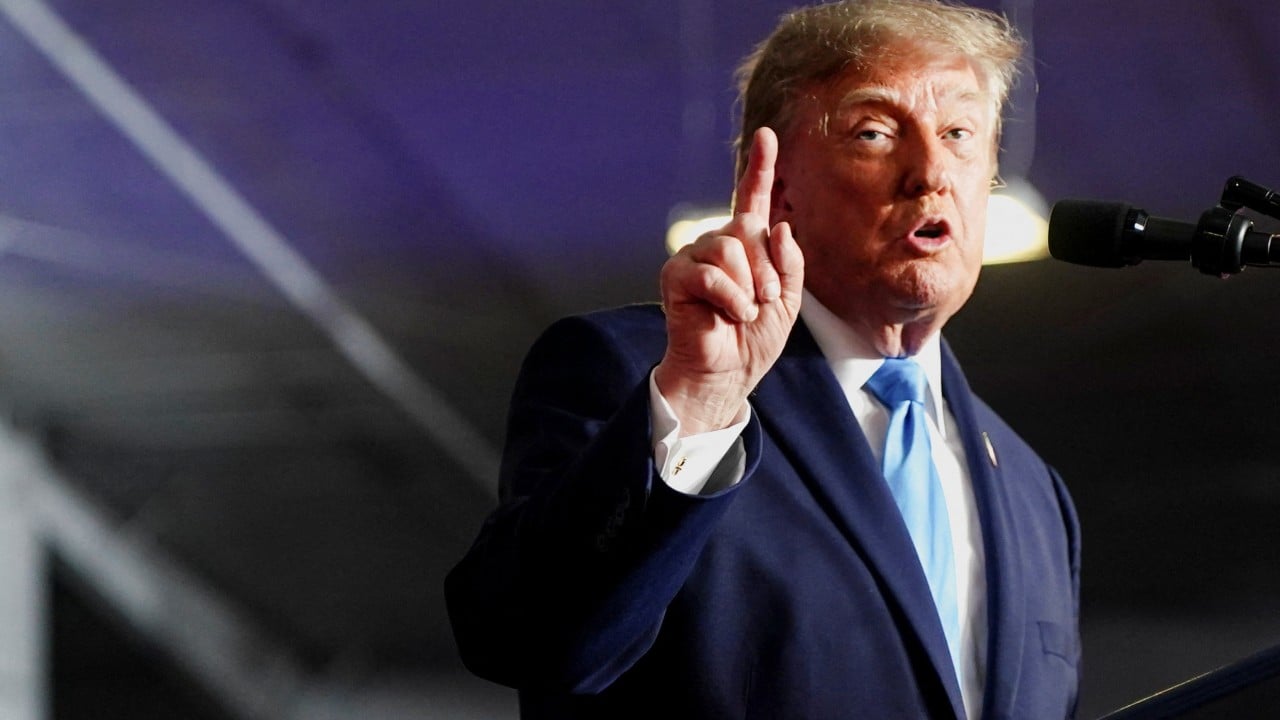
We look because we cannot look away. It is an old human reflex, honed in the shadows of ancient campfires, where tracking the slight stagger of a tribal elder meant knowing whether the community was secure or standing on the edge of a precipice. Today, that campfire is a glowing rectangle on a kitchen table, and the elder is a former president standing behind a mahogany podium, bathed in the harsh, flat light of cable news cameras.
The speech starts with a familiar cadence. The rhythm rolls out like distant thunder—the cadence of rallies that have echoed across airplane hangars and fairgrounds for a decade. But then the needle skips.
A sentence loops back on itself, tangling in a syntax of half-finished thoughts. A hand lifts, hovering mid-air for a beat too long, fingers curling in a manner that observers later describe, with clinical detachment, as a sign of physical frailty. In that single, unscripted second, the political atmosphere shifts. The policy debate evaporates. The room goes quiet, save for the steady hum of a teleprompter and the frantic tapping of keyboards in the press gallery.
We are watching age happen in real time. And it terrifies us.
To understand why a stuttered phrase or a shuffling gait from a public figure triggers an immediate national tremor, we have to look past the political scoreboard. We have to look into the mirror. Every culture obsesses over the physical decline of its leaders because that decline acts as a proxy for our own mortality. When the man at the top looks tired, when the broad shoulders seem to cave slightly under the invisible weight of history and biology, the security blanket of institutional continuity frays.
Consider what happens inside the average American living room during one of these broadcasts. A grandfather sits in a worn recliner, his own hands trembling slightly as he reaches for a glass of water. On the screen, a man who commands global attention makes a minor cognitive detour, mixing up a date or losing the thread of a geographic reference. The television commentators pounce, dissecting every micro-expression with the grim joy of forensic pathologists.
In that moment, the political becomes deeply, painfully personal. The viewer isn't just analyzing a candidate’s viability; they are confronting the universal tax exacted by time.
Public figures live in an eternal panopticon. Every public appearance is subjected to a level of scrutiny that would break an ordinary human being. We demand the energy of a twenty-year-old, the emotional armor of a stoic philosopher, and the strategic foresight of a grandmaster, all while expecting them to age backward on live television. When nature inevitably refuses to cooperate, the reaction is not grace, but a feeding frenzy.
The recent speculation surrounding Donald Trump’s speech patterns and physical presentation fits neatly into this well-worn media machinery. Experts—some credentialed, many simply trading on the currency of speculation—take to the airwaves to parse the mechanics of a slur or the slight listing of a posture. They talk about stamina, cognitive load, and the relentless pressure of a campaign schedule that would exhaust a man half his age.
Yet, reducing a human life to a diagnostic checklist misses the profound psychological undercurrent of the moment.
Speech is our primary bridge to one another. When that bridge wobbles, we feel isolated. For decades, Trump’s greatest political asset has been his voice—loud, unfiltered, rhythmic, and utterly dominant. It was an instrument designed to project absolute certainty in an uncertain world. Therefore, any crack in that instrument feels seismic. It is not merely a political vulnerability; it is a fracture in the illusion of invulnerability that all powerful leaders project to keep chaos at bay.
Step back from the cable news chyron for a moment. Imagine standing on a stage under forty overhead lights, the air thick with heat, talking continuously for ninety minutes without a script. The mind races ahead of the tongue. The body tires before the willpower does. Anyone who has ever delivered a eulogy, defended a dissertation, or led a high-stakes corporate board meeting knows the terrifying vertigo of losing your train of thought in front of an audience waiting for you to fail. Now multiply that by eighty million viewers, each armed with a slow-motion video editing tool.
The irony is thick. We claim to want authenticity in our leaders, yet we punish them mercilessly the second they show us what real human aging looks like beneath the spray tan and the tailored suits. We want titans of industry and politics to remain marble statues, forgetting that marble eventually cracks under its own weight.
When an expert points out a sign of physical strain, they are identifying a biological reality. But the public reaction reveals something darker about our collective psyche. We are impatient with vulnerability. We treat aging as a personal failure rather than a shared biological destination.
The speech eventually ends. The applause surges, loud and defiant, drowning out the murmurs of the critics. The cameras cut to commercial, offering a momentary reprieve from the collective anxiety. But the image lingers. A tired hand resting on a podium. A familiar voice catching on a complex sentence.
We turn off the television and look around our own homes, where the bills are piling up, joints ache with the changing weather, and time quietly marches forward, indifferent to our politics, our arguments, or our fears. The speech was about the future of a nation, but the silence that followed was about something much heavier. It was about the fragility of us all.