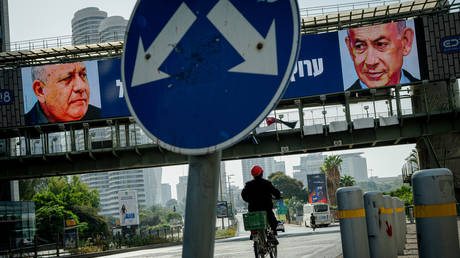
Even when an Israeli election damages Benjamin Netanyahu and strips away his parliamentary majority, the country rarely escapes the underlying political paralysis that has defined its modern governance. The core problem is not a single prime minister. It is a hyper-fragmented parliamentary system combined with deep demographic, religious, and ideological fractures that make stable governing coalitions nearly impossible to build—and even harder to keep alive.
For years, international coverage of Israeli politics has treated Netanyahu as the sole architect of the nation's recurring election cycles and legislative standoffs. That framing misses the structural reality on the ground in Jerusalem. Removing or weakening one veteran leader does not rewrite the electoral math of the Knesset, nor does it bridge the widening chasms between secular centrists, religious Zionists, ultra-Orthodox communities, and Arab citizens.
The Illusion of the Decisive Ballot
Voters go to the polls expecting a verdict. What they get instead is a math puzzle with missing pieces.
Under Israel's system of pure proportional representation, the entire country acts as a single electoral district. Any party that clears the 3.25 percent electoral threshold enters the 120-seat Knesset. Because no single party has ever won an outright majority of 61 seats in the history of the state, every government is a marriage of convenience negotiated behind closed doors after the ballots are counted.
When Netanyahu suffers a setback at the ballot box, the immediate assumption among outside observers is that the opposition has won a mandate to govern. In practice, the anti-Netanyahu camp is rarely a unified political movement. It is an ideological patchwork united almost exclusively by personal and political opposition to one man.
Consider what happens the morning after an election weakens Likud. A hypothetical opposition bloc might span center-left social democrats, hawkish secular nationalists, free-market centrists, and independent Arab parties. On paper, they hold enough seats to block Netanyahu from forming a coalition. In reality, they disagree on nearly every foundational question facing the state.
Where Coalitions Fractured Before They Even Start
- The Palestinian Question: Center-left factions favor diplomatic frameworks and territorial compromise, while right-wing opposition figures reject Palestinian statehood outright.
- Religion and State: Secular parties demand public transportation on Shabbat, civil marriage, and universal military conscription, directly clashing with religious partners needed to reach 61 seats.
- Economic Policy: Free-market liberals and state-interventionist progressives hold incompatible views on taxation, housing subsidies, and cost-of-living reforms.
- Judicial Authority: While opposition parties rally against efforts to weaken the Supreme Court, they remain divided over how much power the judiciary should wield over military and settlement policy.
Once the shared goal of sidelining Netanyahu is achieved, the glue holding that coalition together dissolves. Every legislative vote becomes an existential crisis. A single backbencher threatening to bolt can hold the entire government hostage over a local budget allocation or a cultural dispute.
How the Electoral Threshold Fuels Instability
The 3.25 percent threshold was originally raised to reduce the power of tiny fringe factions and encourage political consolidation. It had the opposite effect.
Instead of creating two or three broad, stable parties, the higher bar forced ideologically distinct groups into temporary technical alliances just to survive election day. The moment those alliances enter the Knesset, they fracture back into their constituent parts. Party leaders spend less time governing and more time managing internal mutinies.
This dynamic gives disproportionate leverage to small, single-issue parties. A faction with six or seven seats can demand critical cabinet ministries—such as Finance, Interior, or National Security—as the price of its loyalty. Bigger parties pay that price because the alternative is calling yet another snap election.
The result is a governing structure where peripheral agendas routinely dictate national policy. Broad national consensus gets sidelined in favor of narrow sectoral demands.
The Demographic Shift Nobody in Jerusalem Can Ignore
Beneath the daily tactical maneuvering in the Knesset lies a slow-moving demographic transformation that makes traditional political compromises increasingly difficult.
Israel's population is growing faster than almost any other developed nation, driven primarily by high birth rates in the ultra-Orthodox (Haredi) and religious Zionist sectors. Over the past several decades, these communities have shifted from the margins of Israeli politics to its decisive center of gravity.
For decades, ultra-Orthodox parties operated as pragmatic kingmakers. They were willing to sit in governments led by either the center-left Labor party or the center-right Likud, provided their core interests—state funding for religious schools and exemptions from mandatory military service—were protected.
That flexibility is largely gone. A combination of generational shifts within the Haredi community, mounting secular resentment over military draft exemptions, and years of aligned messaging from the right has locked ultra-Orthodox voters and politicians firmly into the right-wing religious bloc.
At the same time, the political center has hardened against automatic concessions on military service and public funding. When a crisis or war puts immense strain on the military reserves, the question of who bears the burden of national defense stops being an abstract constitutional debate. It becomes a visceral, kitchen-table issue for hundreds of thousands of secular and modern-Orthodox families.
No prime minister—whether Netanyahu or a centrist rival—can easily square that circle. Granting blanket draft exemptions alienates the secular middle class that powers the economy and fills the combat units. Enforcing universal conscription triggers immediate collapse of any coalition that relies on Haredi votes.
The Missing Role of Arab Citizens in Coalition Math
Any honest accounting of Israel's political gridlock has to confront the status of the country's Arab citizens, who make up roughly one-fifth of the population.
For more than seventy years, an unwritten rule governed Israeli politics: independent Arab parties were never included in ruling coalitions. While they voted in elections and held Knesset seats, their votes were functionally excluded from the math required to form a government.
When the United Arab List (Ra'am) broke that taboo in 2021 by joining a diverse, short-lived governing coalition, it briefly suggested a new political reality. Suddenly, a non-Netanyahu majority seemed viable without needing to win over hardline right-wing nationalists.
Yet that experiment quickly exposed the limits of fragile cross-communal alliances. Right-wing members of the coalition faced relentless accusations from the opposition that they were relying on anti-Zionist partners to stay in power. Simultaneously, Arab lawmakers faced intense pressure from their own constituents whenever security tensions flared in Jerusalem, the West Bank, or Gaza.
Without a stable consensus on how Arab parties participate in national governance, the 120-seat Knesset effectively operates as a 110-seat legislature for coalition-building purposes. Reaching 61 seats out of 110 requires an almost impossible level of ideological uniformity among the remaining Jewish-majority parties.
Why Voters Punish Leaders Without Changing the System
Israeli voters are not blind to this dysfunction. Public trust in political institutions, the Knesset, and party leaders has suffered sustained erosion over years of repeated elections and stalled budgets.
Yet voter behavior consistently reinforces the very stalemate the public despises. In an environment defined by deep identity politics and persistent security anxieties, ballots are cast defensively. Voters rarely switch sides across the main ideological divide. Instead, they shuffle their votes among rival parties within the same camp.
A voter disillusioned with Netanyahu's leadership or legal troubles does not automatically migrate to a center-left party. They are far more likely to move to a rival right-wing faction that promises tougher security policies or cleaner governance without abandoning core nationalist principles.
Similarly, center-left voters bounce between different centrist generals and media personalities, searching for a charismatic figure capable of unseating Likud. Each new party promises to heal national divisions and restore functional government. Within two or three election cycles, most of those insurgent parties either collapse or merge into the existing stalemate.
The Structural Reforms That Never Happen
Political scientists and constitutional scholars in Israel have spent decades drafting blueprints to fix the system. None of them gain traction because the people required to pass the reforms are the very politicians who benefit from the current rules.
Proposed Fixes and Why They Stall
- Raising the Electoral Threshold Further: Moving the threshold to 4 or 5 percent would eliminate micro-factions and force broader party mergers. Small religious and ideological parties immediately veto any such proposal as an existential threat to their survival.
- Direct Election of the Prime Minister: Israel actually tried this in the 1990s. Voters cast two ballots—one for prime minister and one for a party list. Instead of strengthening the executive, it encouraged voters to split their tickets, weakening major parties and empowering small factions even further before the system was scrapped.
- Constitutional Term Limits and Constructive Votes of No Confidence: Making it harder to topple a sitting government unless an alternative majority is already lined up would buy prime ministers time to govern. Opposition leaders routinely block these measures whenever they smell blood in the water.
- Regional Representation: Shifting from a single national district to multi-member regional districts would force lawmakers to answer to local constituents rather than party bosses. Party leaders fiercely resist surrendering control over their candidate lists.
Every time a new coalition takes office, structural reform sits near the bottom of its priority list. Immediate survival always takes precedence over long-term institutional repair.
What Happens When Governance Stalls
Prolonged political gridlock carries tangible costs that extend far beyond parliamentary drama. When governments operate in perpetual campaign mode, long-term policy planning grinds to a halt.
Multi-year infrastructure projects, educational overhauls, healthcare investments, and housing initiatives require sustained ministerial focus and predictable budgets. Instead, ministries are frequently treated as short-term political spoils. Ministers rotate out every year or two, bringing in new advisors, freezing ongoing initiatives, and redirecting funds toward their specific voter base.
The civil service—historically a stabilizing force capable of keeping the state running during political transitions—increasingly finds itself caught in partisan crossfire. Disputes over senior appointments, legal advisors, and regulatory oversight consume bandwidth that should be spent addressing inflation, productivity gaps, and regional security threats.
Abroad, diplomatic partners struggle to read Israel's long-term commitments. Allies in Washington, Europe, and the Middle East recognize that agreements struck with a fragile Israeli cabinet can unravel overnight if a single coalition partner walks out over an unrelated domestic dispute.
Beyond the Netanyahu Era
Political eras eventually end. Whether through electoral defeat, legal outcomes, or generational turnover, Benjamin Netanyahu's decades-long dominance over Israeli public life will conclude.
When that day arrives, the immediate celebration among his critics—and the mourning among his supporters—will obscure a stubborn truth. The disappearance of a polarizing leader will remove a major source of personal friction, but it will not alter the math of the Knesset.
The successor who steps into the prime minister's office will inherit the exact same fractured electorate, the same unresolved clash between religious law and secular democracy, the same demographic pressures on the military and the economy, and the same proportional representation system that turns every parliamentary majority into a temporary truce. Until Israelis overhaul the mechanics of how they translate votes into governing power, changing the face at the top will only change the style of the stalemate.