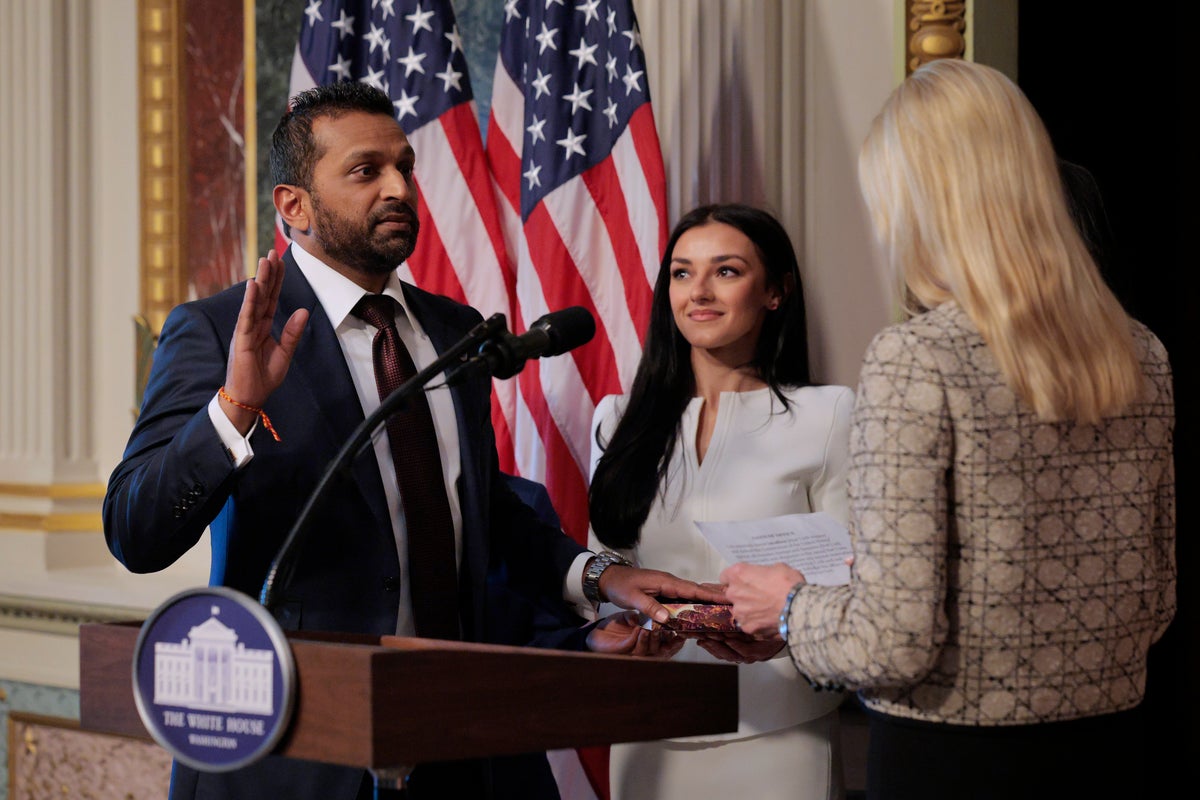
The air in a newsroom during a breaking investigation isn't filled with the sound of frantic typing. It is filled with the sound of silence. It is the heavy, electric quiet of a reporter staring at a screen, weighing the cost of a name. When Adam Entous, then a veteran investigative reporter for the New York Times, began pulling on a thread involving Kash Patel, he likely knew he was stepping into a storm. He probably didn't realize the storm was looking back at him.
Power has a peculiar way of reacting when it feels exposed. It doesn't always shout. Sometimes, it just watches.
The core of the matter seems mundane on the surface—a dispute over travel expenses and the use of government resources. Patel, a high-ranking official in the Trump administration and a fiercely loyal aide, was the subject of Entous’s scrutiny. Specifically, the reporter was looking into allegations that Patel had used government funds to facilitate travel for his girlfriend. In the grand theater of Washington scandals, it sounded like a bit player's error. But in the world of federal intelligence and national security, every dollar and every flight carries the weight of public trust.
Then the machinery of the state began to grind in a different direction.
According to recent reports, the FBI initiated an investigation into Entous himself. The justification was the "unauthorized disclosure of classified information." It is a phrase that sounds clinical, almost noble. It suggests the protection of the realm. Yet, in the hands of those being investigated, that same phrase can become a scalpel used to cut out the tongue of the press.
The Knock That Never Comes
Journalism is often romanticized as a series of clandestine meetings in parking garages. The reality is far lonelier. It is hours of cross-referencing spreadsheets and verifying dates. When a reporter discovers that a public official might be blurring the lines between the taxpayer's wallet and their private life, they aren't just looking for a "gotcha" moment. They are acting as the final, fragile line of defense for a system that assumes everyone follows the rules.
But what happens when the rules are used as a weapon?
Imagine the psychological weight of knowing the FBI is tracing your digital footprints because you asked a question. It isn't just about the threat of a jail cell. It’s the erosion of the environment. If a reporter knows that looking into a powerful man’s travel logs will trigger a counter-investigation by the most powerful law enforcement agency on earth, the next reporter might choose a different topic. They might look at the weather. They might write about a charity gala.
The silence grows.
The investigation into Entous wasn't just an isolated event; it was a signal. By framing a reporter’s inquiry as a potential leak of classified data, the state effectively flips the script. The investigator becomes the suspect. The watchdog becomes the prey. This isn't a hypothetical slide into authoritarianism. It is a documented tactical shift where the classification system is repurposed as a shield for personal conduct.
The Shadow of the Internal Revenue
To understand why this matters, we have to look at Kash Patel’s role in the ecosystem of the previous administration. He wasn't just an aide; he was a bridge between the political wing and the intelligence community. He understood how the gears turned. When Entous began asking about the specifics of Patel’s use of resources, he was poking at a nerve.
The government’s defense of such counter-probes usually centers on "national security." They argue that if a reporter knows about a secret flight or a classified budget line, there must be a "leaker" inside the building. To find the leaker, they must squeeze the reporter. It is a logical loop that turns the First Amendment into a secondary concern.
But the "classified information" in question here didn't involve troop movements or nuclear codes. It involved the intersection of a public office and a private relationship. When the FBI is directed—or feels pressured—to hunt down the sources of a story about a staffer’s girlfriend, the agency ceases to be a guardian of the law and starts to look like a private security firm for the elite.
Consider the ripple effect. Every source within the Department of Justice or the Pentagon saw what happened to Entous. They saw the subpoenas. They saw the scrutiny. They learned that the price of transparency is a life under the microscope.
The Mechanics of the Chill
We often talk about "freedom of the press" as if it is a statue—solid, immovable, and permanent. It isn't. It is more like a fire. It requires constant oxygen.
The use of the FBI to look into a journalist creates a vacuum. It’s called "the chilling effect," but that term is too cold, too academic. It is actually a form of institutional gaslighting. It tells the public that the person trying to tell them the truth is actually a criminal. It tells the reporter that their career, their reputation, and their freedom are forfeit if they don't look away.
Entous was a seasoned pro. He had the backing of the New York Times, a legal team, and a pedigree of high-stakes reporting. But what about the local reporter in a small town looking into a sheriff's department? What about the freelancer without a corporate shield? If the FBI can be mobilized against a Times reporter over a story about travel expenses, the message to everyone else is clear:
Stay in your lane.
The irony is that the investigation into Entous ultimately revealed more about the state of our institutions than the original story about Patel's travel ever could have. It revealed a vulnerability in our democracy. It showed that the barrier between political grievance and federal law enforcement is paper-thin.
The Invisible Stakes
Why should a person working a 9-to-5 job care about a reporter’s phone records?
Because the reporter’s phone is the only thing that keeps the 9-to-5 worker from being lied to with impunity. When we allow the government to investigate the people who investigate the government, we are essentially giving the tiger the keys to its own cage. We are agreeing to live in a world where "truth" is whatever the person with the most security clearances says it is.
The stakes aren't just about Adam Entous or Kash Patel. They are about the precedent. If this behavior is normalized—if we accept that reporting on the misconduct of a powerful official is a valid reason for a federal probe—then we have moved the goalposts of what it means to be a free society.
We are currently living through an era where the word "leak" is treated as a synonym for "treason," and "journalist" is often treated as a synonym for "enemy." But a leak is often just the truth escaping a room where it was never supposed to be kept. And a journalist is just the person standing outside that room with a notebook.
The investigation into Entous eventually fizzled out. No charges were brought. The "national security threat" evaporated as soon as the headlines moved on. But the damage wasn't meant to be a conviction. The damage was the investigation itself. The process was the punishment.
Somewhere right now, another reporter is looking at a document. They see a name they recognize. They see a discrepancy in a budget. They see a misuse of power. They reach for their phone to call a source, but then they stop. They remember the name Entous. They remember the FBI files. They remember the silence.
They put the phone down.
That is how a democracy dies—not with a bang, but with a phone that doesn't ring.


