When Prime Minister Narendra Modi traveled to Washington to pitch India as the ultimate democratic alternative to Chinese manufacturing, the calculation seemed simple enough. Western boardrooms were desperate to de-risk from Beijing, and New Delhi was eager to absorb billions in relocated capital.
It did not take long for that calculation to collide with the reality of global trade.
Walk through the industrial corridors of Sriperumbudur in Tamil Nadu or the electronics clusters outside Bengaluru, and you will not find a clean decoupling from China. You will find factories assembling foreign components behind newly erected security gates, heavily dependent on sub-assemblies shipped directly from Shenzhen, Ningbo, and Guangzhou.
The dirty secret of the "China Plus One" strategy is that the "Plus One" is mostly an illusion. India did not replace Chinese manufacturing; it merely became a late-stage packaging facility for Chinese components, funded by Western subsidies and squeezed by American protectionism. Now, as Washington deploys aggressive tariffs and transactional diplomacy against allies and adversaries alike, India finds itself caught in an unsustainable geopolitical vise.
The Flawed Premise of the Great Decoupling
For years, policymakers in New Delhi convinced themselves that geopolitical friction between Washington and Beijing would automatically redound to India's benefit. The theory held that as the United States erected tariff walls against Chinese goods, multinational corporations would move their factory floors to Indian states offering cheap labor and tax incentives.
It was a comforting narrative. It was also economically illiterate.
Modern manufacturing is not a collection of isolated assembly lines that can be picked up and moved across borders like furniture. It is a deeply interconnected web of specialized suppliers, raw material refiners, toolmakers, and logistics infrastructure that China spent four decades building. When an iPhone or a solar panel is "Made in India," the vast majority of its value—from microprocessors and printed circuit boards to specialized display glass—still originates in Chinese industrial zones.
India's trade numbers tell the story with brutal clarity. Even as New Delhi implemented strict scrutiny on Chinese investment following the 2020 Himalayan border clashes, bilateral trade did not shrink. It surged. China's exports to India reached nearly $80 billion in just the first half of 2026, widening India's trade deficit with Beijing to over $67 billion in six months.
India is buying more intermediate Chinese goods than ever before simply to keep its own factories running.
Washington Chooses Tariffs Over Partners
While Indian industrialists struggled with their dependency on Chinese supply chains, Washington fundamentally altered the terms of engagement.
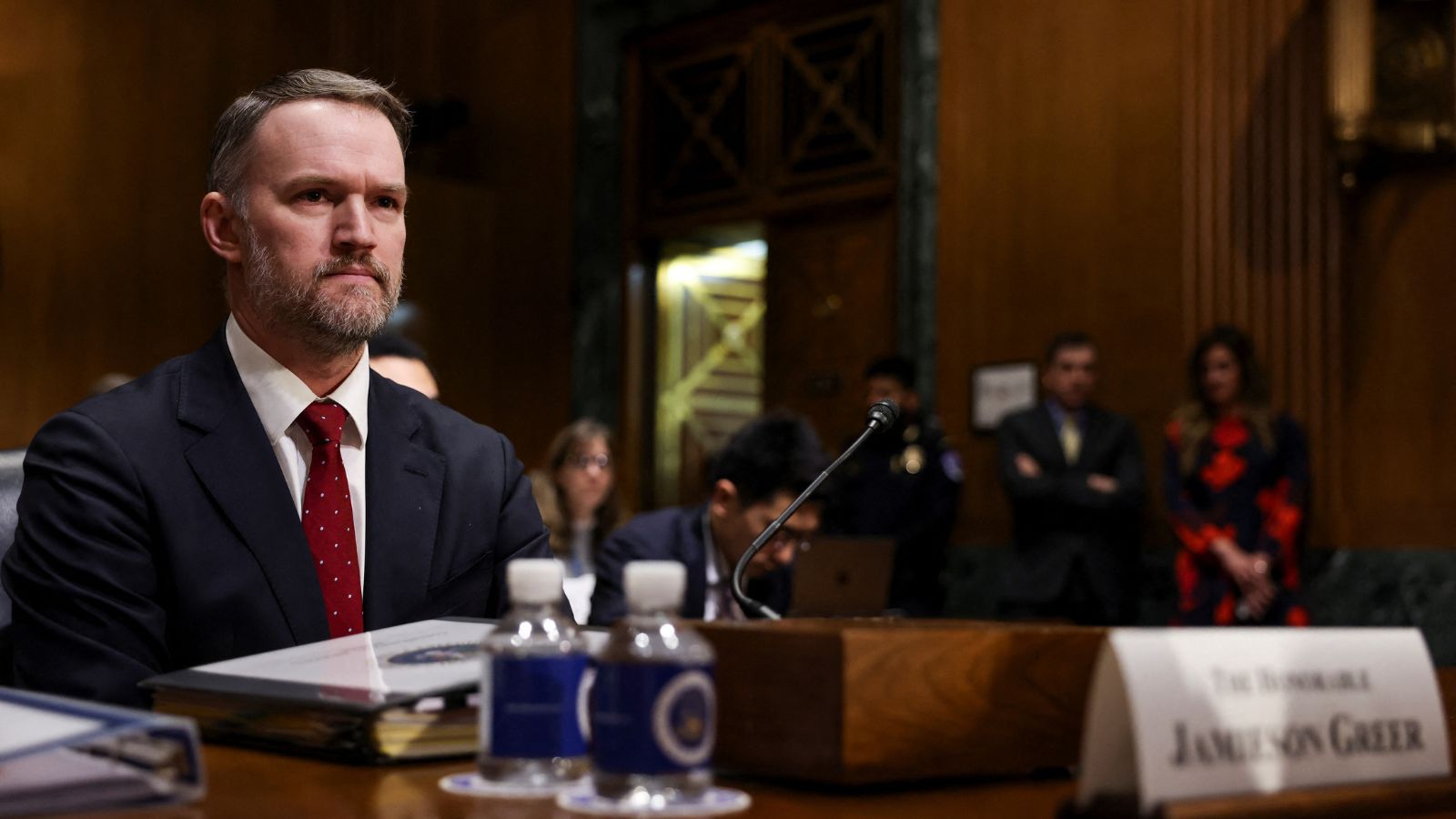
Any expectation that the United States would treat India as a favored trade partner without demanding total strategic alignment evaporated under the weight of transactional American trade policy. Washington has repeatedly demonstrated that its trade enforcement tools do not distinguish between strategic partners and systemic rivals when domestic economic goals are on the line.
The pressure on New Delhi has mounted on multiple fronts. Threats of elevated import duties over India’s continued purchases of discounted Russian crude oil demonstrated how quickly trade access can be converted into political coercion. American negotiators pressed for drastic reductions in Indian agricultural and industrial tariffs while reserving the right to impose punitive measures whenever bilateral trade deficits expanded.
Indian exporters who spent years retooling their businesses to sell into the American market now find themselves exposed to sudden policy swings. The assumption that Washington would underwrite India's industrial rise as a counterweight to Beijing has met a hard limit: American domestic politics no longer tolerates trade deficits, no matter how strategically useful the partner might be.
The Quiet Retreat to Chinese Capital
Faced with mounting trade friction in the West and structural deficits in the East, voices within Prime Minister Modi’s own advisory apparatus are pushing for a radical pivot.
Advisers within the government are now openly arguing that India must ease its post-2020 restrictions on Chinese foreign direct investment. The logic is simple and cold: if India wants to build actual manufacturing capability in labor-intensive sectors like textiles, footwear, electronics, and auto components, it needs the technology, machinery, and capital that only Chinese firms currently possess at scale.
This realization has forced New Delhi into a series of quiet concessions. Business visas for Chinese technicians have been quietly streamlined to prevent assembly lines in southern India from stalling. Selective clearances for joint ventures involving Chinese technology partners are moving forward again. Senior economic advisers are urging the government to reconsider its rejection of regional trading blocks like the Regional Comprehensive Economic Partnership (RCEP).
This is not a sudden embrace of Beijing. Strategic mistrust between the two Asian giants remains profound, anchored by an unresolved border and competing ambitions across South Asia. It is an admission of economic reality.
The High Cost of Playing Both Sides
India’s attempt to maintain strategic autonomy while relying on Chinese inputs and American market access was always a delicate tightrope walk. Now, the wire is snapping.
Washington views India's economic re-engagement with Chinese capital with deep suspicion, raising questions about whether products finished in India using Chinese supply chains should enjoy preferential tariff rates. Beijing, meanwhile, understands its structural leverage over Indian manufacturing and uses export restrictions on critical components to remind New Delhi who holds the keys to its industrial growth.
The street-level consequence for Indian industry is uncertainty. Small and medium manufacturers cannot make multi-decade capital investments when trade policy with both superpowers changes on a whim.
India cannot afford to be an assembly shop for one superpower and a strategic vassal for another. Unless New Delhi builds genuine domestic industrial capacity—unsubsidized, technically independent, and capable of processing its own raw materials—it will remain perpetually vulnerable to every policy tremor emanating from Washington and Beijing.