The Price of Friction
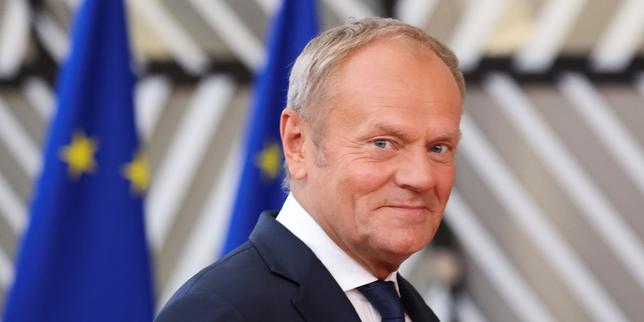
When Polish Prime Minister Donald Tusk openly labeled the diplomatic fractures between Warsaw and Kyiv a "strategic mistake," he was not merely offering a mild reprimand. He was acknowledging a dangerous reality. The growing friction between Poland and Ukraine directly threatens the European coalition against Russian aggression, offering Moscow a major strategic victory without firing a single shot. This rift, driven by domestic agricultural disputes, transport strikes, and deep-seated historical grievances, exposes the fragile underbelly of Western solidarity. It proves that economic self-interest can rapidly derail wartime alliances.
The alliance that once defined the early days of the 2022 invasion is fraying under the weight of political survival. Warsaw’s unconditional support has shifted toward cold protectionism. Meanwhile, Kyiv’s gratitude has evolved into open frustration. This is no longer a temporary diplomatic spat. It is a fundamental realignment of regional priorities that benefits only the Kremlin.
Anatomy of an Economic Collision
The primary driver of this deterioration is not a lack of shared security goals. It is a clash of economic survival. Following Russia's blockade of Ukraine’s Black Sea ports, the European Union lifted tariffs and quotas on Ukrainian agricultural exports to keep the country’s economy alive. This decision transformed Poland from a transit route into a destination.
Cheap Ukrainian grain flooded the Polish market, undercutting local farmers who operate under strict EU regulations and higher production costs. For Polish politicians, the math was brutal. The agrarian vote is a decisive factor in Polish elections. No government in Warsaw can afford to alienate the farming lobby, regardless of their sympathy for the Ukrainian cause.
+---------------------------------------------------------------+
|                 The Agricultural Gridlock                     |
+-------------------------------+-------------------------------+
| Polish Grievances             | Ukrainian Realities           |
+-------------------------------+-------------------------------+
| • Depressed local grain prices| • Critical need for export    |
| • Strict EU compliance costs  |   revenues to fund the war    |
| • Border blockades by truckers| • Black Sea routes unstable   |
+-------------------------------+-------------------------------+
The resulting border blockades by Polish truckers and farmers did more than halt commerce. They delayed dual-use military equipment, ambulances, and humanitarian aid. Kyiv viewed this as a stab in the back during an existential war. Warsaw saw it as a necessary defense of national sovereignty. The core issue is that both arguments are entirely valid within their own frameworks, making a clean compromise nearly impossible.
The Illusion of Unity
Western analysts frequently treat the European coalition as a monolith driven by shared democratic values. This is a naive reading of history and realpolitik. Nations do not act out of pure altruism. They act out of national interest.
Poland’s early, aggressive support for Ukraine was rooted in the "Giedroyc Doctrine," a long-standing geopolitical theory holding that an independent Ukraine is vital for Poland’s security against Russian imperialism. That security imperative has not changed. The immediate political cost of domestic economic pain, however, has begun to outweigh the long-term abstract threat in the minds of voters.
The Weaponization of History
Beneath the grain disputes lie unhealed historical wounds that both sides have weaponized for domestic political gain. The Volhynia massacres of World War II, where Ukrainian nationalists killed tens of thousands of Poles, remain a deeply sensitive topic in Polish society.
- Warsaw demands full exhumation rights and official apologies as a condition for long-term integration.
- Kyiv views these demands during a hot war as an unfair exertion of leverage.
By allowing historical trauma to dictate current security policy, both leaderships have trapped themselves in a cycle of mutual recrimination. It is a dangerous game. Popular support for refugees and military funding in Poland is dropping, not because Poles support Moscow, but because they are growing tired of what they perceive as Kyiv's lack of deference.
The Strategic Exploitation by Moscow
Russia does not need to invent divisions within the West when the West manufactures them so efficiently on its own. Russian intelligence networks have actively amplified the Polish-Ukrainian rift through targeted disinformation campaigns, particularly on social media.
These campaigns exploit legitimate grievances. They magnify stories of Ukrainian corruption or depict Polish farmers as heartless saboteurs. The objective is simple. Moscow wants to convince Western publics that supporting Ukraine is a financial black hole that actively harms domestic workers. When Polish politicians use fiery rhetoric to defend local industries, they inadvertently validate the exact narrative Russian state media pushes daily.
The strategic consequences extend beyond the bilateral relationship. Poland has long acted as Ukraine’s primary advocate within NATO and the European Union. If Warsaw slows down its diplomatic pushing or complicates Ukraine's EU accession talks over agricultural chapters, the entire integration process stalls. This creates a chilling effect across other European capitals that are already looking for excuses to scale back their financial commitments to Kyiv.
Infrastructure as a Weapon
The crisis has also revealed the profound inadequacy of Central Europe’s logistical infrastructure. The concept of "Solidarity Lanes" sounded excellent in Brussels press releases, but the reality on the ground was bottlenecked rail networks, incompatible track gauges, and bureaucratic customs delays at the border.
Poland’s rail infrastructure was never designed to handle the sheer volume of commodities traditionally moved through deep-water maritime ports like Odesa. When the grain piled up in Polish silos instead of moving to ports in Gdańsk or Gdynia, the economic collapse of local markets became inevitable. The failure to rapidly build dedicated, sealed transit corridors that bypass local markets entirely is a collective policy failure of both Warsaw and the European Commission.
[Ukrainian Farms] ---> [Overland Border Bottlenecks] ---> [Polish Silos / Local Market Glut]
                                                                  |
                                                                  v
                                                     [Depressed Prices & Local Protests]
This structural failure turned an administrative challenge into a political crisis. Instead of treating the grain influx as a logistics problem to be solved with EU funding and infrastructure investment, it was treated as a political football.
The Dangerous Path of Diplomatic Spite
The current trajectory is unsustainable for both nations. Ukraine cannot afford to alienate its most vital logistical gateway to the West. Virtually all Western military aid, heavy weaponry, and foreign dignitaries pass through Polish territory. If the border remains volatile or subject to political blockades, Ukraine’s military sustainability degrades.
Conversely, Poland cannot afford a defeated or fractured Ukraine. If Ukraine falls or is forced into a humiliating capitulation, the Russian military machine advances directly to Poland’s eastern border. The financial cost of defending a direct frontier with an aggressive, mobilized Russia would dwarf any economic losses currently suffered by Polish farmers.
The rhetoric coming out of both capitals suggests that short-term electoral logic is overriding long-term existential math. Kyiv's public rhetoric has often lacked diplomatic tact, sometimes alienating its closest allies by accusing them of playing into Russia's hands on international stages like the UN. This approach backfires predictably against a Polish government that must project strength to its conservative base.
The strategic mistake Donald Tusk identified is already yielding consequences. Trust, once broken in international relations, is incredibly difficult to reconstruct. The current friction serves as a stark warning that the greatest threat to Western alignment is not always external aggression, but the internal friction of domestic politics left unchecked.