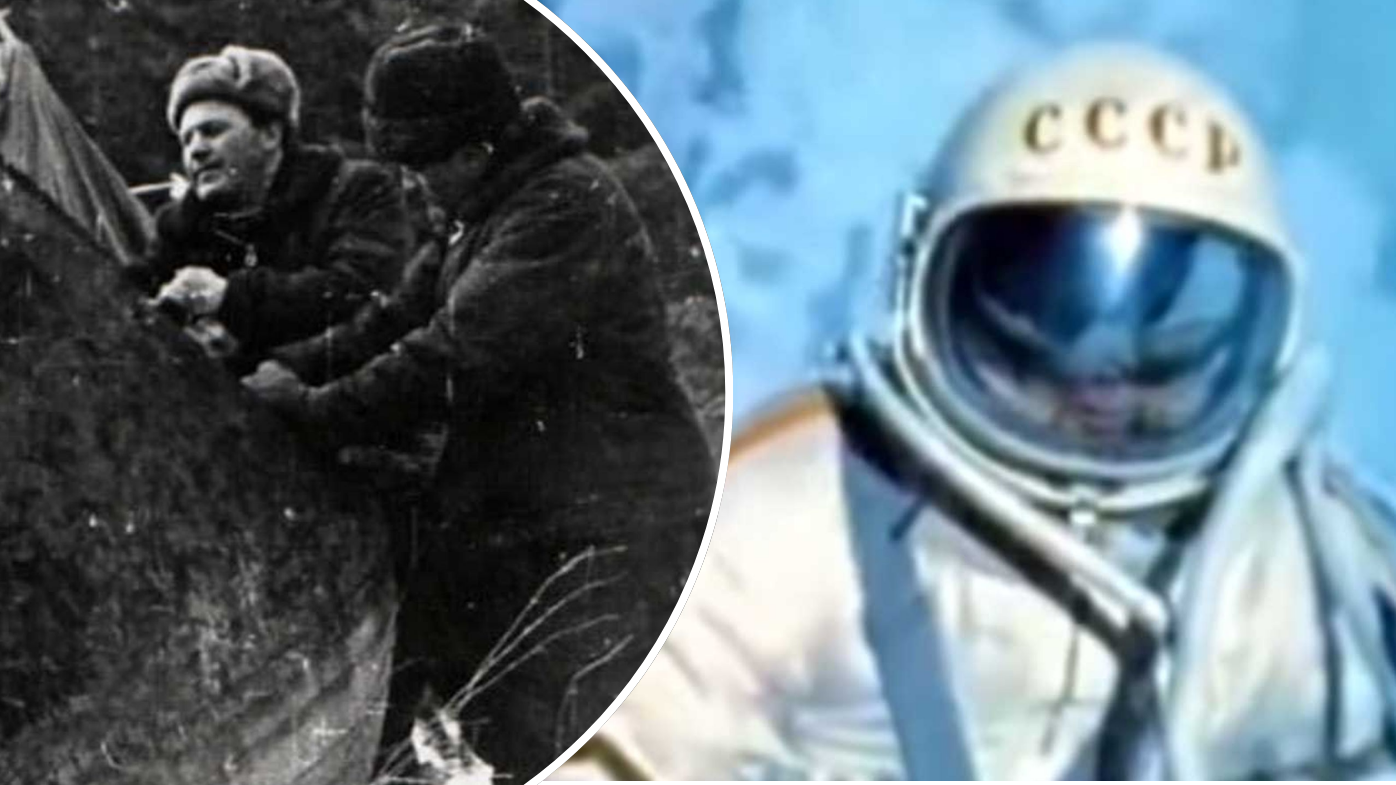
The survival of Alexei Leonov and Pavel Belyayev following the Voskhod 2 mission is frequently framed as a triumph of human spirit over nature, yet this perspective obscures the specific mechanical failures and environmental variables that dictated their 48-hour ordeal in the Perm region. In reality, the event serves as a definitive case study in cascading system failure and the breakdown of recovery logistics within high-stakes aerospace operations. When a spacecraft misses its primary landing zone by 2,000 kilometers, the mission transitions from a controlled technical sequence into a raw exercise in energy management and thermal regulation.
The Genesis of the 2,000 Kilometer Deviation
The deviation from the planned landing site in the Kazakhstan Steppe was not a singular error but a result of a primary system failure leading to an unavoidable manual override. During the 17th orbit, the automated landing system (the "Globus" unit) failed to orient the spacecraft for retrofire. This forced a manual landing procedure, which introduced two critical variables that the automated system was designed to minimize: temporal latency and center-of-gravity shifts.
The Orientation Bottleneck
Belyayev had to manually orient the craft while strapped into a cabin designed for 1960s-era ergonomics, which were not optimized for rapid manual intervention. The time required to unbuckle, orient the craft using the Vzor optical sight, and re-strap for the high-G descent caused a delay in the retrofire sequence. In orbital mechanics, a delay of mere seconds translates into hundreds of kilometers of ground-track error.
Mechanical Interference and Parachute Deployment
The second failure point occurred during the separation of the equipment module. The umbilical cable failed to sever cleanly, causing the two modules to remain tethered as they entered the atmosphere. This created an uncontrolled aerodynamic "tumble" that persisted until the cable burned through. The resulting ballistic reentry profile subjected the crew to G-loads exceeding $10g$, significantly higher than the $3g$ to $4g$ of a standard lifting reentry. This mechanical chaos ensured that when the parachutes finally deployed, the craft was over the dense taiga of the Ural Mountains rather than the flat plains of the recovery zone.
The Three Pillars of Taiga Survival Strategy
Survival in a sub-zero, deep-snow environment like the Perm forest is governed by three non-negotiable constraints: thermal insulation, caloric preservation, and signal visibility. The Voskhod 2 crew faced these constraints with equipment designed for a different environment altogether.
1. Thermal Insulation vs. Physiological Stress
The most immediate threat was not the wolves or bears popularized in later accounts, but the physics of heat transfer. The astronauts were soaked in sweat inside their EVA suits due to the exertion of the spacewalk and the high-stress reentry. Once the cabin heaters failed post-landing, this moisture became a primary vector for heat loss through conduction.
- The Insulation Paradox: The EVA suits were designed to reflect solar radiation in a vacuum, not to provide lofted insulation against a $-30^{\circ}\text{C}$ terrestrial environment.
- Ad Hoc Modification: Leonov and Belyayev were forced to strip, wring out their undergarments, and pour the accumulated sweat out of their boots to prevent rapid-onset hypothermia. They utilized the spacecraft's interior lining—a combination of felt and aluminum foil—to create a makeshift thermal barrier.
2. Caloric Preservation and Energy Management
In deep snow (reportedly up to two meters deep), the metabolic cost of movement is exponential. The crew correctly identified that leaving the immediate vicinity of the capsule was a "negative-sum game." The capsule served as:
- A windbreak: Essential for maintaining a micro-climate.
- A visual marker: Search planes could spot the charred hull more easily than individual humans.
- A tool shed: The survival kit (NAZ) contained a Makarov pistol, matches, and high-calorie food rations.
3. Signal Visibility in High-Density Canopy
The Perm forest presents a "canopy blackout" effect. Even when Soviet rescue aircraft (Il-14s and An-2s) flew over the landing site, the density of the trees made visual confirmation of the crew nearly impossible. The crew used flares, but the sulfurous smoke was frequently dispersed by high-altitude winds before it could penetrate the upper canopy layers. It was only when a search pilot spotted the red-and-white striped parachute draped over the trees that the coordinates were locked.
The Logistics of Extraction: Why Landing Was Not Enough
The discovery of the crew did not mean their rescue. The "Rescue Bottleneck" in the Ural Mountains was a result of terrain that prohibited helicopter landings. The Mi-4 helicopters of the era lacked the hoist capacity and stability to extract two men and their gear through a dense forest in high winds.
The Staged Extraction Model
The Soviet recovery team was forced to implement a staged approach that is still studied in search and rescue (SAR) circles:
- Supply Drops: Dropping warm clothes, food, and—famously—bottles of cognac to stabilize the crew’s physiological and psychological state.
- Ground Insertion: Paramedics and rescue technicians parachuted into the area, but because of the snow depth, they could not reach the capsule quickly.
- The Extraction Path: Ultimately, the crew had to spend a second night in the woods while a rescue party on skis cleared a landing pad several kilometers away.
The Physics of the "Snow Slog"
Walking through two meters of powder snow without snowshoes is physically impossible for sustained periods. The rescue party had to create a "packed track" for the astronauts to follow. This illustrates the Last Mile Problem in aerospace recovery: you can travel 500,000 kilometers through space with precision, but the final 5 kilometers of terrestrial forest can be the most dangerous segment of the entire journey.
Systematic Implications for Modern Aerospace
The Voskhod 2 mission exposed the vulnerability of "lean" survival kits. Modern Soyuz and Dragon capsules have incorporated redundancies directly informed by the Belyayev-Leonov experience.
Redundancy Failures and Manual Overrides
The incident proved that a manual override is only as effective as the pilot's ability to execute it under extreme physical duress. It led to the redesign of cockpit controls to allow for "one-handed" or "strapped-in" orientation, ensuring that if an automated system fails, the human transition does not introduce a massive geographic error.
The Survival Kit Evolution
Following 1965, Soviet survival kits (the NAZ) were expanded to include more robust multi-purpose tools, specifically the TP-82 three-barreled pistol (capable of firing flares, shotgun shells, and rifle rounds) and better portable radio transmitters with dedicated satellite frequencies.
Strategic Takeaway for Remote Operations
The primary lesson of the Perm landing is the Decoupling of Discovery and Recovery. In any remote operation—whether in the Arctic, the deep sea, or space—reaching the target is only 50% of the mission success criteria. The remaining 50% depends on the ability to stabilize the environment around the target until a heavy-lift extraction can be facilitated.
Engineers must account for the "Worst Case Terrain" (WCT) variable. If a craft can land anywhere on Earth, the survival gear must be rated for the most extreme 5% of that surface area (taiga, open ocean, or desert), not the median 95%. The survival of the Voskhod 2 crew was a result of their ability to adapt the materials of their high-tech prison (the capsule) into a low-tech shelter, bridging the gap between aerospace engineering and primitive survivalism.
Operational success in future lunar or Martian returns requires a move away from "hope-based" recovery towards "ruggedized autonomy," where the crew can sustain life for 72+ hours regardless of the landing coordinates. This necessitates a shift in mass-allocation: prioritizing survival gear weight over secondary scientific instruments for any mission involving a human-piloted reentry.