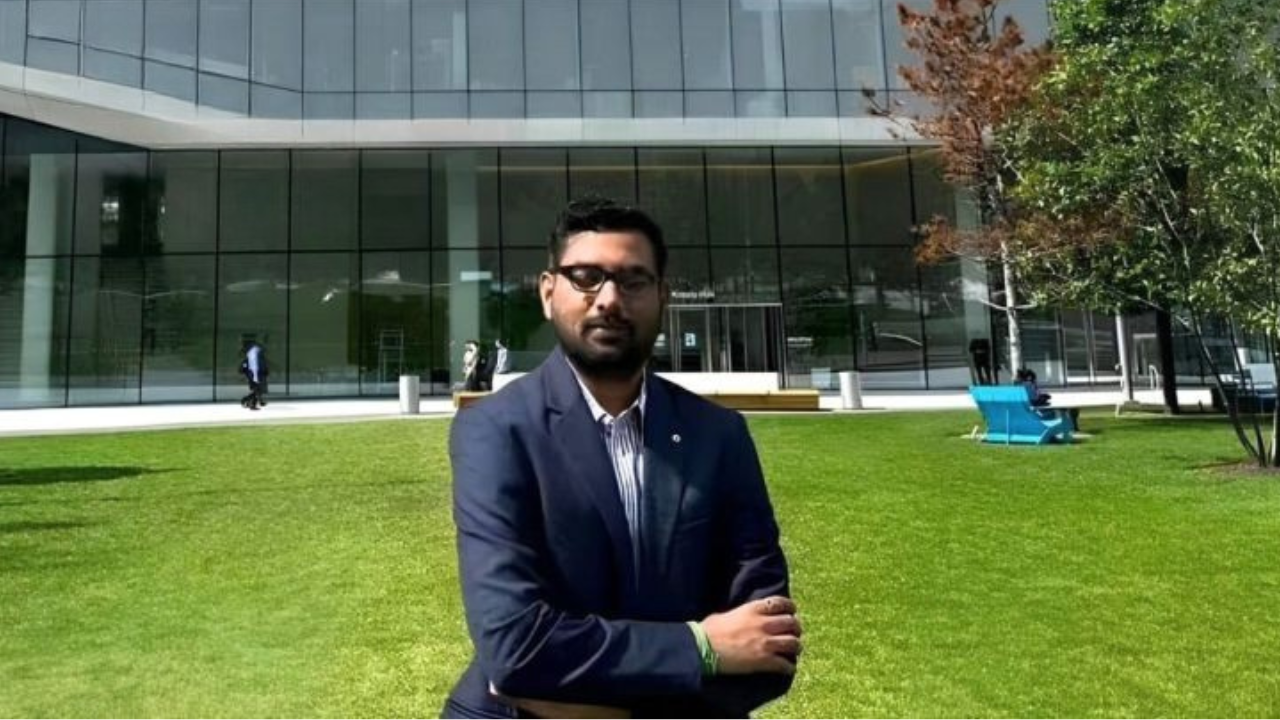
The modern H-1B visa apparatus operates as a high-friction mechanism that treats human capital as a fungible commodity while ignoring the externalities of its own processing latency. When a blind Indian student is trapped in a bureaucratic loop, missing a significant family milestone like his sister’s wedding, it is not an isolated administrative error; it is a manifestation of a systemic "friction tax" that devalues the social and psychological stability required for long-term economic productivity. The United States immigration system lacks a contingency framework for high-vulnerability applicants, creating a binary environment where specialized talent is either legally present or effectively captive.
The Triad of Immigration Volatility
To understand why a viral human-interest story reflects a broader economic dysfunction, one must analyze the three structural pillars that define the current H-1B landscape:
- The Administrative Processing Black Box (Section 221(g)): Unlike standard adjudication, "administrative processing" serves as an indefinite holding pattern. It lacks a statutory deadline, preventing applicants from forecasting their return to work or their ability to attend to personal crises. For an individual with a disability, the loss of a predictable timeline is not merely an inconvenience; it disrupts the specialized support systems and accessibility infrastructures they have cultivated in their host country.
- The Single-Point Failure of Travel: The H-1B status is often conflated with the H-1B visa stamp. While the status grants the right to work, the stamp—acquired only at an overseas consulate—is the "key" to the border. This creates a trap where an employee can be legally authorized to work in the U.S. for years but becomes a legal exile the moment they depart for a family emergency, pending a manual, often subjective, review by a consular officer.
- The Information Asymmetry Gap: Consular decisions are protected by the doctrine of consular non-reviewability. There is no formal appellate body to challenge a delay or a denial based on factual errors regarding an applicant's background or physical requirements. This lack of transparency forces applicants to rely on social media amplification—going "viral"—as a desperate substitute for a functional legal appeal process.
The Cost Function of Human Capital Immobilization
Standard economic models of immigration focus on wage arbitrage and tax revenue. However, these models fail to account for the "stability cost" borne by the individual. When the risk of travel includes the potential for indefinite separation from one's career and support network, the rational actor ceases to engage in cross-border activity.
For a blind student or professional, the stakes are exponentially higher. The cost of a "missed wedding" is the visible symptom; the underlying pathology is the disruption of a carefully calibrated life-management system.
The Dependency Chain of Specialized Talent
The logic of the current system assumes that a high-skilled worker is a mobile, independent unit. In reality, skilled labor exists within a complex dependency chain:
- Physical Infrastructure: Specialized software, braille displays, and curated living spaces that are non-portable.
- Institutional Integration: Deeply embedded roles in universities or corporations that cannot be performed remotely from a different time zone for extended periods.
- Legal Continuity: The risk that a 30-day delay becomes a six-month displacement, leading to the termination of the underlying employment or student status.
When the U.S. Department of State experiences backlogs, it inadvertently triggers these dependency chains. The student in question becomes a victim of a system that prioritizes "security theater" over the surgical application of risk assessment. The application of "administrative processing" to a blind student—someone whose background is likely among the most documented and vetted due to their reliance on institutional support—highlights the blunt-force nature of current protocols.
The Mechanism of Viral Advocacy as a Systemic Workaround
The fact that this story gained traction on social media demonstrates a market failure in communication. In a functional system, an applicant with a disability would have access to an expedited review process or a "hardship" lane that accounts for their specific needs.
The current workaround follows a predictable, yet inefficient, trajectory:
- The Logjam: An applicant is placed in 221(g) or faces a massive appointment backlog.
- The Silent Phase: Standard inquiries yield "your case is undergoing mandatory processing" responses.
- The Escalation: The applicant leverages their personal tragedy (a missed wedding, a dying relative) to gain public sympathy.
- The Political Intervention: The viral pressure forces a Congressional inquiry or a high-level consular intervention.
- The Resolution: The visa is issued, but the damage (the missed event, the mental toll) is irreversible.
This "advocacy-based adjudication" is unsustainable. It favors those with the social capital to go viral while leaving the quiet majority of applicants in a state of perpetual limbo. It replaces a rules-based system with a discretionary one driven by optics.
Calculating the Risk of Geographic Entrapment
Strategic professionals are now factoring "geographic entrapment" into their career decisions. This is a phenomenon where H-1B holders refuse to leave the U.S. for any reason—including funerals, weddings, or professional conferences—out of fear that they will be unable to return.
The repercussions of this fear are profound:
- Innovation Stagnation: Reduced participation in global summits and collaborative research.
- Social Erosion: The severing of ties with the country of origin, which paradoxically undermines the U.S.'s soft power goals.
- Mental Health Degradation: A workforce that feels imprisoned by its own legal status is prone to burnout and decreased cognitive output.
The specific case of the blind Indian student illustrates a failure to apply a "reasonable accommodation" standard to immigration. If a domestic employer is required by the Americans with Disabilities Act (ADA) to provide accommodations, the federal government's own processing wing should, logically, apply a similar lens to ensure that its administrative delays do not disproportionately harm those with physical vulnerabilities.
The Structural Path Forward: De-risking the Visa Lifecycle
To move beyond the cycle of viral tragedies, the immigration framework must transition from a reactive model to a predictive one. The solution does not lie in "feeling sorry" for individual applicants, but in re-engineering the processing pipeline to eliminate unnecessary friction points.
Domestic Visa Revalidation
The most significant friction point is the requirement to leave the country for a visa stamp. Reintroducing domestic visa revalidation—allowing workers and students to renew their stamps while remaining in the U.S.—would eliminate the "travel trap." This allows the Department of State to conduct its security checks while the applicant maintains their productivity and remains within their support system.
Hardship-Based Fast Tracking
A tiered processing system must be established that accounts for physical disabilities or documented family emergencies. This is not "special treatment" but a recognition that the cost of a delay is not equal across all demographics. A standard processing delay for a healthy, mobile individual is a frustration; for an individual with a disability, it is a catastrophic failure of their operational environment.
Algorithmic Transparency
The "Black Box" of administrative processing must be replaced with a milestone-based tracking system. Applicants should be able to see which stage of the background check is active and the expected timeframe for completion. Removing the uncertainty allows for better personal and professional planning, reducing the need for social media-driven escalations.
The narrative of the blind student is a warning of a system that has become detached from its intended purpose. If the goal of the H-1B and F-1 programs is to attract and retain the world's most capable minds, the current "friction tax" is a self-defeating policy. The U.S. is currently competing in a global market for talent where countries like Canada and the UK have moved toward more predictable, digital-first immigration systems. Maintaining a high-friction, high-uncertainty model is a strategic vulnerability.
The final move for policymakers is not to issue more apologies, but to decouple the "right to travel" from the "risk of exile." Until the visa stamp is treated as a routine administrative validation rather than a high-stakes gamble, the U.S. will continue to see its most valuable human assets trapped in bureaucratic cycles that serve no security purpose while inflicting significant human and economic cost.