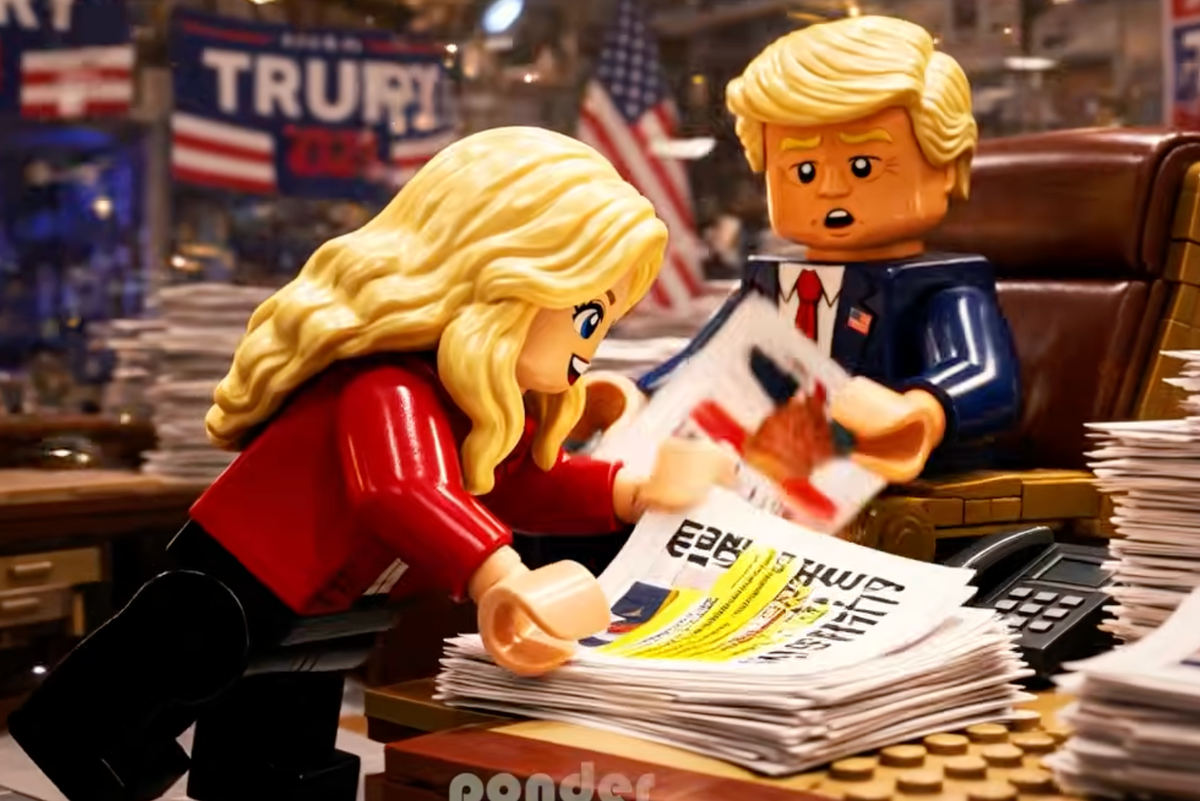
The internet lost its collective mind over a recent piece of synthetic media depicting prominent political figures rendered as plastic construction toys. Commentators rushed to hail the clip as an incredible milestone for generative neural networks. They called it a cultural watershed. They treated a pixelated parlor trick like the arrival of the printing press.
They are dead wrong.
This obsession with rendering politicians as miniature bricks misses the entire reality of how modern media consumption actually operates. I have watched media companies burn millions of dollars chasing viral novelties that generate empty impressions while driving zero actual retention or persuasion.
The Superficial Trap of Synthetic Novelty
The lazy consensus is that when a piece of synthetic media goes viral, it shifts public opinion or exposes some profound cultural nerve. That premise collapses under basic scrutiny. Novelty wears off in seconds. People do not share these clips because they carry deep political weight. They share them because the software stitched together a recognizable face with a familiar childhood toy. It is sensory sugar. It provides a momentary spike of digital dopamine before the viewer scrolls to the next meaningless clip.
When researchers measure the actual impact of low-effort parody generators, the metrics tell a brutal story. Engagement spikes and flatlines within forty-eight hours. No minds change. No votes move. No policy positions shift. The entire exercise is a massive waste of computational power disguised as cultural commentary.
Defining the Real Problem with AI Parody Culture
We need to be precise about what is happening here. Generative tools are not democratizing satire; they are automating laziness. Real political satire requires a point of view, structural critique, and timing. Slapping a digital likeness onto a plastic minifigure requires none of those things. It outsources the wit to an algorithm trained on millions of scraped images.
Imagine a scenario where every political disagreement is reduced to low-resolution plastic parodies. Public discourse does not become sharper or more accessible. It degenerates into a flat, frictionless soup where nothing has weight and everything is equally weightless. When everything becomes a toy, nothing matters anymore.
The heavy hitters in media theory warned us about this decades ago. Neil Postman understood that when a medium prioritizes entertainment above all else, serious discourse dissolves into amusement. The plastic toy video is not a triumph of creativity. It is the absolute surrender of thought.
What to Do Instead of Chasing Digital Gimmicks
If you want to understand where culture is moving, stop looking at what algorithms can render in ten seconds. Look at what people actually retain.
- Audit your attention: If a piece of media requires zero effort to produce and zero effort to consume, it has zero value for your understanding of the world. Cut it out of your information diet entirely.
- Demand substance: Support creators who do the hard work of deep investigative reporting rather than those recycling aesthetic tropes for quick algorithmic validation.
- Ignore the hype cycle: The tech platforms pushing these generation tools have a financial incentive to make every novelty look like a revolution. Do not buy the pitch.
The next time a synthetic video of a world leader rendered as a children's plaything dominates your feed, close the tab. You are watching a digital magic trick designed to pick your pocket of time.
Stop being easily amused.