The air in a Hong Kong elevator is thick with a specific kind of silence. It is the silence of people calculating. As the floor numbers flicker past—24, 25, 26—the passengers aren't just thinking about dinner or the workday ahead. They are doing the grim math of the square foot. In March, that math became even more punishing.
For months, the city held its breath. High interest rates and a sluggish post-pandemic recovery had finally begun to cool the most expensive property market on earth. Potential buyers watched the indices dip, waiting for the floor to fall out. Instead, the floor solidified. In March, home prices didn't just stop falling; they climbed.
Consider a hypothetical couple, Wei and Lin. They represent the thousands currently trapped in the middle of a shifting financial tectonic plate. They have a decent down payment saved, stashed in a high-yield account that finally earns them some interest. For two years, they played the waiting game, convinced that the "bubble" was finally popping. But while they waited for a bargain, the ground shifted beneath them. The government scrapped the long-standing "cooling measures"—the extra stamp duties designed to keep speculators at bay—and suddenly, the market woke up with a roar.
The Vanishing Discount
The March price uptick was the first significant rise after nearly a year of stagnation. It wasn't a massive surge in percentage terms, but in Hong Kong, a single percentage point represents a small fortune. The removal of the Buyer’s Stamp Duty and the New Residential Stamp Duty acted like a shot of adrenaline to a patient everyone thought was in a coma.
Investors who had been sitting on the sidelines for half a decade saw the gate swing open. They didn't just walk through; they ran.
Wei and Lin found themselves at an open house in Tai Wai. Three months ago, there were five other interested parties. In March, there were fifty. The "bargain" price they had been quoted in February was gone, replaced by a firm, non-negotiable figure that sat just out of their reach. This is the psychological cruelty of the Hong Kong market. It provides just enough hope to keep you in the game, then raises the stakes the moment you try to bet.
Price movement in the secondary market—the lived-in homes—showed a resilience that shocked the bears. While developers are still offering deep discounts on new builds to clear their inventory, the owners of existing flats have regained their nerve. They see the numbers. They see the influx of talent from the mainland under new visa schemes. They know that even if interest rates stay high, the sheer scarcity of land in this vertical jungle keeps the value anchored.
The Renters Paradox
If the rising cost of buying a home is a slow-burn anxiety, the rental market is a flash fire.
Rents in the city have peaked for a fifth consecutive month. This isn't just a statistic; it is a fundamental restructuring of how people live. Imagine a young professional who just moved from Singapore or London to take a role in a Central law firm. They expect high costs, but they don't expect the competition.
Every time a rental contract expires, the landlord holds all the cards. In neighborhoods like Mid-Levels or the trendy pockets of Sai Ying Pun, the "asking price" is merely a suggestion. Prospective tenants are now engaging in bidding wars for apartments they haven't even seen in person.
Why is this happening now? The answer lies in the government’s aggressive push to bring in global talent. Thousands of professionals have arrived under the Top Talent Pass Scheme. These new arrivals aren't buying—not yet. They are renting. They need to be near the MTR lines. They need to be within striking distance of the office. This surge in demand has collided with a supply that is functionally frozen.
For people like Wei and Lin, the rental peak is the pincer movement that closes the trap. If they don't buy, they stay in the rental market. But as rents climb, their ability to save for that ever-increasing down payment evaporates. They are running on a treadmill that is slowly tilting upward.
The High-Floor Mirage
There is a pervasive myth that the Hong Kong property market is a monolith. It isn't. It is a fragmented ecosystem where different classes of assets behave in wildly different ways.
Luxury properties on the Peak or in Deep Water Bay operate in a stratosphere of their own, influenced more by global capital flows and the health of mainland conglomerates than by local interest rates. But for the "mass market"—the tiny two-bedroom units that house the engine of the city—the pressures are different.
The recent price rise is fueled by a desperate kind of optimism. There is a fear of missing out that is unique to this city. People remember 2003. They remember 2008. Those who bought during the troughs became the landed gentry of the 2010s. No one wants to be the person who waited for a 30% drop only to see the market rebound after a 10% dip.
But the invisible stakes are higher this time. The interest rate environment is not the friendly, near-zero landscape of the last decade. Borrowing is expensive. Every dollar added to the purchase price in March carries a heavier weight of interest than it did three years ago. The monthly mortgage payment on a standard 500-square-foot flat now consumes a terrifying percentage of the average household income.
The Sound of the Gavel
In the sales offices of new developments in Kai Tak, the atmosphere is electric and exhausting. Agents hover over clients, brandishing floor plans like sacred texts. The removal of the "duties" has made it easier for people who already own one home to buy a second or third.
This was the government's intention: to stimulate the economy and prevent a hard landing for the banks. From a macroeconomic perspective, it worked. Transaction volumes have spiked. The "dry spell" is over. But for the person trying to find a place to raise a family, the removal of those cooling measures felt like the removal of a shield.
Suddenly, the "mom and pop" investors are back. They aren't looking for a home; they are looking for a yield. And with rents peaking for five months straight, the yield looks better than it has in years.
This creates a self-fulfilling prophecy. Investors buy because rents are high. Rents stay high because people can't afford to buy. The cycle tightens.
The View from the 50th Floor
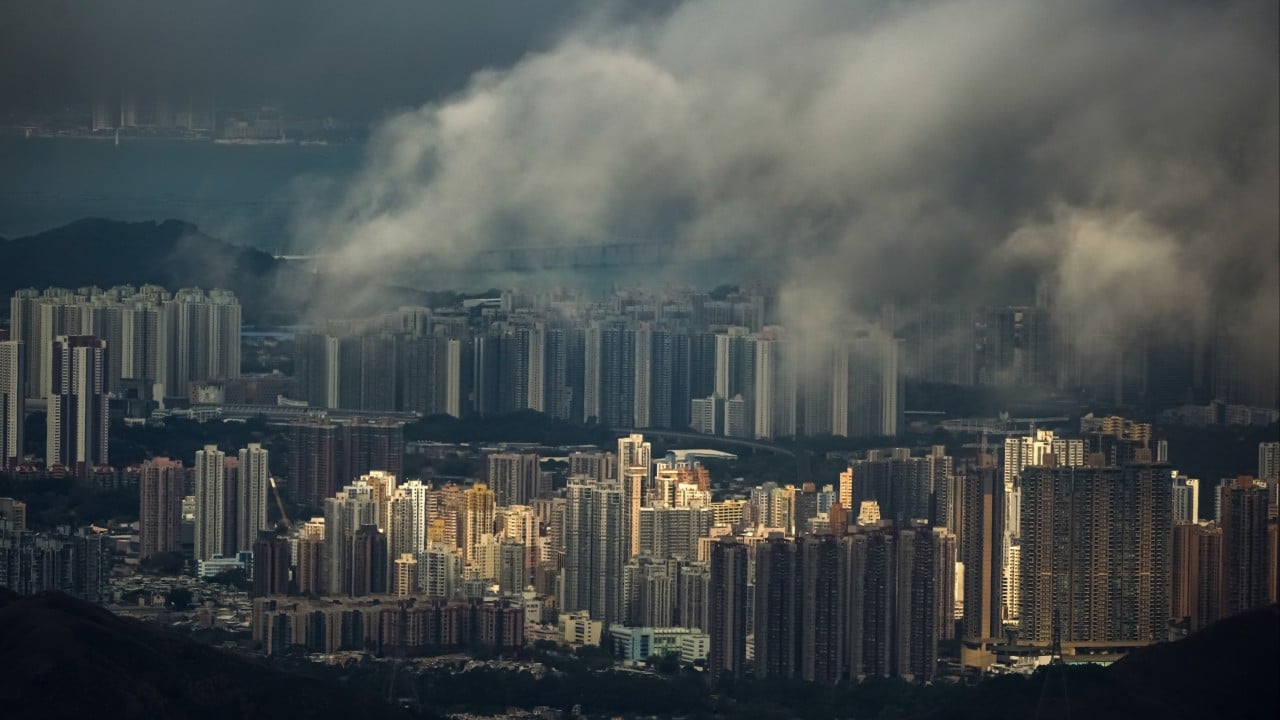
To understand the scale of the challenge, you have to look at the city at night. Each light in those towering monoliths represents a different version of the same struggle.
There is the elderly couple in a rent-controlled flat, praying the building doesn't get sold for redevelopment. There is the tech founder living in a co-living space because a studio in Wan Chai costs more than his company’s cloud server bills. And there are the thousands of people like Wei and Lin, sitting at a kitchen table with a calculator, wondering if they should jump now or wait for a future that might never arrive.
The March data isn't just a blip on a chart. It is a signal. It tells us that the gravity of Hong Kong real estate is stronger than the headwinds of high interest rates or geopolitical uncertainty. The city is built on a scarcity of land, but more importantly, it is built on the belief that property is the only true path to security.
When that belief is challenged, the city falters. When it is reinforced—as it was in March—the city accelerates.
But acceleration has a cost. As the price of entry rises and the cost of staying (rent) reaches new heights, the "Hong Kong Dream" becomes a narrower and narrower ledge. It is a high-wire act performed thousands of feet in the air, with no safety net and the wind picking up.
The elevator continues its ascent. The numbers on the display climb higher. 38, 39, 40. For the people inside, the goal isn't just to reach the top. It’s to find a way to stay there without losing their balance. In the streets below, the city carries on, oblivious to the fact that for many of its citizens, the ceiling is slowly becoming the floor.
A single apartment in a nondescript tower in Kowloon sold last week for a price that would buy a mansion in most other global capitals. The buyer didn't blink. The seller didn't celebrate. They both simply acknowledged the new reality. The pause is over. The climb has resumed. And in the humid March air, the only thing more expensive than owning a piece of this city is the cost of being left behind.