The coffee in the boardroom of a multi-billion-dollar single-family office tastes exactly like the coffee in a mid-tier hotel lobby. It is lukewarm, faintly acidic, and served in thin porcelain that rattles when the air conditioning kicks on.
For three hours, a young analyst with a pristine pedigree had been projecting slides onto a wall. He was talking about algorithmic optimization. He was talking about neural networks, sovereign data clouds, and generative enterprise layers. He used the word "disruption" fourteen times in twenty minutes.
Sitting across from him was the man whose grandfather had turned a single scrap-metal yard into an empire that now quietly buys up strip malls, municipal water systems, and regional trucking lines. The patriarch did not look at the slides. He looked out the window at a crane moving concrete blocks across a construction site.
When the analyst finally paused for breath, the older man leaned forward. His palms, still calloused despite thirty years of sitting in leather chairs, hit the mahogany table with a soft thud.
"If the power grid fails for forty-eight hours," he asked, "does your software still exist?"
The analyst blinked. "Well, no, but the redundancy protocols—"
"If the power grid fails for forty-eight hours," the older man interrupted, "the fish in our processing plants still need to be salted, and the roofs we just shingled will still keep the rain off people's heads. Find me more things that exist when the screen goes dark."
A quiet migration is underway in the highest tiers of private wealth. While venture capitalists chase the next iteration of large language models and retail investors pour their savings into microchip manufacturers, the caretakers of generational fortune are quietly walking backward. They are retreating from the bleeding edge. They are pulling hundreds of millions of dollars out of silicon and pouring it into concrete, diesel, scale-houses, and scales.
They are buying old-economy businesses. Dealerships. Commercial fisheries. Waste management companies. Asphalt plants.
This is not a temporary dip in risk appetite. It is a fundamental philosophical schism about what constitutes permanent value in an age where intelligence has become a cheap commodity.
The Mirage of the Infinite Scale
To understand why a billionaire would choose a smelly trout farm over a hyper-scaling software startup, you have to understand the existential dread currently haunting the halls of venture capital.
For two decades, the playbook for massive wealth creation was simple: build a digital platform with zero marginal distribution costs. Once the software was written, selling it to the second million customers cost almost nothing. The margins were intoxicating. Ninety percent gross margins were the standard, creating a class of paper billionaires overnight.
But that model relied on a hidden assumption. It assumed that while distribution was free, the human ingenuity required to build the product was rare and defensible.
Generative artificial intelligence blew that assumption apart.
Consider a hypothetical company we will call ApexLogistics. Five years ago, ApexLogistics built a proprietary software suite that optimized supply chains for regional grocery stores. It took thirty engineers two years and $15 million to write the code. The company was valued at $100 million because its software was a moat. It was too expensive and too difficult for a competitor to duplicate.
Today, a bright college graduate sitting in a dorm room can use an advanced AI agent to replicate eighty percent of ApexLogistics’ core functionality over a single long weekend. The cost of entry has plummeted to near zero.
When the cost of creation drops to nothing, the moat vanishes. Software, once the ultimate high-margin asset, is rapidly becoming a commodity. If everyone can build a world-class customer relationship management tool in an afternoon, then no one can charge a premium for it anymore. The digital world is suffering from a hyper-inflation of supply.
The old-money investors saw this coming. They realize that in a world where digital assets can be duplicated instantly by a line of code, the only true defensibility lies in physical friction.
You cannot download a car dealership. You cannot replicate a fleet of refrigerated fishing trawlers with a prompt. You cannot send a digital agent to repair a burst water main in Ohio.
The Sovereignty of the Dirt
Let us look at a car dealership through the eyes of a modern family office. On paper, it looks like an archaic relic. It involves physical inventory that depreciates every day it sits on the lot. It requires massive real estate footprints at prime highway intersections. It involves human mechanics with grease under their fingernails and sales floors that smell of stale popcorn and cheap upholstery.
It is beautiful.
A dealership possesses three characteristics that AI cannot touch: regulatory protection, geographic monopoly, and physical integration.
In almost every American state, franchise laws make it incredibly difficult for manufacturers to sell directly to consumers or to arbitrarily revoke a dealer's license. If you want to buy a truck in a fifty-mile radius, you often have to go through that specific family-owned business. The dirt beneath the tires iszoned specifically for automotive use. The service bays possess specialized diagnostic equipment that costs hundreds of thousands of dollars to install.
When an AI model looks at a car dealership, it sees inefficiency. It sees a middleman that should be optimized out of existence. But when a generational investor looks at it, they see an impenetrable fortress.
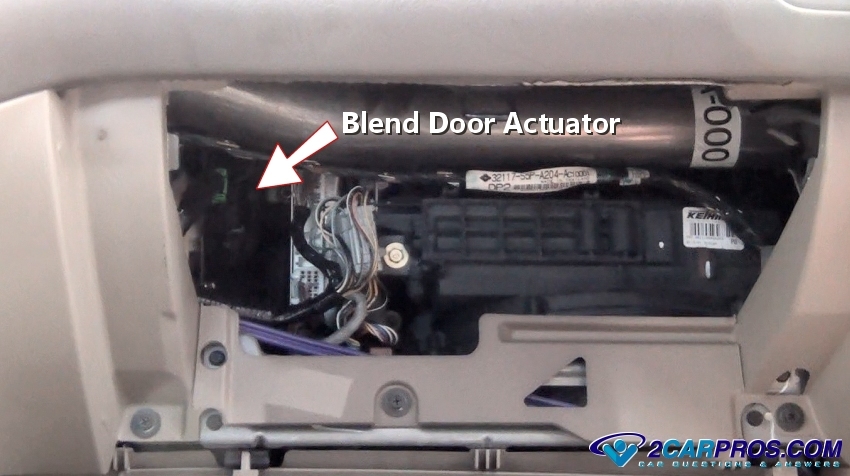
Even if a tech giant invents an autonomous vehicle that drives itself, that vehicle will still hit a pothole. It will still need its alignment checked. Its sensors will still get caked in winter salt and mud. It will need a human being in a physical bay to replace the actuator. The family office owns the bay. They own the hoist. They own the legal right to be the only person in that county allowed to fix that specific brand of truck.
The margins are lower than software, certainly. A good year might yield an eight percent net return rather than eighty percent. But that eight percent is anchored in reality. It is protected by state law, by concrete, and by the stubborn refusal of the physical world to conform to digital optimization.
The Smells of the Real World
There is a specific kind of clarity that comes from visiting a commercial fishery at four o'clock in the morning. The air is thick with the scent of diesel exhaust, crushed ice, and the cold, metallic smell of Atlantic cod.
It is a brutal business. The weather is unpredictable. Fuel prices fluctuate wildly. International quotas dictate exactly how many days your boats can out on the water. It is the antithesis of the clean, predictable, subscription-based revenue models that modern business schools teach.
Yet, family offices are buying these operations up with quiet urgency. Why? Because the world is running out of protein, and you cannot hallucinate a cod.
Think about the supply chain of a regional fishery. They own the licenses—assets issued by governments that are strictly capped. There will never be an infinite supply of commercial fishing permits. They own the docks, a scarce piece of coastal real estate that cannot be expanded due to environmental regulations. They own the processing plants, the flash-freezers, and the deep-seated relationships with grocery distributors who need predictable deliveries every Tuesday morning.
If a competitor wants to disrupt a digital fintech startup, they need a laptop and a clever marketing strategy. If a competitor wants to disrupt a commercial fishery, they need to buy a harbor, lobby a federal agency for five years to get a quota allocation, build a logistics network that can move highly perishable goods across three states in twelve hours without breaking the cold chain, and find captains who know how to navigate a northeaster without sinking a $4 million vessel.
The barrier to entry is not intellectual. It is visceral. It is capital-intensive, exhausting, and fundamentally messy.
That messiness is the security feature.
The False Promise of Efficiency
We have been conditioned to believe that efficiency is the ultimate good in business. For thirty years, the global economy has pursued the elimination of friction. We wanted just-in-time inventory, asset-light models, and decentralized workforces. We wanted everything to be smooth, fast, and weightless.
We forgot that friction is what keeps us from sliding off the edge of the cliff.
The family offices moving into old-economy assets are making a profound bet: that the next decade will be defined not by a thirst for more efficiency, but by a desperate hunger for reliability.
When everything is optimized to the absolute limit, the slightest tremor destroys the system. A software glitch can ground an entire airline fleet worldwide. A single cyberattack can freeze a banking network for days. In those moments, the value of the digital infrastructure drops to zero.
But the family that owns the local propane distribution company still has trucks filled with gas. The family that owns the limestone quarry still has piles of gravel that the state needs to repair the highway. Their revenue does not depend on the uptime of an API link in Northern Virginia.
There is a profound humility in this investment thesis. It acknowledges that we do not know what the world will look like in fifteen years. We do not know if coding will be an obsolete skill. We do not know if the internet will fracture into balkanized national networks. We do not know which tech giants will be broken up by antitrust regulators or rendered irrelevant by open-source algorithms.
But we do know that people will still need their trash collected. We know they will still want fresh fish on their plates. We know they will still need to buy parts for their tractors when the harvest is due.
The Final Invoice
The shift is visible in the career choices of the heirs to these fortunes. A decade ago, the children of industrial tycoons went to Stanford, studied computer science, and stayed in Silicon Valley to launch venture funds. They wanted to distance themselves from the mundane businesses that paid for their educations. They wanted to be tech founders.
Now, they are coming home.
They are putting on steel-toed boots and walking the floors of distribution centers in Indiana. They are sitting in the back offices of ready-mix concrete plants in Texas. They are learning how to manage union negotiations, how to audit fuel expenditures, and how to spot a failing hydraulic pump before it blows.
They are doing this because they realize that the digital gold rush has reached its inevitable conclusion: the gold has been found, the fields are crowded, and the price of shovels is dropping to zero. The real wealth belongs to those who own the land under the miners' feet.
The young analyst in the boardroom finished his presentation. He looked around the room, waiting for the applause or at least the nods of approval that usually accompanied terms like "exponential growth vector."
The patriarch looked down at his notebook, where he had written a single phrase over and over again while the analyst spoke.
Who owns the trucks?
He closed the leather binder, stood up, and adjusted his tie. He did not offer a critique of the presentation. He did not ask for a follow-up deck.
"Thank you for your time," the older man said, his voice flat and steady. "It was very educational. But we're going to pass. I have to go to an auction in Pennsylvania. There's a family selling twelve acres of gravel pits and a fleet of dump trucks, and I want to make sure we buy them before someone else realizes what they're actually worth."
The analyst stayed in the room for a long time after the family left, packing his laptop into a leather briefcase. The screen was still glowing, casting a pale blue light against the dark wood of the table. Outside, the crane on the construction site finally stopped moving as the sun dipped below the horizon, leaving nothing behind but the heavy, immovable weight of the concrete blocks it had spent the day putting into place.