Geopolitics rarely smells like dry shale dust and diesel exhaust, but in the arid expanses of Neuquén, Argentina, it smells like both. President Javier Milei came to power promising a total ideological alignment with the United States, waving the banner of Western capitalism and treating Beijing's overtures with open suspicion. Yet reality has a brutal way of rewriting campaign rhetoric. When the regional electric utility cooperative in Neuquén, known as CALF, found itself locked in talks to expand its existing digital infrastructure contracts with Chinese tech giant Huawei, Washington did not issue a polite diplomatic memo. Instead, United States diplomats deployed a blunt instrument of statecraft, bypassing traditional diplomatic channels to send text messages warning utility directors that their entry visas into America could be revoked.
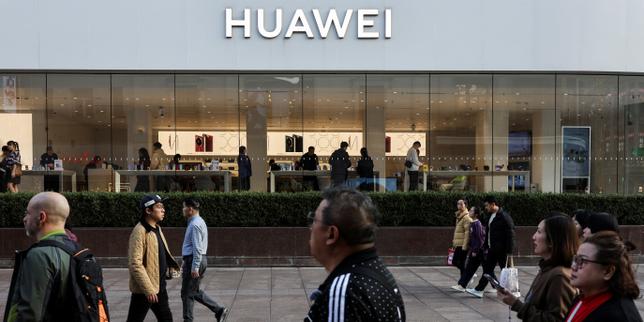
This high-stakes arm-wrestling match exposes the severe limitations of trying to run a twenty-first-century emerging market economy through ideological purity tests. The immediate flashpoint centers on Vaca Muerta, the massive shale formation that represents Argentina's best hope for breaking its chronic cycle of sovereign debt default and currency depreciation. Energy extraction at this scale requires heavy industrial automation, secure data transmission, and reliable telecommunications grids. Huawei has spent years embedding its networking equipment into regional utilities across Latin America, offering financing terms and pricing structures that Western vendors simply cannot match. For a cash-starved utility cooperative in Patagonia, turning down an infrastructure partner because of a foreign superpower's security anxieties makes little economic sense.
The ensuing diplomatic collision laid bare the contradictions defining modern Argentine foreign policy. While Beijing's embassy in Buenos Aires blasted Washington's tactics as an arrogant assault on free market principles and national sovereignty, the United States embassy stood firm, with Ambassador Peter Lamelas defending the visa maneuvers publicly on social media. Protecting national infrastructure from perceived foreign espionage risks is standard operating procedure for Washington, but applying those rules through coercive pressure on a municipal electricity cooperative in a sovereign South American province reveals an escalating desperation. The superpower rivalry has descended from global trade summits directly into the boardrooms of regional utilities.
The Cost of Pragmatism in Neuquén
To understand why a local power distributor in Argentina has become a frontline proxy battleground in the new cold war, one must look at the financial mechanics of modern infrastructure development. CALF operates a multi-vendor network. Western, European, and Asian hardware components have historically sat side-by-side within their systems. Replacing Huawei gear is not a simple matter of swapping out a router; it involves massive capital expenditures, prolonged network downtime, and finding alternative suppliers willing to offer equivalent long-term credit lines to a corporate entity operating inside Argentina's volatile economic climate.
When the text messages warning of visa revocations landed on the phones of utility executives, CALF did not quietly fold. Instead, the cooperative issued a public statement maintaining that its procurement decisions are governed strictly by commercial criteria such as quality, price, and financing terms, rather than geopolitical alignment. This response underscores a profound truth about global markets. Local operators facing operational realities care far more about keeping the lights on and managing regional energy grids efficiently than they do about Washington's strategic competition with Beijing.
President Milei faces a structural trap of his own making. His administration relies heavily on American political goodwill to navigate ongoing negotiations with international financial institutions, while simultaneously depending on Chinese currency swaps, agricultural exports, and infrastructure investments to keep the domestic economy afloat. Telling resource-rich provinces that they must forgo efficient technology to satisfy a foreign security brief is a luxury a bankrupt nation cannot afford. When foreign policy demands economic self-sabotage, local actors frequently choose survival over solidarity.
Beyond the Visa Threats
The deployment of visa threats against corporate directors marks an escalation in how great powers police their technological perimeters abroad. Traditionally, economic coercion took the form of export controls, banking sanctions, or diplomatic demarches channeled through foreign ministries. Targeting individual executives with travel restrictions for evaluating a commercial contract with Huawei signals a tactical shift toward personalized pressure. It is a strategy designed to raise the personal cost of doing business with Chinese firms, creating a chilling effect that deters other regional companies from even entertaining similar proposals.
Yet this heavy-handed approach risks backfiring in regions weary of historical foreign intervention. Latin America has spent centuries managing the competing ambitions of external empires. When an American ambassador defends visa revocations as a routine measure to protect the homeland, local observers hear echoes of a paternalistic doctrine that treats sovereign nations as mere security buffer zones. Beijing understands this dynamic well, framing its commercial expansion not as an ideological crusade, but as a mutually beneficial trade partnership respecting domestic autonomy.
The friction in Neuquén demonstrates that telecommunications infrastructure is no longer judged by technical specifications alone. Every fiber-optic cable, smart grid controller, and cellular tower is viewed through the lens of national security intelligence. For Huawei, maintaining a foothold in Latin America's emerging energy hubs is vital to sustaining its global market share outside the tightly sealed borders of the Western world. For the United States, keeping Chinese vendors out of the Western Hemisphere's critical supply chains is treated as an existential imperative.
The Unresolved Equation for Emerging Markets
The standoff over the Neuquén utility contract is merely a preview of the economic friction awaiting every developing nation caught between these two superpowers. As long as advanced digital infrastructure remains tied to national security doctrines, local enterprises will find themselves trapped in the crossfire of regulatory extraterritoriality. Washington can deploy visa restrictions and diplomatic pressure to delay specific contracts, but it cannot permanently alter the economic gravity pulling resource-dependent economies toward competitive Asian supply chains.
Ultimately, the dispute exposes the fragility of trying to enforce a global technological blockade through bilateral coercion. Argentina will continue walking its precarious tightrope, balancing the political necessity of keeping Washington content against the financial necessity of engaging Beijing. Every successful shale extraction project in Vaca Muerta requires reliable power grids, and every power grid requires modern components. Until Western nations can match the financial terms and technological availability of their rivals without resorting to punitive diplomacy, local utilities will keep answering the phone when Huawei calls, regardless of who threatens their travel plans.