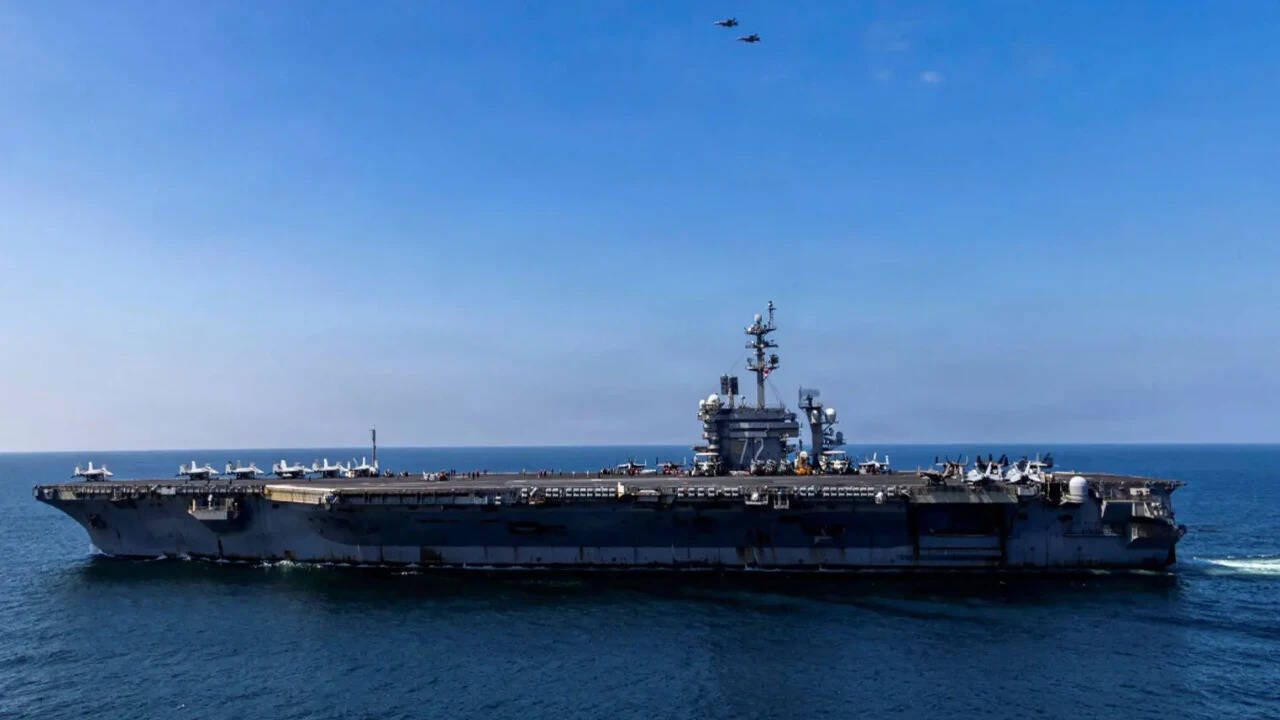
Thousands of weary American sailors and Marines are finally walking on solid ground after enduring a staggering 286 days away from home port. When the nuclear-powered aircraft carrier USS Abraham Lincoln docked near Laem Chabang, Thailand, it marked the end of a brutal deployment shaped by combat operations in the war with Iran. But this long-awaited rest and recuperation stop immediately triggered intense local friction, heavy police patrols, and a sudden wave of raids across nearby Pattaya's famous nightlife districts.
If you look at how military port calls usually operate, this kind of heavy-handed local response isn't entirely new, but the scale of the deployment makes this situation completely different. Let's break down why this specific visit has turned into a massive logistical and law enforcement headache for both Thai authorities and the US Navy.
A Historic and Exhausting Deployment
The USS Abraham Lincoln left San Diego back in November 2025. Sailors expected a standard six-to-nine-month tour. Instead, geopolitical realities intervened, redirecting the strike group straight into the Middle East to execute naval blockades and combat missions. That original timeline evaporated.
By the time the vessel reached Thai waters, the crew had spent an extraordinary stretch of time at sea with minimal breaks. Lawmakers and family members back home raised serious red flags over the past few months regarding crew mental health fatigue, dwindling supplies, and visible wear and tear on the carrier itself. Rust streaked the waterlines. Morale needed an absolute lifeline.
Enter Pattaya. This coastal destination has served as a primary R&R hub for American service members stretching all the way back to the Vietnam War era. For local business owners suffering through a sluggish tourism slump, the arrival of roughly 5,000 personnel feels like a financial miracle.
The Crackdown and Prostitution Sweeps
Local officials knew that flooding a resort city with thousands of pent-up service members after nearly ten months at sea would require strict crowd management. Thai police didn't wait for trouble to start. Over the weekend leading up to the arrival, law enforcement launched aggressive sweeps through entertainment zones, detaining dozens of individuals for suspected involvement in prostitution.
Prostitution remains strictly illegal under Thai law, yet Pattaya's massive underground sex industry is an open secret. Ahead of the carrier's arrival, police ramped up visible patrols along major beachfront strips and entertainment corridors. Authorities also drew hard boundaries for the visiting American personnel.
Certain notorious nightlife pockets—including specific alleyways known for open solicitation—were placed completely off-limits to US troops. Command leadership issued strict behavioral guidelines. Sailors and Marines were explicitly barred from consuming cannabis, engaging in high-risk water sports like jet skiing or parasailing, and entering restricted zones. Around 40 dedicated buses were mobilized to ferry the crew between the deep-water port at Laem Chabang and designated hotels in the city, keeping movement structured and heavily monitored.
Balancing Economic Survival and Strict Enforcement
Local business associations have been remarkably vocal about their reliance on this port call. Retailers, gem shops, and hotel operators near Walking Street draped storefronts with welcome banners and special military discount signs. Years of regional conflict and shifting global travel trends have battered local commerce, making the sudden influx of American purchasing power a vital safety net.
At the same time, Thai municipal leaders are desperate to polish the city's international image. Authorities heavily promoted alternative attractions—such as botanical gardens, museums, water parks, and golf courses—hoping to steer the crew away from pure nightlife indulgence.
The five-day stop is designed to handle logistics, refuel, and give minds and bodies a chance to reset before the strike group completes its eventual journey home. Yet, the collision between a fatigued military superpower and a hyper-policed tourist hotspot highlights the complicated reality of modern naval deployments. As the buses roll back and forth between Laem Chabang and Pattaya over the next few days, both navies and local police will be watching closely to ensure a much-needed break doesn't turn into a liability.