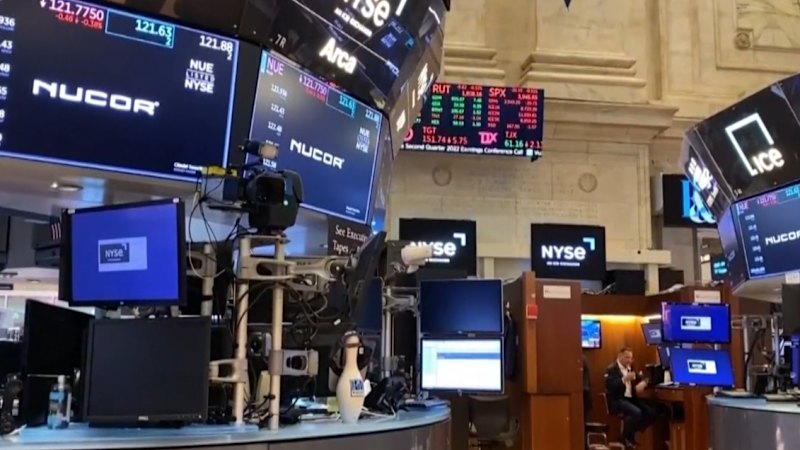
When the US share market takes a nosedive after midterms, financial television blames the newly elected politicians before the final ballots are even counted. They get the cause backward. Post-midterm sell-offs rarely stem from sudden ideological panic over incoming lawmakers, and instead reflect the abrupt unwinding of pre-election hedging strategies, shifting fiscal expectations, and institutional profit-taking after months of political uncertainty. Wall Street hates a vacuum far more than it hates either political party. Once the electoral gridlock or power shift becomes mathematical reality, the algorithms reprice risk instantaneously, triggering mechanical liquidations that look like chaos to retail investors watching the red tickers scroll across their screens.
The numbers tell a quieter story than the cable news chyrons. Historically, midterm election years have been the most volatile of the four-year presidential cycle, routinely producing steeper intra-year drawdowns than presidential election years or post-election years. Yet once the dust settles in November, the S&P 500 has a documented track record of posting positive returns over the following twelve months in nearly every cycle since World War II. What looks like an existential market collapse in the immediate aftermath of the vote is almost always a violent mechanical reset.
The Mechanics of the Post-Election Unwind
To understand why equities drop right after voters go to the polls, you have to look at the options market rather than the campaign trail. In the months leading up to a midterm election, institutional fund managers spend billions of dollars buying downside protection. They purchase put options on major indices, load up on volatility contracts, and hoard cash to insulate their portfolios against contested results, recount delays, or radical legislative surprises.
This defensive positioning creates an artificial floor under the market prior to election day. Market makers who sell those put options to institutions have to hedge their own exposure by shorting futures or adjusting their delta exposure, which paradoxically dampens extreme downward swings right up until the event occurs. Then the polls close. The uncertainty vanishes overnight.
Suddenly, those expensive insurance policies lose their value in a phenomenon traders call volatility crush. As implied volatility collapses, institutions rush to sell back their hedges and close out protective positions simultaneously. Market makers unwind their corresponding hedges in lockstep. Because modern equity trading is dominated by high-frequency algorithms and systematic trend-following funds, this sudden shift in order flow triggers automated selling cascades. A three percent drop in the Dow Jones Industrial Average over forty-eight hours is frequently the result of derivatives plumbing flushing out pre-election bets, not pension funds dumping blue-chip stocks because a Senate seat flipped in the Midwest.
Consider a hypothetical example of how this plays out on a trading desk. Suppose a multi-billion-dollar macro fund buys index puts in September, betting that a razor-thin Congressional margin will delay federal budget negotiations. On Wednesday morning after the election, the results are clear enough that the worst-case scenario is off the table. Even though the political news is technically stabilizing, the fund sells its puts to salvage remaining premium. The dealer who bought those puts back no longer needs to hold the underlying stock hedges they accumulated over the previous six weeks, so they dump those shares onto the open market. Multiply that single transaction across thousands of institutional desks, and you get a sharp, broad-based equity sell-off that baffles anyone looking purely at political headlines.
The Fiscal Reality Check
Beyond the derivatives plumbing, post-midterm drops expose the harsh arithmetic of federal spending. Campaign trails run on promises of tax cuts, infrastructure binges, targeted subsidies, and regulatory relief. Equity sectors rally for months on the mere possibility that their favored lobby will get what it wants in the new legislative session. Defense contractors bid up on hawkish rhetoric; renewable energy stocks surge on green spending pledges; regional banks climb on talk of deregulation.
The morning after the election, the campaign ends and the legislative math begins. Investors immediately realize that the party winning control of the House or Senate has neither the vote margin nor the executive alignment to pass the sweeping stimulus measures priced into stock valuations during the summer.
Gridlock is often celebrated by Wall Street commentators as a bullish signal because divided government prevents radical tax hikes or aggressive corporate crackdowns. That conventional wisdom misses the flip side of the coin. Gridlock also kills fiscal stimulus. When an economy is already dealing with elevated interest rates, sticky inflation, or slowing corporate earnings growth, the realization that Washington will be paralyzed for the next two years removes a vital safety net. Traders who bought cyclical stocks hoping for a legislative tailwind suddenly find themselves holding overpriced assets with no catalyst left on the calendar.
Sector Rotation Beneath the Surface
Looking strictly at the headline indices obscures the violent rotation happening underneath. A broad market nosedive rarely punishes every sector equally. Instead, capital flees the speculative winners of the pre-election run-up and crowds into defensive bastions or cash equivalents.
- Healthcare and Pharmaceuticals: Often whipsawed before the vote by rhetoric surrounding drug pricing caps, these stocks frequently experience sharp post-election swings as traders reassess whether divided committees will bury reform bills.
- Energy and Industrials: Capital expenditure plans depend heavily on permitting rules and federal tax credits. Any shift in committee chairmanships forces analysts to rebuild their discounted cash flow models overnight.
- Big Tech and Communications: Antitrust enforcement rarely changes immediately after a midterm, yet mega-cap technology stocks act as the market's primary liquidity ATM. When funds need to raise cash quickly to meet margin calls or rebalance portfolios after an election shock, they sell their most liquid winners first.
The Federal Reserve Elephant in the Room
Financial media loves a political narrative because politicians are visible, loud, and easy to caricature. Central bankers are dry, technocratic, and speak in carefully hedged clauses. Yet the Federal Reserve exerts far more gravitational pull on the US share market than any midterm election ever could.
Midterm elections always fall in early November, placing them squarely between the Federal Open Market Committee's autumn policy meetings and the crucial year-end liquidity crunch. For decades, investors have fallen into the trap of attributing November market swoons to election outcomes when the real culprit was monetary policy tightening or shifting Treasury yields.
If the bond market is already digesting aggressive rate hikes or quantitative tightening, equity valuations are stretched thin before a single ballot is cast. A minor disappointment in the election results, or even a completely predictable outcome, simply serves as the excuse for equity traders to finally acknowledge what the Treasury yield curve has been screaming for months. When ten-year Treasury yields push higher in the wake of an election—often driven by fears that neither party intends to rein in deficit spending—the discount rate applied to future corporate earnings rises. Growth stocks, whose valuations depend on profits promised years into the future, take an immediate mathematical hit.
Why Retail Investors Always Catch the Falling Knife
Every post-midterm nosedive follows a predictable behavioral script. Institutional desks trigger the initial wave of selling through algorithmic rebalancing and derivatives unwinding. Financial news networks flash urgent red banners linking the drop directly to the political upheaval in Washington. Retail investors, reacting to the headlines rather than the market structure, panic and sell near the bottom of the move.
The asymmetry of information is brutal. By the time a retail trader reads an op-ed explaining why the incoming Congress will hurt corporate margins, institutional algorithms have already finished liquidating their weak positions and are quietly accumulating discounted shares from panicked sellers.
There is also the tax-loss harvesting factor that peaks right after the November elections. Institutional and high-net-worth portfolios routinely use November to dump losing positions so they can offset realized capital gains before the December 31 deadline. When a midterm election triggers a two- or three-day dip, it accelerates this seasonal selling pressure. Fund managers see red on their screens, decide to cut their laggards early, and compound the downward momentum. The headlines blame the voters; the accountants know it is just year-end bookkeeping colliding with political calendar timing.
The Myth of the "Bad" Election Outcome
If you examine market history across the past century, trying to trade based on which party wins the House or the Senate is a fool's errand. Markets have thrived under Democratic presidents with Republican Congresses, Republican presidents with Democratic Congresses, and unified governments of both stripes. Conversely, brutal bear markets have unfolded under every conceivable combination of political control.
The market's primary demand is clarity, not ideological alignment. Once the rules of the game are established for the next two years, corporate executives can make capital allocation decisions. Chief financial officers who froze hiring, delayed mergers, or held back share buybacks during the uncertainty of September and October finally have a clear view of the regulatory and tax horizon.
That clarity is precisely why the post-midterm nosedive is historically short-lived. As soon as the derivatives unwind finishes and the weak hands are shaken out, corporate buyback desks step back into the market. Companies are often the single largest buyers of their own stock, and blackout periods ahead of third-quarter earnings typically end right around the midterm election window. The collision of forced institutional selling and returning corporate buybacks creates the classic V-shaped recovery that has defined post-midterm trading for generations.
Navigating the Volatility Without Getting Burned
Watching a portfolio lose several percentage points in forty-eight hours tests the discipline of even seasoned market participants. The instinct to do something—anything—to stop the bleeding is overwhelming, yet action during a mechanical liquidity event is usually the worst possible move.
- Separate headline noise from credit stress. Before assuming a post-midterm drop signals a genuine economic downturn, check the corporate bond market and credit spreads. If high-yield credit spreads remain calm while the S&P 500 plunges, you are watching an equity technical correction, not a systemic financial crisis.
- Watch the Volatility Index, not the cable pundits. When the VIX spikes sharply during a post-election sell-off and then fails to make new highs even as stock prices drift lower, the panic is exhausting itself. That divergence marks the point where institutional hedging demand has peaked.
- Avoid market orders during the opening bell. The morning after an election frequently brings wide bid-ask spreads as market makers recalibrate their risk models. Placing unguarded market orders in the first thirty minutes of trading guarantees terrible execution prices.
- Ignore sector predictions based on campaign speeches. Campaign promises rarely survive contact with Congressional committees intact. Dumping a fundamentally sound company because a newly elected committee chair criticized its industry during a stump speech routinely locks in losses right before the political reality proves far milder than the rhetoric.
The US share market does not care who won the governorship in a swing state, nor does it mourn the loss of a charismatic backbencher. It cares about liquidity, interest rates, earnings growth, and the cost of hedging risk. When the screen turns blood red the day after the midterms, you are not witnessing the death of the bull market; you are watching Wall Street take off its expensive insurance policy and reset the board for the next two years.