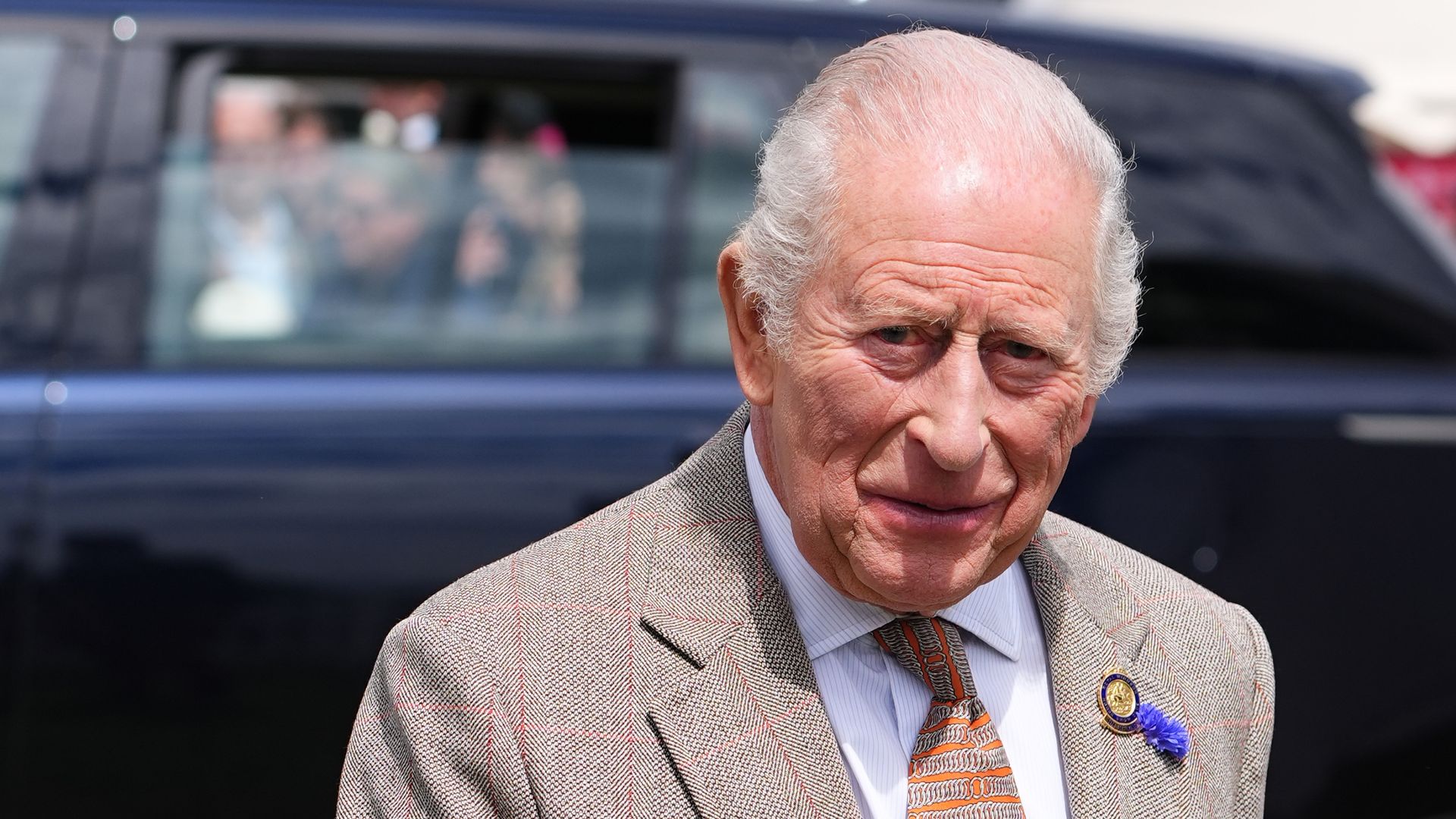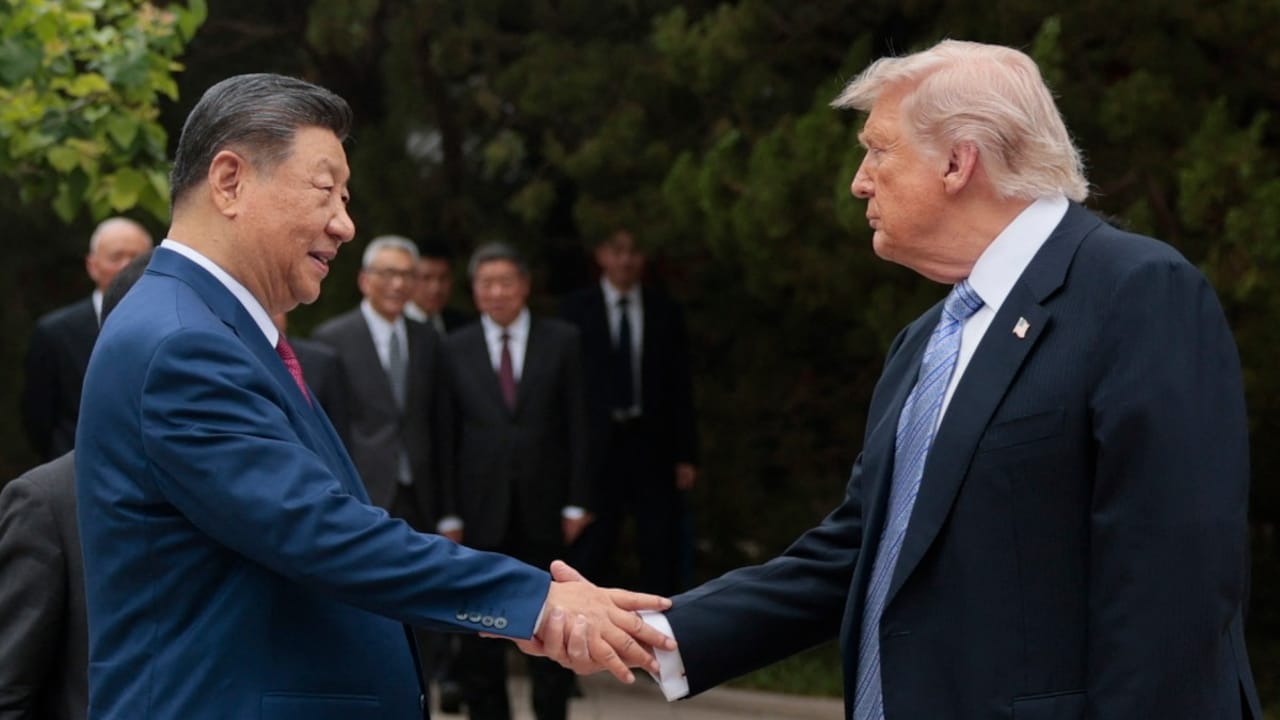
Most pundits treat trade deficits and tariff rates as the main event whenever Donald Trump and Xi Jinping sit across from each other. They're missing the real fight. Behind every heated debate over soybeans, fentanyl precursors, or electric vehicles sits a far more existential battle over who controls artificial intelligence.
The US-China AI rivalry isn't just another tech dispute to trade away at the negotiating table. It's the core engine driving national security, economic dominance, and military power for the rest of this century. If you want to understand why diplomacy between Washington and Beijing feels so brittle right now, stop looking at shipping containers and start looking at silicon wafers.
The Chip Chokehold That Changed Everything
Washington figured out years ago that you can't build frontier AI models without massive compute, and you can't get massive compute without advanced semiconductors. That simple realization triggered the most aggressive industrial blockade since the Cold War.
Starting in October 2022 and tightening through subsequent updates, the US Commerce Department's Bureau of Industry and Security (BIS) cut off Chinese firms from high-end AI chips like Nvidia's H100 and B200 series, alongside the extreme ultraviolet (EUV) lithography machines built by Dutch giant ASML. The goal wasn't merely to slow Beijing down. National Security Advisor Jake Sullivan openly stated the objective was maintaining "as large of a lead as possible" rather than just staying a generation or two ahead.
Beijing didn't sit quietly. China responded by pouring tens of billions of dollars into its domestic semiconductor ecosystem through the third phase of its National Integrated Circuit Industry Investment Fund, often called the "Big Fund III," which launched with roughly $47.5 billion in registered capital. At the same time, Chinese regulators restricted exports of critical minerals like gallium, germanium, and antimony—raw materials essential for chip manufacturing and defense electronics.
When Trump and Xi meet, those export controls sit squarely in the crosshairs. Beijing wants the chip bans lifted or softened as a baseline condition for broader economic cooperation. Washington hawks argue that trading away compute restrictions for agricultural purchases or tariff relief would be strategic suicide.
Why Export Controls Are Harder to Enforce Than Politicians Admit
On paper, banning advanced GPU shipments to China sounds clean. In practice, enforcement has been messy.
Smuggling networks quickly popped up across Southeast Asia and the Middle East, routing restricted Nvidia processors through shell companies in Malaysia, Singapore, and the United Arab Emirates. Meanwhile, cloud computing created a massive loophole. Chinese AI labs realized they didn't necessarily need to import physical server racks into Shenzhen or Beijing if they could simply rent compute power remotely through overseas data centers operated by third-party providers.
I've watched enterprise tech teams struggle with compliance rules around cross-border cloud access, and the reality is blunt: tracking where model weights are trained across distributed data centers is a nightmare. Even when US regulators proposed Know-Your-Customer (KYC) rules for cloud providers, closing every backdoor without crippling legitimate global cloud businesses proved nearly impossible.
The Open-Weight Curveball From Chinese Labs
For a long time, the consensus in Silicon Valley was comfortable. American labs—OpenAI, Anthropic, Google DeepMind, Meta—held an insurmountable lead in frontier model performance, while Chinese firms were stuck playing catch-up with inferior hardware.
Then Chinese startups flipped the script.
Companies like DeepSeek, Alibaba's Qwen team, and 01.AI started releasing open-weight models that matched or beat top American systems on coding, math, and reasoning benchmarks—often trained at a fraction of the reported compute cost. DeepSeek-R1 and Qwen-2.5 didn't just impress researchers in Beijing; developers in San Francisco, London, and Bangalore started downloading them by the millions because they were free, fast, and easy to fine-tune locally.
This created a massive strategic headache for US policymakers. You can block a cargo ship carrying Nvidia GPUs, and you can restrict foreign investment in Chinese startups. How do you tariff or embargo open-source weights posted freely on Hugging Face?
You can't. Not without breaking the open-source ecosystem that American startups also depend on.
What Open-Weight Dominance Means for Global Influence
Here is what most casual observers miss about why Beijing encourages open-weight AI releases. It's a classic standards play.
When developers across the Global South—in Southeast Asia, Latin America, Africa, and the Middle East—build their local banking apps, customer service bots, and government tools on top of Chinese open-weight architectures, China sets the foundational software layer for the developing world's digital infrastructure.
- Lower deployment costs make Chinese models irresistible to cash-strapped startups outside the US and Europe.
- No API lock-in means foreign governments don't have to worry about Washington cutting off their cloud access during a diplomatic spat.
- Local fine-tuning allows nations to adapt models to regional languages and local censorship norms without asking Silicon Valley for permission.
This mirrors Huawei's telecom strategy from the 2010s, except software spreads infinitely faster than 5G base stations. During Trump-Xi negotiations, Washington faces pressure from defense hawks to restrict American companies from adopting Chinese AI codebases, even as US businesses quietly use them to save money.
Tariffs Meet Compute in Trump's Deal-Making Playbook
Donald Trump's approach to China blends hardline economic nationalism with transactional deal-making. That creates real tension inside his own coalition whenever AI comes up.
On one side, you have China hawks who view Beijing's military-civil fusion strategy as an existential threat. Under Chinese law, private tech companies are required to share technology and data with the People's Liberation Army (PLA) upon request. To national security officials, every advanced AI cluster in China is a dual-use military asset capable of accelerating cyber warfare, autonomous drone swarms, and hypersonic weapons design.
On the other side, you have American semiconductor executives and Big Tech leaders who rely heavily on global supply chains and international revenue. Nvidia, Broadcom, Qualcomm, and Intel have repeatedly warned Washington that permanently locking US firms out of the world's second-largest economy starves them of R&D revenue while handing Chinese competitors like Huawei a captive domestic market to subsidize their catch-up efforts.
Trump loves leverage. He has threatened sweeping tariffs of 60% or higher on Chinese imports while simultaneously floating selective exemptions or bilateral investment deals. In the AI arena, that transactional instinct raises an obvious question: would Trump ever trade an easing of semiconductor export rules—or greenlight modified, lower-powered chips for the Chinese market—in exchange for massive Chinese purchases of American goods, TikTok concessions, or cooperation on Ukraine and fentanyl?
The Taiwan Factor Nobody Can Ignore
You cannot separate the AI rivalry from Taiwan. Period.
Taiwan Semiconductor Manufacturing Company (TSMC) fabricates roughly 90% of the world's most advanced logic chips. Every flagship AI accelerator designed by Nvidia, AMD, Apple, and Google passes through TSMC's foundries in Hsinchu and Tainan.
If a military blockade or conflict ever erupted in the Taiwan Strait, global AI development wouldn't just slow down—it would hit a brick wall overnight. Even with TSMC building new fabrication plants in Phoenix, Arizona, the most advanced process nodes remain concentrated on the island.
That vulnerability hangs over every handshake between Trump and Xi. Washington uses AI chip dominance as deterrence, while Beijing views Taiwan's semiconductor shield as both a strategic prize and a symbol of its dependence on Western supply chains. Any summit communiqué that glosses over Taiwan while pretending to negotiate "AI safety" is pure diplomatic theater.
Why AI Safety Talks Are Mostly Window Dressing
Whenever diplomats want a low-stakes win, they propose bilateral talks on AI safety and governance. Both Washington and Beijing have acknowledged the risks of rogue autonomous systems, AI-assisted bioweapons, and automated cyberattacks. They even held preliminary intergovernmental dialogues in Geneva to discuss risk management.
Don't mistake polite talks about existential risk for genuine alignment.
When American officials talk about AI safety, they focus heavily on preventing catastrophic misuse and maintaining democratic oversight. When Beijing talks about AI governance, its primary concern is ideological control—ensuring generative models adhere to "core socialist values" and don't undermine Communist Party authority—alongside pushing back against US tech hegemony.
Neither side trusts the other enough to allow intrusive verification. Without mutual inspection regimes, promises not to integrate frontier AI into nuclear command-and-control systems or offensive cyber operations remain unenforceable pledges.
How Businesses and Investors Should Read the Signals
If you run a tech company, manage supply chains, or allocate capital in AI infrastructure, waiting for a grand Trump-Xi peace treaty on technology is a losing strategy. The decoupling of the US and Chinese AI stacks is structural, not cyclical.
Watch three concrete indicators instead of summit photo-ops:
- BIS Entity List Additions and Compute Thresholds: Pay close attention to updates from the Bureau of Industry and Security regarding interconnect bandwidth and total processing performance (TPP) caps. Every time Nvidia designs a compliant chip for China—like the A800 or H20—regulators eventually move the goalposts.
- Power Grid and Data Center Capital Expenditures: As model training hits physical energy bottlenecks, the US-China race is shifting from pure chip design to gigawatt-scale power generation. China added more solar, wind, and nuclear capacity over the past few years than the rest of the world combined, giving it a structural advantage in cheap electricity for massive training clusters.
- Sovereign AI Deals in Third-Party Markets: Watch where Gulf states like Saudi Arabia and the UAE place their bets. Funds like MGX and G42 sit right in the middle of this tug-of-war, forced by Washington to divest from Chinese hardware before gaining access to top-tier US chips.
Audit your own software dependencies and hardware supply chains right now. Map out where your cloud inference runs, verify whether your engineering teams are pulling open-weight models from foreign repositories without security reviews, and build procurement flexibility assuming tariffs and export controls will tighten further—regardless of how warm the rhetoric sounds after the next Trump-Xi meeting.