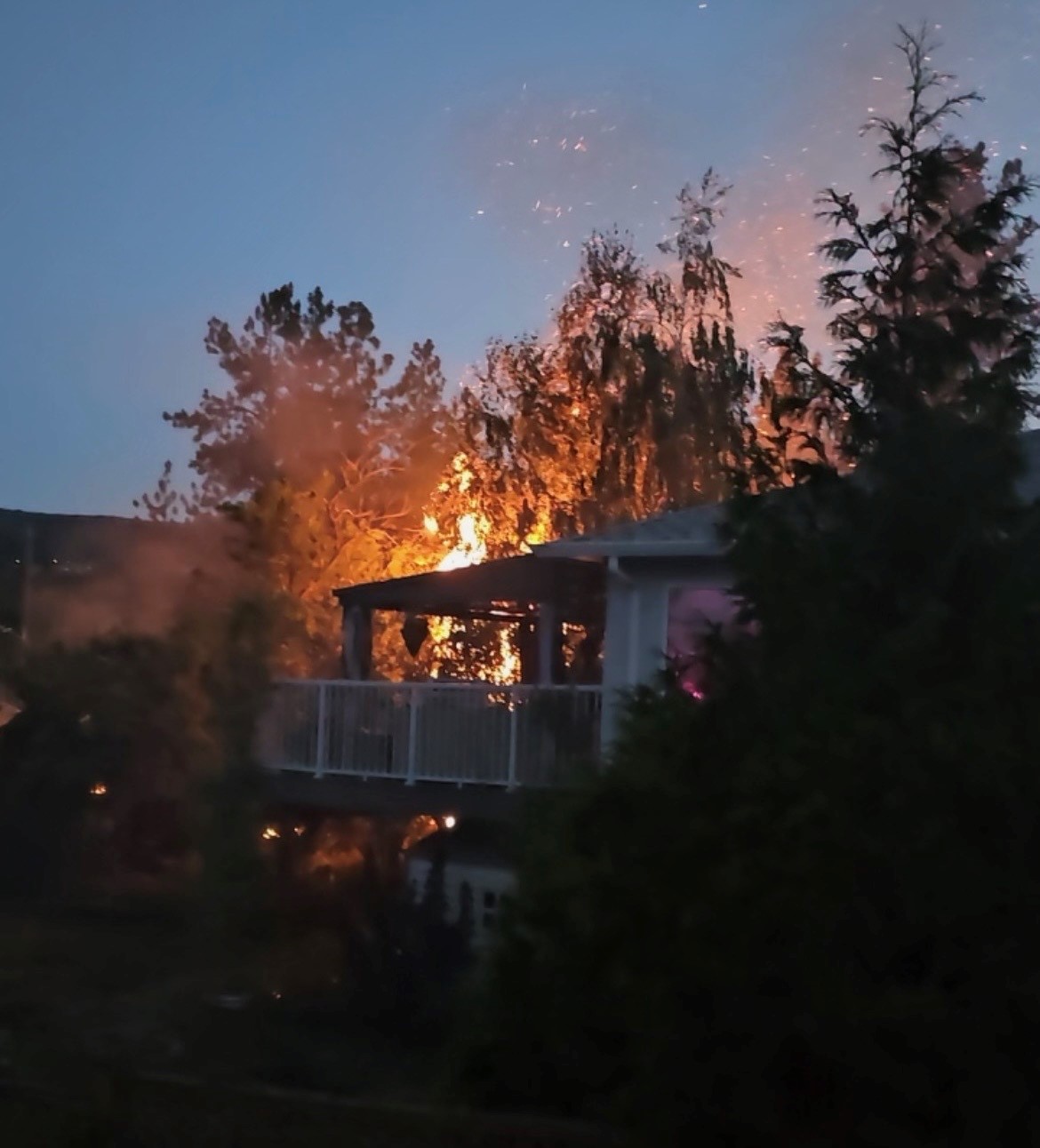
Municipal emergency infrastructure in micro-climates faces a structural vulnerability when deliberate human activity intersects with severe seasonal dry conditions. The recent sequence of intentionally set ignitions in West Kelowna along the Old Okanagan Highway and Shannon Lake Road corridor provides a concrete case study in urban-wildland interface (WUI) risk compounding. Over a four-hour window, four discrete fires were set within a two-kilometer radius, demonstrating a intentional exploitation of municipal fire response mechanisms.
The primary systemic threat in serial ignitions is not merely immediate structure loss, but the forced decentralization of tactical units. Analyzing these incidents through a systems-engineering lens reveals three distinct layers of impact on municipal resilience, public infrastructure, and law enforcement allocation.
The Tri-Factor Vulnerability Mechanics
To evaluate the operational exposure created by targeted ignitions in residential neighborhoods, the threat vector must be broken into three core variables: Spatial Proximity, Resource Splitting, and Ambient Fuel Availability.
1. Spatial Proximity and Structural Ignition Vulnerability
In dense suburban pockets abutting recreational green spaces or brush corridors, ignition events collapse the traditional buffer zone between wildfire fuels and home structures.
- Convective and Radiative Heat Transfer: Combustible structural augmentations, such as ornamental cedar hedging or wooden perimeter fences, act as direct fuse lines. When ignitions occur within three to ten meters of residential properties, heat flux rapidly approaches the auto-ignition temperature of standard exterior siding without requiring direct flame contact.
- Civilian Intervention as Last-Ditch Mitigation: Early-stage interventions by residents using domestic water lines temporarily mitigate ember generation, but introduce severe civilian safety risks and unreliable suppression pressures compared to high-volume fire rescue apparatus.
2. Tactical Resource Splitting
Emergency services operate on predetermined response capacity models designed around single-point catastrophic events or low-frequency dispersed events. Serial arson creates a high-frequency localized cluster that degrades response efficiency.
- Operational Staggering: Managing four distinct fire scenes simultaneously within a two-kilometer boundary forces dispatchers to divide active engine crews. Primary units are occupied with low-intensity, high-risk ignitions (e.g., public park infrastructure, refuse containers, and outbuildings), diluting overall operational readiness across the wider jurisdiction.
- Response Bottlenecks: Staggered calls over a multi-hour duration exhaust localized personnel rotation cycles, leaving the broader region vulnerable to concurrent, unassociated emergency calls or sudden wind-driven fire accelerations.
3. Ambient Fuel and Seasonal Amplification
The baseline risk of localized arson escalates exponentially when mapped against seasonal fuel dryness indicators.
- Fine Fuel Moisture Code (FFMC): Mid-summer conditions significantly depress the moisture content of surface fuels like grass, park benches, and urban leaf litter. This lowers the energy required for ignition to negligible levels.
- Rate of Spread (ROS) Vectors: High ambient temperatures paired with localized wind funnels mean an ignition originating in a garbage receptacle or park gazebo can transition to a high-intensity canopy or structure fire within minutes, shrinking the window for effective containment.
Tactical Cascades in Multi-Point Ignitions
[Intentional Ignition Event]
             │
             ├──► [Dispatched Units Split Across Multi-Sites]
             │              │
             │              ▼
             │   [Delayed Primary Containment Window]
             │              │
             ▼              ▼
[Localized Fuel Ignition] ──► [Accelerated Boundary Expansion] ──► [Critical WUI Hazard]
When arsonists deploy multiple ignition points within a compressed timeframe and localized geographic footprint, emergency dispatch algorithms encounter a structural friction point.
- Initial Containment Phase: Crews respond to primary minor blazes (such as public refuse or municipal infrastructure).
- Secondary Ignition Phase: Subsequent fires are initiated in adjacent fuels (such as park gazebos or residential perimeter landscaping).
- Resource Saturation: The fire department must commit secondary and tertiary apparatus, stretching local shift coverage and triggering mutual aid protocols across neighboring municipal lines.
- Escalation Threshold: If ambient wind or terrain gradient favors propagation, a secondary fire shifts from a localized nuisance to an out-of-control interface event before dedicated tactical lines can be deployed.
Strategic Police and Investigative Allocations
Investigating concentrated serial arson within an urban-wildland interface requires shifting law enforcement resources from reactive patrol to intensive forensic tracing. The Royal Canadian Mounted Police (RCMP) and municipal fire origin-and-cause investigators face acute operational bottlenecks during these multi-site events.
Forensic Origin Mapping
- Multiple Point-of-Origin Isolation: Establishing physical boundaries for four distinct burn sites demands dedicated evidence preservation resources to isolate chemical accelerants or mechanical ignition devices before weather or suppression efforts destroy evidence.
- Temporal Mapping: Investigators must build precise chronologies based on witness reports, 911 call logs, and security camera footage to identify travel routes between sites along key arteries like Old Okanagan Highway.
Community-Scale Risk Mitigation
- Proactive Patrol Inflation: To deter subsequent ignitions, police departments must redirect units toward high-density physical patrols in vulnerable interface zones, incurring significant overtime costs and pulling resources away from routine municipal policing.
- Information Intake Filtering: High community anxiety during peak wildfire season generates an influx of tip-line calls, requiring dedicated analytical bandwidth to vet actionable intelligence from noise.
Structural Defenses for WUI Neighborhoods
Addressing localized, human-caused ignition threats requires moving beyond standard municipal emergency responses toward structural, community-level risk reduction. Relying solely on suppression capabilities during active seasonal dry spells leaves residential developments inherently exposed.
Municipalities and property owners must adopt a multi-tiered defense posture designed to limit ignition potential long before emergency services arrive.
Hardening the Immediate Home Ignition Zone (0-1.5 Meters)
- Fuel Discontinuation: Replace all high-volatility vegetation—specifically cedar hedges, junipers, and dense brush—with non-combustible landscaping materials such as gravel or river rock along home perimeters.
- Structural Barrier Maintenance: Ensure exterior siding, decking, and soffits feature fire-rated materials. Close off exposed under-deck spaces where wind-driven embers or localized spot fires can pool and ignite structural framing.
Public Infrastructure and Park Management
- Asset Hardening: Transition municipal park infrastructure (e.g., waste containers, picnic seating, public gazebos) from wood or composite materials to non-combustible steel or concrete in high-risk interface corridors.
- Surveillance and Access Control: Install targeted closed-circuit monitoring systems at key access points along major municipal trailheads and greenways to enhance investigative tracking and deter unauthorized access during extreme fire weather warnings.
Regional Emergency Response Optimization
- Cross-Jurisdictional Staging: Establish pre-positioned mutual aid strike teams during high-risk environmental windows to prevent complete local resource exhaustion during simultaneous arson events.
- Targeted Civilian Training: Educate property owners on immediate reporting protocols and non-hazardous perimeter protection, reducing the reliance on domestic water supplies that can inadvertently drop municipal water network pressure during active suppression operations.


