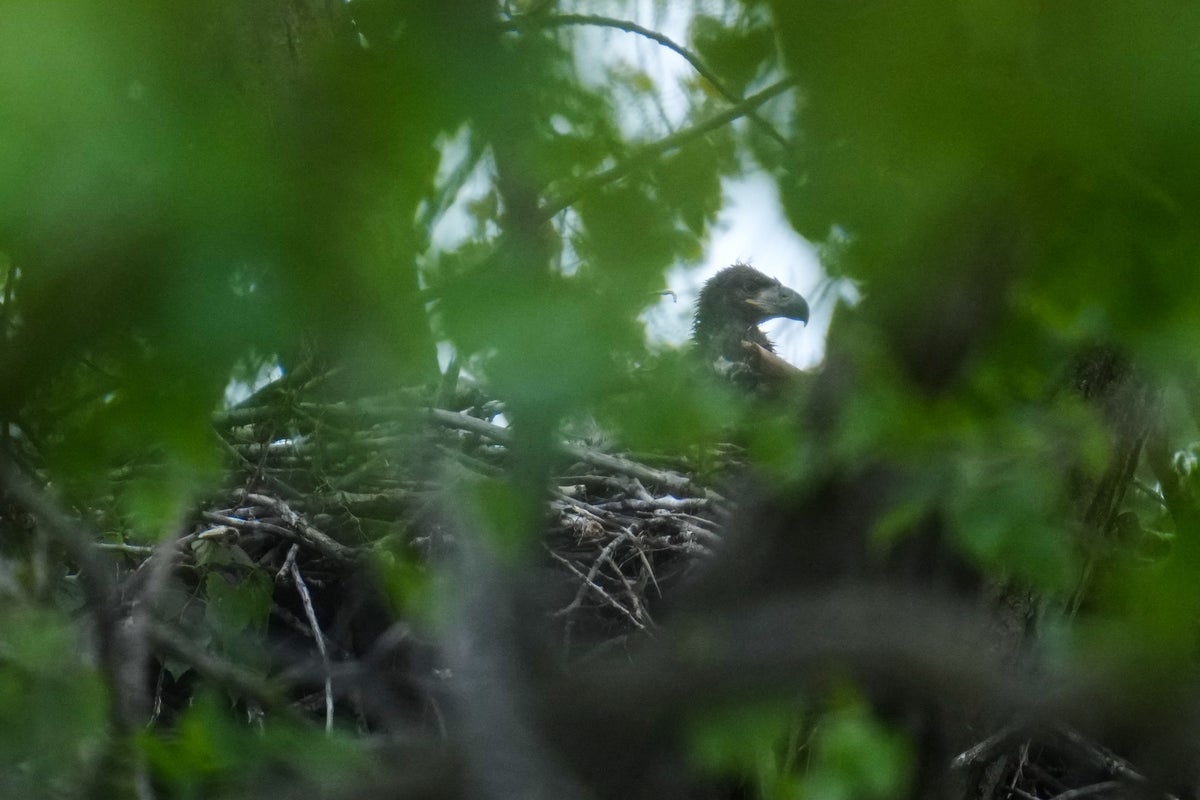
Wild bald eagle hatchlings are reportedly nesting in a major US city for the first time in over a century. While conservationists celebrate this milestone as a symbol of environmental triumph, the reality of urban raptor recolonization is far more complex than a simple feel-good headline. The return of apex predators to paved environments is not merely a victory of nature over concrete. It represents a volatile new ecological experiment where human infrastructure, toxic legacies, and wildlife behavior collide.
Understanding this phenomenon requires looking past the romanticized imagery of a national symbol perched on a skyscraper. The true drivers of this urban migration reveal a gritty intersection of strict federal policy, shifting prey dynamics, and the unintended consequences of architectural design.
The Illusion of Pristine Recovery
The narrative surrounding the return of bald eagles to metropolitan centers usually credits local river cleanups and urban park initiatives. That narrative is incomplete. The foundational catalyst remains the federal ban on DDT in 1972 and the uncompromising protections of the Endangered Species Act. Decades of legal enforcement allowed population densities in rural and coastal breeding grounds to reach a saturation point.
Eagles are territorial. When prime real estate in wilderness areas fills up, younger pairs are forced to scout the margins.
Metropolitan areas present an unexpected bounty. Urban waterways, once biological dead zones, now support robust populations of invasive fish species and abundant refuse. Cities are essentially massive, artificial energy funnels. For a scavenger-hunter like the bald eagle, a suburban retention pond stocked with goldfish or a river corridor littered with fish carcasses is an easier hunting ground than a pristine mountain lake.
This is not a return to a historical baseline. It is an adaptation to an entirely new, human-dominated food web.
The Hidden Hazards of Asphalt Habitats
Living close to millions of humans introduces novel mortality risks that wilderness eagles rarely encounter. The infrastructure that powers a city presents a daily gauntlet for a bird with an eight-foot wingspan.
- Power Line Electrocution: Distribution lines in urban corridors are rarely spaced widely enough to accommodate the massive reach of an eagle, turning utility poles into lethal perches.
- Vehicle Collisions: Eagles are heavy birds that require a significant runway to take off, especially after consuming a heavy meal. When they forage on roadkill along suburban highways, their slow ascent makes them highly vulnerable to oncoming traffic.
- Rodenticide Poisoning: The intense pest control measures practiced in urban centers ripple up the food chain. An eagle that consumes a dazed, poisoned rat ingests a sub-lethal dose of anticoagulants, which builds up over time and causes internal bleeding.
The Territorial Warfare in the Canopy
The media focus on eagle hatchlings often ignores the violent displacement of other urban wildlife. Eagles do not build nests in a vacuum. They require massive, mature trees, often choosing the exact same sites favored by blue herons, red-tailed hawks, or great horned owls.
When a pair of eagles moves into a city park, they do not peacefully coexist with the current residents. They dominate them.
+-------------------+-----------------------------------------+
| Species           | Impact of Urban Eagle Colonization       |
+-------------------+-----------------------------------------+
| Great Horned Owl  | Direct predation and loss of nest sites |
+-------------------+-----------------------------------------+
| Blue Heron        | Abandonment of rookeries due to stress  |
+-------------------+-----------------------------------------+
| Red-Tailed Hawk   | Displacement to inferior hunting zones  |
+-------------------+-----------------------------------------+
Observing this displacement reveals that urban green spaces are zero-sum games. A park that supports a breeding pair of eagles often sees a sharp decline in the nesting success of other raptors. The apex predator claims its tax from the existing ecosystem, forcing smaller predators into even tighter, more dangerous urban niches.
The Problem with Public Attention
Human behavior poses an immediate threat to newly established urban nests. The moment the coordinates of an eagle nest hit social media, the site is swarmed by wildlife photographers and curious onlookers.
Eagles are highly sensitive to disturbances during the early incubation period. If a parent bird is flushed from the nest by an overzealous photographer drone or a crowd gathering too close to the buffer zone, the eggs can cool rapidly, destroying the clutch. Municipalities are poorly equipped to handle this. Local park departments rarely have the budget or the manpower to enforce the 660-foot protection buffers recommended by federal guidelines, leaving enforcement to understaffed state wildlife agencies.
The Legacy Toxins in the Sediment
A city river might look clean enough to support fish, but the mud beneath the surface tells a darker story. Decades of industrial manufacturing left a thick layer of heavy metals, PCBs, and legacy contaminants embedded in urban riverbeds.
When bottom-feeding fish stir up the sediment, they ingest these toxins. The toxins accumulate in their fat tissue.
[Industrial Sediment] -> [Benthic Organisms] -> [Forage Fish] -> [Apex Predators (Eagles)]
Because eagles sit at the absolute top of the aquatic food chain, they experience the full force of biomagnification. An adult eagle eating fish from an urban river accumulates concentrations of mercury and PCBs vastly higher than the levels found in the water itself. While these toxins might not kill the adult birds outright, they drastically reduce reproductive success, leading to fragile eggshells or neurological defects in hatchlings. The presence of a chick in a nest is a milestone, but it does not guarantee the long-term viability of an urban bloodline.
Architectural Hazards and the Glass Ceiling
Modern urban architecture is fundamentally hostile to avian senses. The trend toward reflective glass facades in corporate parks and residential high-rises creates a deadly optical illusion.
An eagle cruising at 40 miles per hour cannot distinguish between a clear sky and a mirror-like reflection of that sky on a skyscraper. The result is high-impact trauma. While smaller birds frequently die from window strikes, the sheer mass of an eagle makes these collisions catastrophic, often resulting in broken wings or fractured coracoids that permanently end a bird's ability to hunt.
The Illusion of Coexistence
The return of the bald eagle to American cities is a testament to the resilience of the species and the raw power of environmental legislation. It is not, however, a sign that the urban environment has healed. It is a warning that our cities are becoming the final frontier for displaced wildlife, forcing a magnificent predator to scavenge our waste and dodge our infrastructure just to survive.
Cities must move beyond passive observation. True conservation in the metropolitan age requires structural changes: retrofitting power grids, banning second-generation anticoagulant rodenticides, and mandating bird-safe glass in municipal building codes. Without these concrete steps, welcoming eagles into our cities is less of a sanctuary and more of a trap.