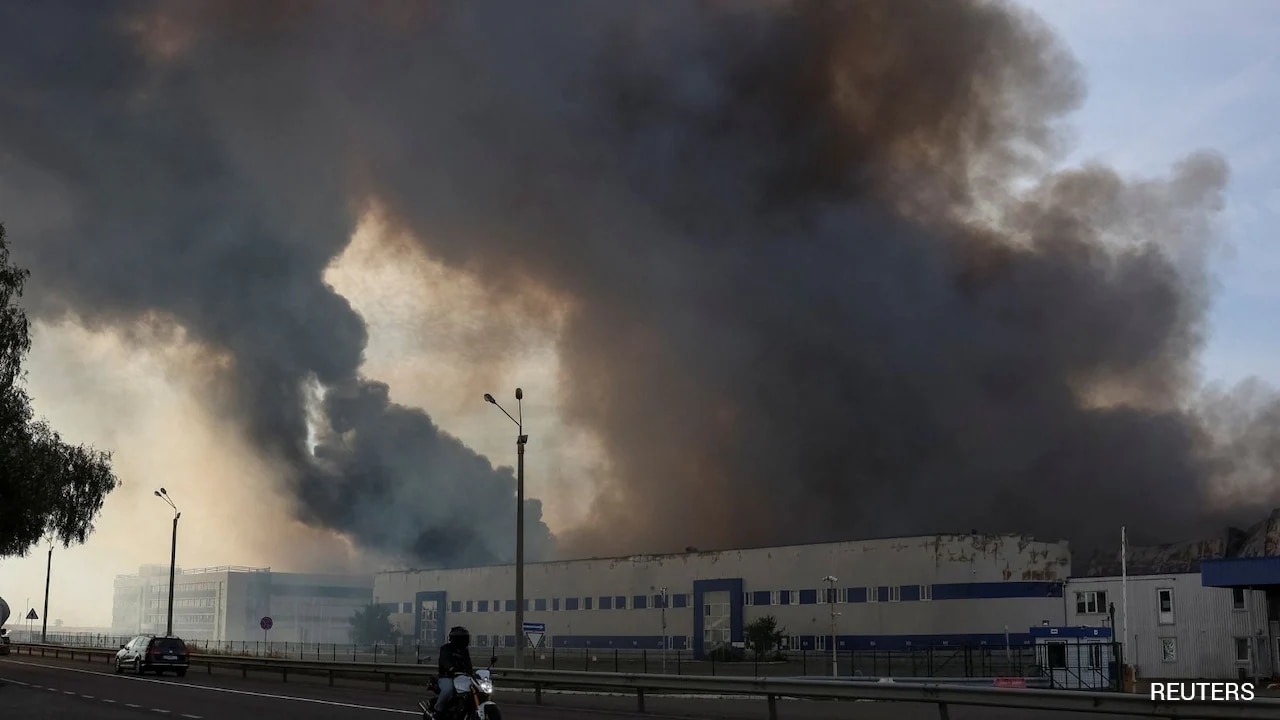
Sustained aerial bombardments against metropolitan centers alter the economic and structural viability of urban real estate. When a high-rise residential building in Kyiv absorbs a kinetic impact from an inbound jet-powered drone or missile fragment, the primary casualty count represents only the most visible variable in a complex equation of societal disruption. Evaluating these strikes requires moving past tactical reporting and examining the structural mechanics of municipal vulnerability, emergency response allocation, and urban attrition economics.
The Mechanics of Structural Degradation in High-Density Zones
Modern municipal architecture relies on distributed load-bearing systems that maintain stability under standard vertical and horizontal loads. A kinetic strike against upper residential tiers, such as the upper-floor impacts documented in recent Kyiv engagements, introduces localized thermal and mechanical stress that defies standard engineering tolerances.
- Thermal expansion from localized fuel deflagration weakens reinforced concrete bonding agents.
- Shockwave propagation compromises structural integrity across adjacent interior partition walls, even when primary external columns remain standing.
- Debris descent mechanics transform upper-story components into vertical kinetic hazards for surrounding lower-level infrastructure.
Urban density magnifies the radius of collateral disruption. When an unmanned aerial vehicle or intercepted ordnance strikes a residential tower, the immediate footprint extends far beyond the point of impact. Shattered glass, compromised window assemblies, and ruptured utility lines across multiple stories render entire vertical stacks uninhabitable, forcing immediate evacuation protocols for dozens of residents regardless of whether their individual apartments sustained direct structural damage.
The Resource Allocation Equation for Municipal First Responders
Emergency management during sustained aerial campaigns operates under strict triage mathematics. Every secondary fire ignited in a residential high-rise forces a reallocation of municipal resources away from critical infrastructure maintenance, medical transit networks, and secondary rescue operations.
The operational lifecycle of a single strike response follows a rigid sequence. First, air defense alert states dictate whether emergency crews can mobilize immediately or must seek shelter during active tracking phases. Second, specialized high-altitude suppression equipment is required to combat fires on upper residential tiers, where standard ground-level water pressure systems prove insufficient. Third, structural engineers must execute rapid load assessments to determine whether search and rescue personnel can safely enter compromised stairwells.
This multi-tiered response introduces severe operational friction. When multiple districts experience simultaneous impacts, response times lengthen, increasing the vulnerability window for trapped occupants and elevating the probability of secondary structural failures before stabilization can occur.
The Attrition Calculus of Urban Air Defense
The strategic objective behind continuous nighttime drone and missile barrages against capital infrastructure extends beyond immediate physical destruction. By forcing a high-frequency deployment of defensive interceptor assets, these campaigns stress the logistics chain governing counter-air capabilities.
Urban centers present a difficult defensive geometry. Protecting a sprawling metropolitan area requires layered intercept zones that minimize ground debris fallout over populated sectors. When interception occurs at lower altitudes closer to residential zones, the probability of falling shrapnel and unspent propellant damaging civilian property rises exponentially. Conversely, pushing interception perimeters outward requires a higher density of surface-to-air launch platforms and radar tracking nodes.
The economic burden shifts continuously between defense expenditure and structural rehabilitation. Each residential tower requiring facade reconstruction, window replacement, and internal utility rewiring diverts capital away from productive economic output. Over time, the cumulative cost of urban repair functions as a slow-drain economic mechanism, testing municipal resilience and forcing civilian populations to adapt their daily operational parameters around persistent air raid alerts and structural recovery cycles.
Deploy immediate structural engineering diagnostics on damaged high-rise perimeters before authorizing re-entry, prioritizing critical utility isolation to mitigate secondary fire hazards in adjacent urban sectors.