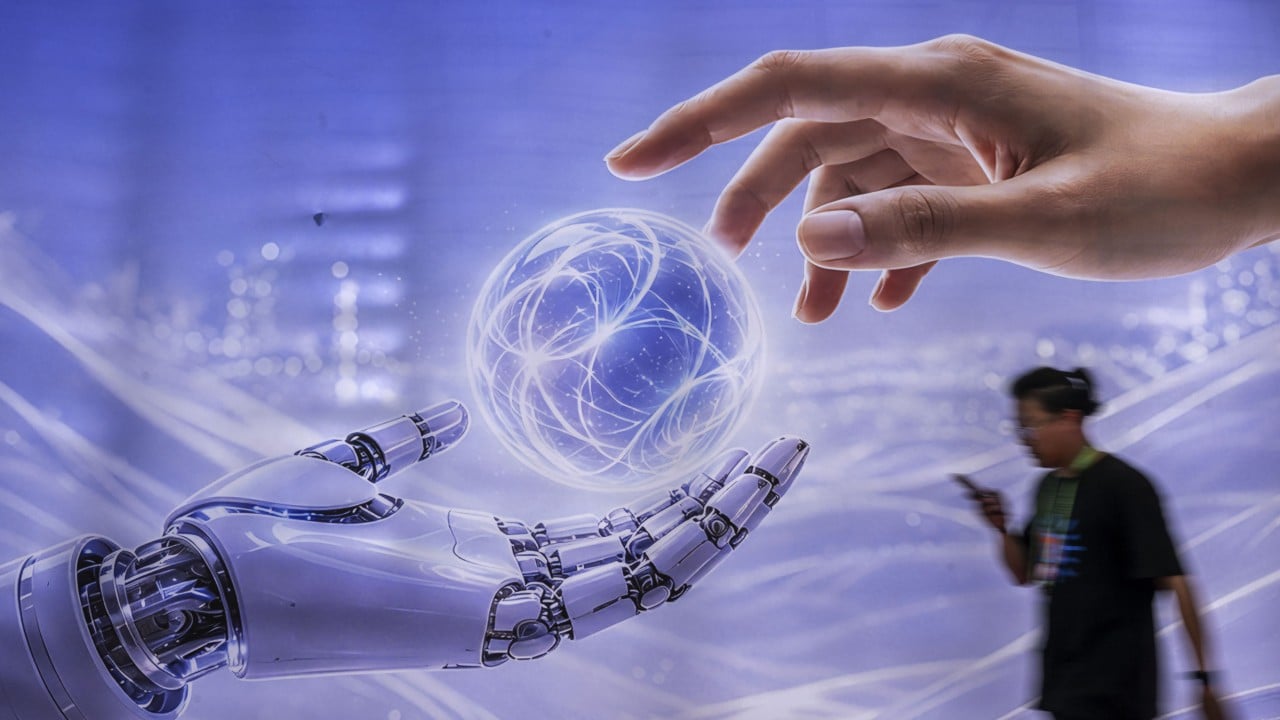
For years, tech executives loved to kick the can down the road. They promised that general-purpose humanoid robots were just around the corner, only to quietly adjust their timelines to a decade or more away whenever hardware or software hit a wall. Wang Xingxing, the founder of Unitree Robotics, used to fall into that camp. Not anymore.
Wang recently admitted that his biggest mistake over the past decade was not believing strongly enough in how fast AI would evolve. Thanks to the arrival of OpenAI's GPT-6 and the horizon-scanning view of subsequent models like GPT-7, the timeline for practical humanoid robots has compressed dramatically. We are no longer looking at decades of incremental engineering. We are looking at an inflection point that could arrive as early as next year.
The Real Shift Behind Embodied Intelligence
Most casual observers think robots fail because their legs wobble or their hands drop things. They focus on the hardware. But the real bottleneck has always been the brain, not the brawn. For a robot to operate in a chaotic human environment, it needs high-level reasoning that can adapt to unstructured spaces. It cannot rely purely on rigid, pre-written code for every single step of a chore.
When OpenAI released GPT-6, it completely scrambled how engineers inside the robotics space viewed what was possible. Unitree tested the model across multiple robotic platforms, and the results caught even the developers off guard. Instead of weeks of specialized programming just to get a mechanical arm to pick up an odd-shaped object, large language and multimodal models allowed robots to understand vague human prompts on the fly. They could process an unfamiliar room, figure out where things belonged, and execute tasks they had never explicitly been trained to perform in a lab.
Wang now defines the threshold for maturity quite simply: a robot must be able to walk into roughly 80% of unfamiliar environments and successfully complete about 80% of tasks assigned via simple spoken or written instructions. According to his updated forecasts, we could hit that exact tipping point by 2028, with initial major breakthroughs driven by upcoming model iterations landing much sooner.
Where the Industry Stands Right Now
Factories are already serving as the initial testing grounds. Major manufacturing facilities are running active pilots where humanoid hardware works alongside human employees. Yet, factory floors are relatively structured compared to the messy reality of a family home or a commercial office building.
Factories have predictable lines of sight, designated drop zones, and clear safety protocols. Homes do not. A robot trying to clean up a living room has to deal with stray toys, shifting pets, furniture that gets moved around, and instructions like "clean up that mess over there." That requires a level of common-sense reasoning that only advanced frontier AI models can supply.
This is why companies like Unitree are shifting their focus heavily toward self-improving software architectures. Unitree’s recent work involves systems where the AI itself searches through research papers, writes code, tests it in virtual simulations, and then pushes updates down to physical test units. By letting the software iterate at digital speeds, hardware companies are trying to bypass the painfully slow loop of manual coding.
What Needs to Happen Before Mass Deployment
Even with brilliant reasoning engines running the show, several massive hurdles remain before millions of humanoids populate our streets and workplaces.
First, generalization needs to improve so that a skill learned in one environment transfers instantly to another without crashing the system. Second, energy efficiency is a constant battle. Running high-end multimodal AI models alongside heavy-duty motor controllers demands a lot of juice. If a robot's battery dies after an hour of heavy reasoning, it isn't very useful in a commercial setting.
We also have to confront the data crunch. Training these physical AI models requires millions of hours of real-world interaction data. Companies are racing to capture, buy, and synthesize this data, turning everyday physical movements into digestible training datasets.
If you're watching this space, stop looking at the mechanical joints and start looking at the model updates. The hardware is ready; it's the software that's finally catching up to the science fiction.