State-media footage of an Iranian Islamic Revolutionary Guard Corps (IRGC) underground missile base signals psychological signaling and hardened storage, not an automatic shift in battlefield survival. Standard coverage of the November 2026 unveiling treats a tunnel walkthrough as proof of an invulnerable "missile city," conflating passive shelter with combat-ready firepower.
A rigorous strategic analysis separates three distinct layers: the Three Functional Tiers of Subterranean Facilities, the Portal Bottleneck, and the Escalation Cost Function. Separating these mechanisms exposes where hardened tunnels actually help Tehran and where they create severe operational constraints under sustained strikes.
Separating Protected Storage from Active Launch Power
Headline reporting often treats every underground corridor shown on television as a self-contained arsenal. Defense analysts draw a sharp line between holding hardware and firing it under fire.
The Three Functional Tiers of Subterranean Facilities
- Tier 1: Hardened Storage and Staging. Deep rock cover protects transporter-erector-launchers (TELs), ballistic missiles, and cruise missiles from initial standoff strikes. Survival here lowers pre-launch attrition during the opening hours of a conflict.
- Tier 2: Assembly, Maintenance, and Telemetry. Underground bays can host propellant handling, diagnostic checks, and warhead integration if ventilation, power, and blast doors remain intact. This tier is far more vulnerable to precision power-grid or logistics disruption than a bare storage drift.
- Tier 3: Full Industrial Production. Manufacturing airframes, guidance electronics, and solid-rocket motors requires heavy machine tools, supply chains, and specialized inputs. Tunneling alone does not create high-rate production capacity.
Known facts vs. educated hypotheses: Footage released in November 2026 shows IRGC Aerospace Force leadership and armed forces officials touring a subterranean site with missiles and launch vehicles on display. What remains an educated hypothesis—not verified from staged television tours—is the site's depth, exact geologic overburden, real-time sortie generation rate, and whether the displayed units represent fresh production or consolidated inventory.
The first operational limitation is reloading throughput. Moving heavy launchers out of deep tunnels, positioning them for launch, and returning or reloading them introduces predictable movement windows.
Why Tunnel Entrances Create a Chokepoint
A missile inside a deep tunnel cannot strike a target until it exits through a portal. That transition turns an invulnerable bunker into a time-bound logistics funnel.
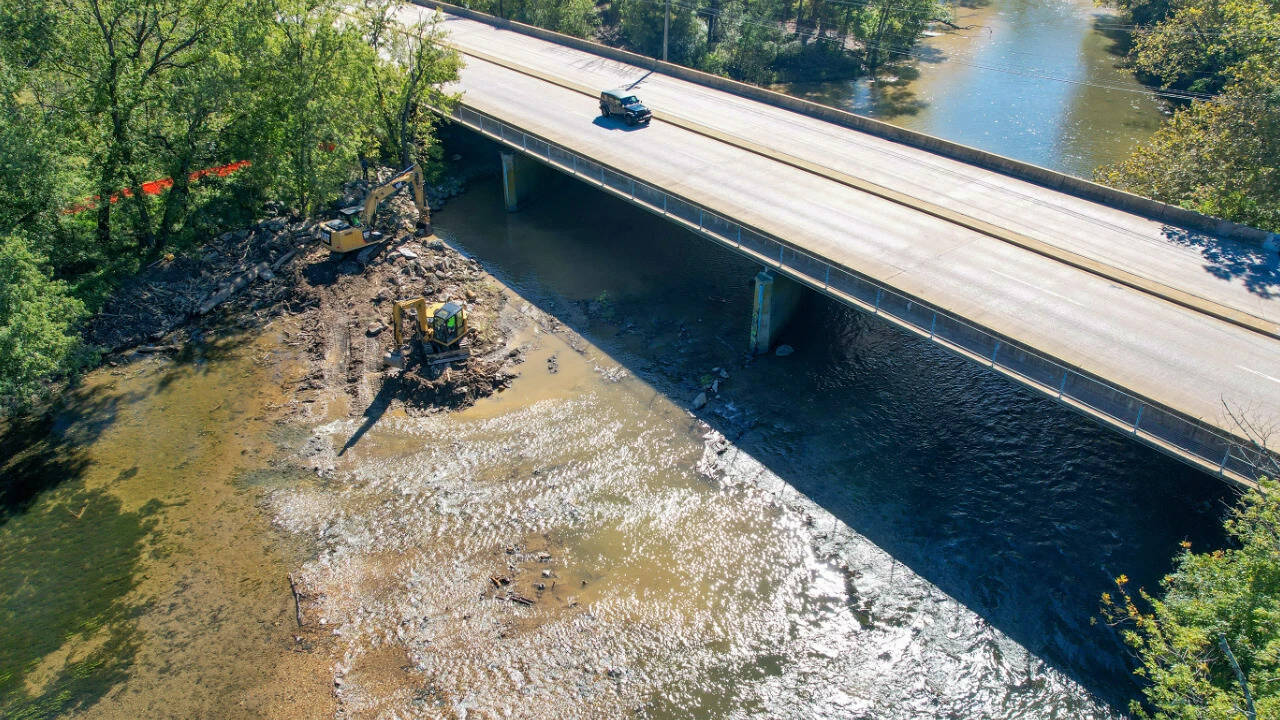
Satellite assessments following earlier strikes in 2025 and 2026 illustrate both sides of this dynamic. Commercial imagery reviewed in 2026 showed IRGC crews clearing rubble and reopening dozens of damaged tunnel portals across multiple sites. Reopening a collapsed adit proves engineering persistence, yet clearing debris takes time, heavy machinery, and exposure to follow-on observation.
The Portal Bottleneck
- Chokepoint exposure: Adits and blast doors are the weakest structural points of an underground complex. Sealing or cratering an exit delays launcher egress even if the main cavern survives.
- Signature generation: Every exit, movement to a firing point, and rocket launch creates thermal, radar, or optical signatures that counter-battery intelligence, surveillance, and reconnaissance (ISR) networks track.
- Dispersal trade-off: Keeping launchers inside a base preserves them from immediate strike, while dispersing them into the open increases launch readiness at the cost of higher vulnerability to aircraft and loitering munitions.
Consider a practical sequence during a high-intensity strike campaign. Even if 80% of stored launchers survive inside rock chambers, an adversary using persistent overhead surveillance and bunker-defeating munitions can pin down exits, strike portals during clearing operations, and hunt launchers once they emerge. Hardening delays depletion; it does not eliminate attrition.
Strategic Signaling and the Escalation Cost Function
Unveilings timed around military anniversaries or diplomatic pressure serve domestic cohesion and external deterrence simultaneously. Showing modern launchers and invoking broader regional or inter-theater reach communicates resolve to domestic hardliners and foreign capitals alike.
The Escalation Cost Function
- Deterrence dividend: Demonstrating surviving arsenal capacity raises the expected cost of a short, limited strike aimed at quick disarmament.
- Targeting magnet: Publicizing new bases or capabilities invites intelligence collection and expands the target set once hostilities begin.
- Proportionality trap: Public pledges of wider retaliation lock leadership into high-cost responses that risk triggering heavier counter-strikes against energy, command, or industrial nodes.
The second operational limitation is information asymmetry. State-controlled broadcasts curate camera angles, lighting, and hardware selection. Analysts who treat promotional footage as an audited inventory misprice both defensive resilience and offensive capacity.
A concrete illustration shows how signaling backfires when overplayed. If a force advertises long-range strike reach or dense underground reserves and then fires fewer salvos than expected—or suffers rapid portal closures—adversaries infer operational friction rather than restraint.
Strategic Action for Decision-Makers
Defense planners, risk analysts, and policymakers should evaluate underground missile bases through portal-to-salvo throughput and sustained reconstitution speed, rather than tunnel count or staged footage. Track three concrete indicators: recurring heavy-equipment activity around known tunnel entrances after strikes, verified changes in missile launch cadence over multi-week intervals rather than single-day salvos, and supply-chain bottlenecks in specialized guidance and propulsion components.
Iran Unveils "Missile City," a New Underground Missile Base
This short news clip illustrates how state-promoted footage of an underground missile facility is visually packaged during heightening regional tensions.