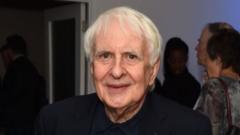
The passing of Peter Gill at the age of eighty-six marks the loss of a rare archetype in modern performance art: an artist who viewed the stage not as a playground for self-indulgence, but as an altar for absolute truth. To understand Gill, who shaped the landscape of post-war British drama as both a visionary director and a razor-sharp playwright, one must confront an uncomfortable reality. Commercial stages today are increasingly driven by spectacle, branding, and risk aversion, a direct antithesis to the uncompromising ethos Gill spent six decades defending. While mainstream retrospectives praise his quiet influence, they often sanitize the structural friction he caused. Gill was never merely "quietly seismic"; he was a persistent, abrasive challenge to institutional complacency, forcing audiences and actors alike to look at the unadorned mechanics of class, desire, and regional identity.
Born into a working-class Welsh Catholic family in Cardiff, Gill understood early on that authentic human experiences rarely arrived with theatrical fireworks. His initial entry into the industry was as an actor—eagle-eyed viewers can spot him in the film Zulu—before he found his true home at London's Royal Court Theatre under the orbit of George Devine. It was there that Gill codified his lifelong artistic creed: an absolute belief in the sanctity of the written text, a rigorous purity of design, and an unwavering respect for the actor's internal psychological reality. He did not care for directorial vanity. When Gill staged a production, the ego of the director vanished behind the architecture of the play.
His watershed moment arrived in 1968 with his rediscovery and direction of three neglected D.H. Lawrence plays: A Collier's Friday Night, The Daughter-in-Law, and The Widowing of Mrs Holroyd. Before Gill, these works were largely dismissed as unplayable domestic realism. Gill unlocked their rhythmic poetry, transforming ordinary domestic friction into something monumental. Critics scrambled for vocabulary to describe how he made the mundane details of working-class existence compelling. He achieved this not through stylistic trickery, but by listening closely to the pauses, the unspoken resentments, and the physical stiffness of people trapped by their social standing.
As a playwright, Gill practiced the brutal economy he preached. His own early writing, such as his debut The Sleepers' Den (1969)—which memorably staged three generations of women confined to shared beds—refused to romanticize poverty. Later works like Small Change (1976) and Cardiff East (1997) mined his upbringing for painful emotional truths, dealing with adolescent trauma, homosexual desire, and industrial decline long before those themes became standard theatrical currency. The York Realist, which premiered at the Sheffield Crucible and transferred to the West End in 2002, remains his masterwork. It explored the tragic intersection of class and romance between a rural farm laborer and a London theatre director. The play was devoid of sentimentality, laying bare how cultural displacement can destroy intimacy.
Yet, Gill’s uncompromising standards made him an increasingly uneasy fit for an industry shifting toward corporate sponsorship and managerial consensus. His tenure as the founding director of the National Theatre Studio, established in 1984 to foster uninhibited writer development, ended amid institutional friction. Gill wanted a laboratory for raw expression; administrative boards often preferred predictable output. He was constitutionally unequipped for institutional compromise. If a script was false, he said so. If an actor relied on superficial habits rather than emotional excavation, he corrected them. This absolute dedication to craft earned him the fierce devotion of peers like Ian McKellen and David Hare, but it also led to periods of professional isolation in his later decades.
The institutional amnesia surrounding artists like Gill reveals a structural flaw in modern cultural funding. Contemporary theatres, squeezed by rising overhead and terrified of alienating donor bases, frequently prioritize commercial transfers and high-concept revivals over austere psychological truth. The quiet revolution that Gill spearheaded—where silence, regional accents, and ordinary domestic pain carried the weight of tragedy—has been largely sidelined in favor of high-decibel multimedia staging.
Consider how modern venues treat new writing. Writers are often pushed into writers' rooms where scripts are vetted by committees, sanded down of their rough edges, and optimized for broad demographic appeal. Gill operated on the exact opposite principle. He believed that specificity bred universality. By anchoring his work in the hyper-specific rhythms of Welsh working-class life or Yorkshire agricultural labor, he tapped into universal anxieties about belonging and alienation.
His architectural contributions were equally monumental, though rarely celebrated in corporate boardrooms. Transforming a derelict television studio in Hammersmith into the Riverside Studios in the late 1970s was a feat of visionary enterprise. Gill wanted an alternative space where international classics could be mounted with clarity and without the suffocating weight of West End traditionalism. He directed stunning productions of The Cherry Orchard and The Duchess of Malfi there, proving that adventurous spatial design could alter how an audience perceives classical text. Riverside became a blueprint for fringe and Off-West End spaces that followed, though few managed to replicate its intellectual rigor.
When an artist of Gill's stature departs, the tributes roll out with predictable melancholy, lamenting the loss of a giant while quietly ignoring the conditions that marginalized him toward the end of his life. The theatrical establishment praises his integrity while continuing to reward the very commercial shortcuts he spent a lifetime resisting. To honor Peter Gill properly is not merely to quote his admirers or catalog his premieres. It requires interrogating why contemporary stages are so heavily populated by safe, frictionless entertainment, and why modern institutions have grown so afraid of the unsparing honesty he championed until his final days.
The scripts he left behind, from The York Realist to his late-career gem Something in the Air (2022), stand as a permanent indictment of theatrical cowardice. They demand actors who can inhabit silence and directors who possess the courage to let a moment breathe without rushing to fill it with noise. Whether today's commercialized stages have the appetite to heed that demand remains an open, uncomfortable question.