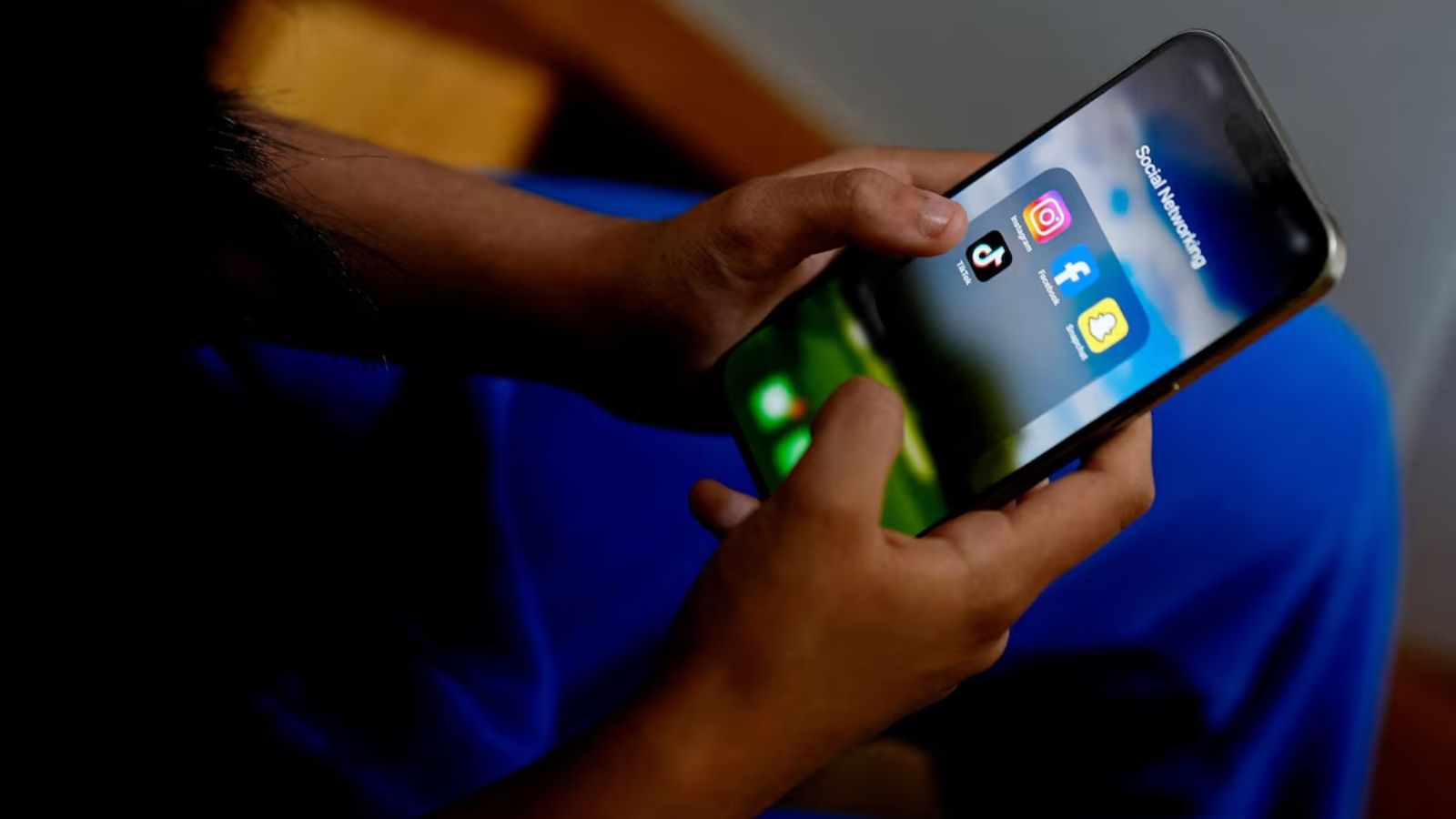
The British government wants to tuck your teenagers into bed and turn off their internet.
Under newly announced plans, 16 and 17-year-olds in the UK face an overnight social media curfew. From midnight to 6:00 AM, major apps like Instagram, TikTok, and YouTube will automatically lock up. Algorithms will freeze. Feeds will go dark. Alongside the curfew, addictive features like infinite scroll and auto-play videos will be switched off by default.
It sounds strict. It sounds radical. But there is a massive catch.
Teens can opt out with a couple of clicks.
The entire policy rests on the honor system. Ministers are pitching this as a protective shield to help older adolescents get more sleep, focus on college, and reconnect with reality. In reality, it is a toothless regulation that underestimates the digital literacy of teenagers while shifts the burden of enforcement onto tech companies that have historically failed to cooperate.
If you think a tech-savvy 17-year-old is going to accept a midnight lockout just because a government default tells them to, you don't know teenagers.
The Illusion of the Opt Out Default
The mechanics of the proposed curfew are straightforward. From next spring, anyone aged 16 or 17 will find their social media accounts restricted during the six-hour midnight window. The Department for Science, Innovation and Technology (DSIT) modeled this approach after a small pilot study involving 300 families. According to the government, when curfews were applied, teens slept better and family arguments decreased.
Online Safety Minister Kanishka Narayan argues that defaults work. He noted that when some platforms introduced voluntary time-management prompts previously, over 90% of teens kept them active.
But a gentle reminder to take a break is entirely different from a total midnight lockout.
"Either they think 16 and 17-year-olds should be on social media or they don't, but curfews they can simply switch off won't achieve anything," argues Laura Trott, the opposition's shadow education secretary.
She is right. The logic collapses under minimal scrutiny. A 16-year-old in the UK can legally leave home, get a job, pay taxes, and join the armed forces. In some political circles, there is a push to give them the right to vote. Yet, the government treats them as too vulnerable to manage their evening screen time, while simultaneously handing them the exact tool needed to bypass the restriction. It is a bizarre regulatory middle ground.
The Technical Nightmare of Age Verification
For a default curfew to work, platforms must accurately know who is 16 and who is 18. That requires robust age assurance, an area where tech companies and regulators have stalled for years.
Tech firms like Meta want device manufacturers like Apple and Google to handle age verification at the operating system level. Apple recently launched device-level checks on newer iOS versions, prompting users to verify their age through their Apple ID. But millions of older devices do not support these features.
If the platforms have to build the verification tools themselves, the options are messy:
- Facial age estimation scans via the front-facing camera.
- Credit card verification checks.
- Uploading government-issued identification.
Most older teenagers already use accounts with falsified birth years. Unless Ofcom forces a retrospective, hard-line identity check on every single existing social media profile in the UK, millions of older teens will simply fly under the radar undetected.
Furthermore, the government has refused to curb the use of Virtual Private Networks (VPNs). If a teenager leaves their account settings alone but uses a free VPN to routing their traffic through France or the United States, the UK-specific curfew instantly breaks down.
The Unintended Harms of Digital Isolation
While the health motives behind better sleep are admirable, child safety advocates warn that blunt digital lockouts can backfire.
Professor Sonia Livingstone from the London School of Economics points out that a midnight block could cut off vulnerable youth when they need support the most. For LGBTQ+ teens, individuals dealing with toxic home environments, or those struggling with late-night mental health crises, online communities are a vital lifeline.
If a young person cannot reach out to a trusted peer group or a digital support forum at 2:00 AM, they are left isolated. The government's solution is to keep messaging services like WhatsApp and Signal open, but community support often lives on public platforms like Reddit or Discord, which face restrictions.
Moving Beyond Simple Digital Sticking Plasters
If you are a parent or educator trying to manage teenage screen time, waiting for government defaults to take effect next spring is a losing strategy. The NSPCC has rightly called these voluntary curfews a "sticking plaster" that ignores the root issue: the addictive architecture of the apps themselves.
Instead of relying on a flawed legislative framework, practical interventions require direct, local action.
Start by changing device settings directly rather than hoping platforms comply. Use built-in operating system tools like Apple’s Screen Time or Google’s Family Link. These allow parents to set hard downtime rules that cannot be bypassed with a simple click in an app menu. Move chargers out of bedrooms entirely. The pilot data shows that physical absence of the phone does more for sleep quality than any software toggle ever will. Talk openly with older teens about algorithmic manipulation. When they understand how auto-play and infinite scroll are engineered to steal their time for ad revenue, they are far more likely to disable those features voluntarily. Regulation will always lag behind teenage ingenuity. Real digital balance starts at home, not in Parliament.