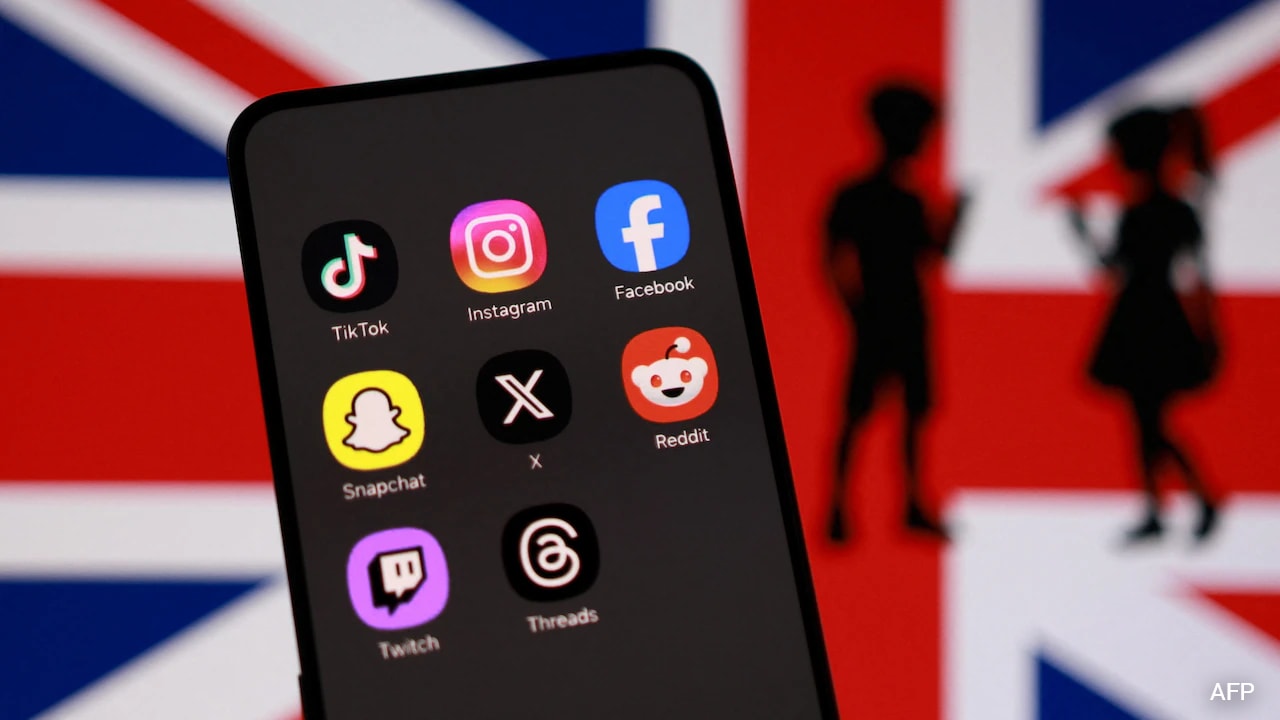
The British government is about to throw a giant, expensive blanket over a raging bonfire and call it firefighting.
With rumors swirling that Whitehall is preparing to announce a mandatory midnight social media curfew for teenagers, the political class is already lining up to pat itself on the back. It sounds so simple, so common-sense. Lock the digital gates at 12:00 AM, and suddenly millions of sleep-deprived, anxious teenagers will drift off into blissful, restorative sleep, free from the toxic clutches of algorithms.
It is a beautiful fantasy. It is also an absolute lie.
As someone who has spent fifteen years analyzing digital infrastructure and tracking youth online behavior, I can tell you exactly what this policy is: cheap, performative legislation designed to make older voters feel like "something is being done" while doing absolutely nothing to solve the root crisis of youth mental health.
We are treating a systemic societal rot with a bedtime. And the worst part? It is going to backfire spectacularly.
The Tech Reality That Politicians Conveniently Ignore
Let us start with the glaring technical illiteracy of this proposal. How, exactly, does a government enforce a nationwide digital curfew on a specific demographic without turning the country into a surveillance state?
They cannot.
To implement a bulletproof curfew, platforms must know three things with absolute certainty: who is on the app, how old they are, and where they are located.
- The Age-Verification Myth: Standard age-verification methods are a joke. Teenagers bypass them in seconds. The more robust solutions—requiring facial scans or uploading government-issued IDs—present a massive data privacy nightmare. We are asking platforms that we already distrust with our data to hold the digital passports of every child in the country.
- The VPN Loophole: Any teenager with a search engine can bypass a UK-specific IP block in three clicks. A virtual private network (VPN) routes their traffic through France or Ireland, and suddenly, the midnight curfew is irrelevant.
- Sideloading and Off-Grid Apps: Restricting mainstream giants like TikTok or Instagram just drives the most vulnerable users to unmoderated, peer-to-peer messaging boards and alternative platforms. We are pushing kids out of monitored, relatively safe public squares into the dark corners of the web where no safety guardrails exist.
When you ban the front door, you do not stop the party. You just force kids to use the fire escape.
Dismantling the "Safe Sleep" Delusion
The core argument for the curfew is that late-night scrolling is destroying teen sleep. Yes, blue light and dopamine loops disrupt sleep architecture. That is basic biology. But the assumption that removing the smartphone automatically yields a healthy, resting teenager is a massive logical leap.
In my years analyzing behavioral patterns, I have seen parents and policymakers repeatedly confuse the symptom with the disease.
A Thought Experiment: Imagine a highly stressed 16-year-old dealing with academic pressure, social isolation, or family tension. At 11:59 PM, their phone locks. Does their brain suddenly stop spinning? Do their cortisol levels plummet? No. They lie awake in the dark with their thoughts, now cut off from the only peer support network they have.
We have built a world where physical public spaces for teenagers have been systematically systematically dismantled—youth clubs closed, public parks heavily policed, third spaces commodified. The internet became their only remaining playground. Shutting down the digital playground at midnight without addressing why they are desperately clinging to it in the first place is a form of cognitive evasion.
And let us be brutally honest about the parents.
A government curfew is a cop-out for parental responsibility. It allows parents to outsource boundaries to a state-mandated digital wall. "I don't need to have a difficult conversation with my child about screen time because the government turned off their phone." This destroys the exact thing we actually need to cultivate: digital resilience and self-regulation.
You do not teach a child to swim by draining the pool. You teach them by getting in the water with them.
The Real Damage of Government Overreach
When governments step in to act as the ultimate arbiter of screen time, they create a highly dangerous precedent.
If the state can mandate a curfew for teenagers "for their own health," what stops them from expanding it? Why not a curfew for adults on election eve to "prevent misinformation"? Why not block access to news apps during civil unrest to "maintain public order"?
Once the infrastructure for nationwide, time-based content blocking is built and validated by public consensus, it will be used again. Authoritarian tools do not disappear when the political party in power changes. They sit there, fully loaded, waiting for someone worse to pull the trigger.
How to Actually Address the Youth Mental Health Crisis
If we want to stop playing theater and actually protect teenagers, we need to dismantle the systemic incentives that make social media toxic in the first place. A curfew targets the clock. We need to target the business model.
1. Ban Algorithmic Amplification for Under-18s
The problem isn't that kids are online; it is that they are being fed a hyper-personalized, dopamine-optimized feed designed to keep them eyeballs-down. We should legally mandate that users under 18 can only access chronological feeds. No algorithmic recommendations. No infinite scroll. Let them see what their friends posted, and then let the feed end.
2. Outlaw Persistive Notifications
Platforms use push notifications like digital cattle prods. A simple legislative ban on sending push notifications to accounts registered to minors between 9:00 PM and 7:00 AM would do more for teen sleep than any sweeping curfew ever could. It removes the external trigger without resorting to heavy-handed censorship.
3. Rebuild Physical Spaces
If we want kids to get off their phones, we have to give them somewhere to go. Invest the millions that would be wasted on enforcing and litigating this curfew into youth centers, community sports, and safe physical spaces.
The Hard Truth Nobody Wants to Hear
The proposed UK curfew is not about the kids. It is about the adults.
It is about politicians who want an easy headline to prove they are tackling "Big Tech." It is about parents who are too tired or too disconnected to enforce rules in their own households. It is a lazy, top-down, authoritarian sticking plaster on a deep, gaping wound.
When midnight strikes and the screens go dark, the anxiety, the loneliness, and the systemic pressures facing today's youth will still be sitting there in the dark with them. We will have solved nothing. We will have only succeeded in making ourselves feel better while leaving an entire generation stranded in the quiet.