The United Arab Emirates has delivered a blunt message to Washington and its regional neighbors. Force will not solve the crisis with Iran, and there are no quick off-ramps once the shooting starts. Behind the diplomatic phrasing lies a cold, hard calculation rooted in geography, global trade, and the brutal reality of modern asymmetric warfare.
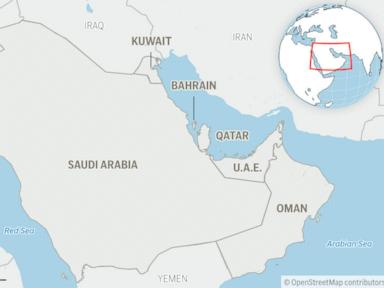
Abu Dhabi sits just across the narrow waters of the Persian Gulf from the Iranian coast. For decades, Western policymakers have debated containment and deterrence from thousands of miles away. Emirati leaders do not have that luxury. They look out their windows at the shipping lanes that keep their economy breathing and see an adversary capable of turning the entire region into a burning parking lot within hours.
Geography Dictates Everything in the Persian Gulf
Distance changes perspective. When analysts in Washington or London discuss "surgical strikes" or "limited kinetic options" against Iranian nuclear or military infrastructure, they imagine a contained exchange. They picture precision-guided munitions hitting hardened bunkers, followed by a return to the negotiating table.
Emirati officials see something entirely different. They see a map where Dubai and Abu Dhabi sit well within the range of Iran’s most basic, low-cost ballistic missiles and one-way attack drones.
The Strait of Hormuz is barely twenty-one nautical miles wide at its narrowest point. Roughly a fifth of the world's total petroleum consumption passes through this chokepoint every single day. If a full-scale military confrontation erupts, Iran does not need to defeat the United States Navy in a traditional sea battle to win. It only needs to make the water uninsurable for commercial shipping.
A single anti-ship missile hitting a supertanker, or a handful of naval mines dropped in the shipping lanes, freezes global energy markets instantly. Lloyd’s of London pulls coverage. Tanker captains drop anchor. Within days, the economic shockwaves hit every major capital on earth. For the UAE, whose entire modern identity is built on being a safe, stable hub for global capital, aviation, and logistics, a closed Gulf is an existential threat.
The Myth of the Clean Strike
Military history is littered with campaigns that were supposed to be over by Christmas. The belief that airpower alone can force a regime to capitulate is one of the most persistent illusions in modern statecraft.
Consider what happens the morning after a major strike on Iranian soil. Even if the initial wave destroys key air defenses, missile production facilities, and naval assets, the political leadership in Tehran faces a binary choice. They can surrender under fire, which guarantees their domestic collapse, or they can escalate horizontally across the region to impose unbearable costs on their enemies.
Iran has spent forty years preparing for that exact scenario. They built a decentralized network of regional proxies, hardened underground missile cities, and asymmetric naval capabilities specifically because they knew they could not match Western conventional militaries tank for tank or jet for jet.
If pushed into a corner, Tehran’s playbook is predictable:
- Direct strikes on Gulf energy infrastructure, targeting desalination plants, oil terminals, and power grids across the Arabian Peninsula.
- Activation of regional militias in Iraq, Syria, Lebanon, and Yemen to attack Western bases and commercial vessels simultaneously.
- Cyber warfare operations aimed at crippling banking networks, port logistics, and aviation hubs in Dubai and Riyadh.
- Mine warfare and swarm boat attacks designed to choke off maritime traffic in both the Persian Gulf and the Red Sea.
For the UAE, the vulnerability of desalination plants is particularly acute. Like most Gulf states, the Emirates rely almost entirely on desalinated seawater for drinking water and agriculture. A handful of cheap drones hitting coastal water facilities could create a humanitarian crisis in major cities within seventy-two hours. Air defense batteries like Patriot and THAAD are remarkably effective, yet they operate on an unfavorable cost curve. Firing a multi-million-dollar interceptor to shoot down a twenty-thousand-dollar drone is a math problem that eventually favors the attacker.
The Economic Fortress Under Threat
To understand why Abu Dhabi is preaching restraint, you have to look at what the country has spent the last thirty years building. The UAE transformed itself from a collection of quiet fishing and pearling ports into the undisputed commercial capital of the Middle East.
Dubai International Airport is the busiest hub for international passengers on the planet. Jebel Ali Port is one of the largest container terminals outside East Asia. Sovereign wealth funds like ADIA and Mubadala manage well over a trillion dollars in global assets, investing in everything from Silicon Valley tech startups to European infrastructure.
This entire economic model rests on a single foundational promise. Stability.
Multinational corporations move their regional headquarters to Dubai because the lights stay on, the tax regime is predictable, and the streets are safe. Tourists fly in by the millions because the country feels insulated from the chaos that has plagued other parts of the Middle East.
A shooting war shatters that illusion overnight. Even if missile defense systems intercept ninety-nine percent of incoming threats, the remaining one percent—and the mere sound of explosions over the skyline—triggers capital flight. Expats pack their bags. Foreign executives relocate to Singapore or Zurich. Real estate values plummet. The UAE knows that rebuilding shattered glass towers takes years, but rebuilding lost investor confidence takes decades.
The Lessons of January 2022
This is not theoretical for Emirati leaders. They already lived through a preview.
In January 2022, Houthi militants in Yemen—backed by Iran—launched a coordinated drone and ballistic missile attack against Abu Dhabi. The strikes hit an oil facility near the airport, killing three workers and sparking a fire visible across the city. Additional missiles were intercepted over the capital in the weeks that followed.
The psychological impact on the Emirates was profound. For years, the UAE had projected an image of invulnerability, backed by massive defense spending and close security ties with Washington. Suddenly, commercial flights were briefly disrupted, and global headlines questioned whether the Gulf's premier business hub was truly safe.
Equally sobering was the international response. Emirati officials felt that Washington’s reaction was sluggish and overly cautious, reinforcing a growing suspicion in Abu Dhabi that the United States was pivoting away from the Middle East toward competition with China. When push came to shove, the UAE realized it stood on the front lines alone.
The Diplomatic Pivot Nobody Saw Coming
Following those 2022 attacks, Abu Dhabi executed one of the sharpest strategic pivots in modern Middle Eastern diplomacy. Rather than doubling down on confrontation, the UAE decided to de-escalate directly with Tehran.
Emirati officials reopened diplomatic channels, restored ambassadorial ties, and increased trade delegations. Dubai has long served as a vital commercial lifeline for Iranian businesses navigating Western sanctions, with bilateral trade running into the tens of billions of dollars annually. Abu Dhabi leaned into this economic interdependence, betting that shared commercial interests would buy a measure of security that missile batteries could not guarantee.
This shift was part of a broader regional realignment. Saudi Arabia followed a similar path, signing a Chinese-brokered normalization deal with Iran in 2023. The Gulf states recognized a fundamental truth. Outsourcing their security entirely to external powers left them exposed to decisions made in Washington, Jerusalem, or Tehran without their input.
By maintaining open lines of communication with Iran, the UAE positioned itself as a pragmatic intermediary. When tensions spike, Abu Dhabi wants to be the room where diplomats talk, not the battlefield where armies collide.
The Washington Dilemma and the Trap of Escalation
The UAE’s warning about the lack of "quick off-ramps" is aimed squarely at hawks who believe military pressure can be dialed up and down like a thermostat. In theory, a limited strike sends a message, restores deterrence, and forces the adversary to back down. In practice, escalation rarely follows a script.
Consider a hypothetical scenario where a localized skirmish at sea leads to retaliatory strikes on coastal radar stations. Hardliners in Tehran immediately face internal pressure from the Islamic Revolutionary Guard Corps to demonstrate strength. If they fail to respond, they look weak to their own domestic base and their regional proxies. So they strike back slightly harder. The opposing side then feels compelled to hit a larger target to re-establish dominance.
Neither side originally wanted a full-scale regional war, yet both walk step-by-step into one because neither can afford to be the first to blink. That is the exact trap the UAE is warning against. Once blood is spilled and national pride is on the line, political off-ramps disappear. Leaders become prisoners of their own rhetoric.
Furthermore, military strikes rarely achieve their stated long-term political goals against entrenched regimes. You can destroy buildings, sink ships, and eliminate commanders. You cannot bomb away technical knowledge, ideological conviction, or deeply rooted regional networks. History shows that external attacks often have the opposite effect of what planners intend, rallying a divided population around an unpopular government in the name of national defense.
What De-Escalation Actually Requires
Critics of the Emirati position argue that avoiding military confrontation simply buys Iran time to advance its nuclear program and expand its regional influence. They contend that appeasement only invites further aggression, and that credible military force is the only language Tehran respects.
That counter-argument carries real weight. Diplomacy without leverage is just wishful thinking, and Iran has repeatedly used negotiations to stall for time while continuing its enrichment activities and arming proxy groups. Ignoring those realities would be naive.
Yet the UAE is not advocating for surrender or unilateral disarmament. Abu Dhabi continues to spend billions on advanced air defenses, intelligence gathering, and joint military exercises with Western partners. What Emirati strategists are demanding is a realistic assessment of the endgame before the first shot is fired.
If military action cannot permanently eliminate Iran's capabilities without a massive, protracted ground invasion—which nobody in Washington or the Gulf has the appetite or resources to fight—then any military campaign is ultimately just a violent prelude to a eventual diplomatic settlement. The UAE’s core argument is simple. If you have to sit down and negotiate at the end anyway, it makes far more sense to do it before your cities, ports, and oil fields are in ruins.
The Burden of Proximity
It is easy to advocate for bold military gambles when an ocean separates you from the fallout. Policy papers written in think tanks rarely account for the panic in a supermarket when a desalination plant goes offline, or the sight of an oil tanker burning off the coast of Fujairah.
The United Arab Emirates understands the stakes because it lives in the blast radius. Its leaders have spent half a century turning desert sand into a global financial powerhouse, and they have no intention of watching that achievement burn to test a military theory. Until someone in Washington or Tehran can draw a realistic map showing how a war in the Persian Gulf actually ends, Abu Dhabi will keep standing in the doorway, demanding everyone put their weapons down.