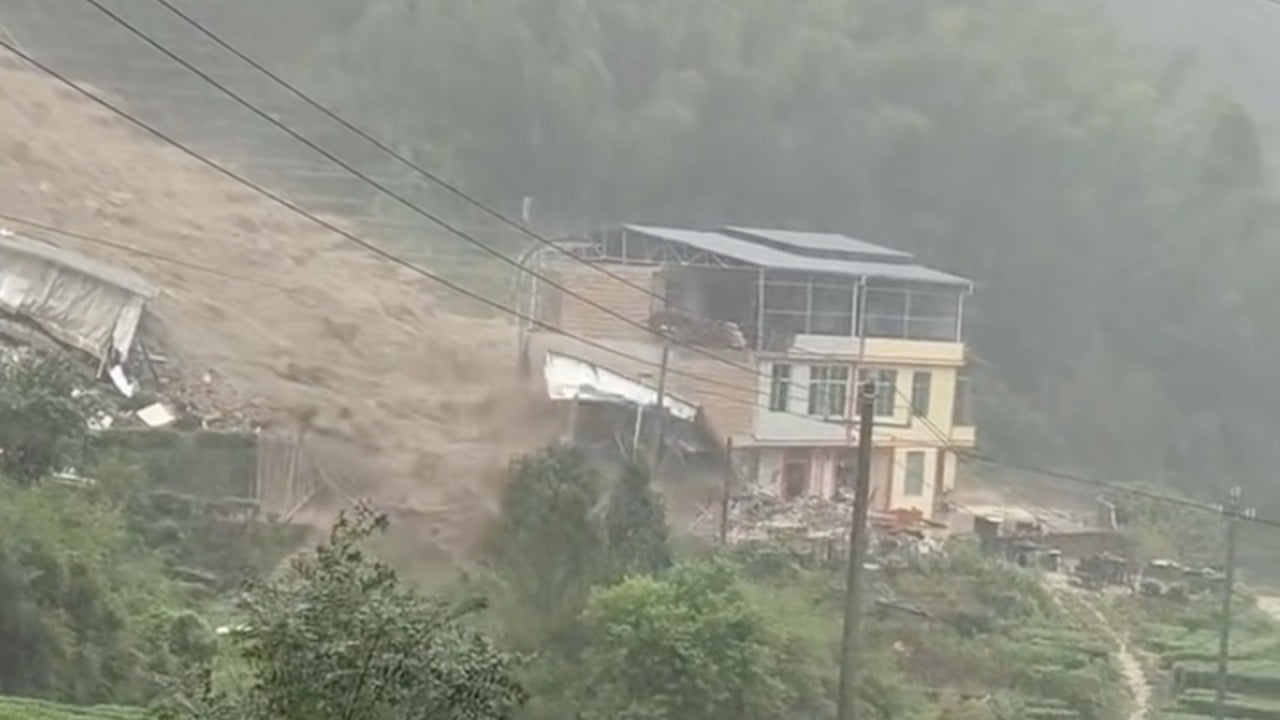
Torrential downpours from Typhoon Saudel didn't just soak China’s eastern and southern coasts; they triggered a catastrophic landslip in Jiangxi province that left one person dead and 11 others missing. When the storm struck Suichuan County, it proved that the real danger of modern typhoons isn't just the wind—it's the relentless water that stays long after the eye has passed.
If you're tracking how extreme weather patterns are shifting across Asia, Saudel offers a brutal masterclass in secondary disasters. The storm didn't follow a standard script. After hammering coastal areas in Zhejiang and Fujian, it tracked inland, feeding on warm moisture and putting millions on edge.
The Anatomy of a Relentless Storm
Saudel marks the seventh typhoon to hit China this season, but its path has baffled regional meteorologists. It made a rare third landfall in Zhangzhou after gaining fresh energy over the South China Sea. That unusual loop gave the system a second wind, turning what should have been a fading tropical depression into an engine for continuous flash floods.
In Wenzhou, over 2,500 students and teachers found themselves marooned inside a school compound as water levels surged past safe thresholds. Emergency responders had to rely on drones just to drop basic food and drinking water supplies to the trapped campus. Down in Fuding, brown floodwaters swallowed cars and forced firefighters to wade through waist-deep currents to rescue stranded elderly residents.
The numbers tell a staggering story of displacement. Authorities evacuated more than 83,000 people in Fujian alone, while hundreds of thousands more relocated across neighboring provinces as rivers breached critical warning thresholds.
Why This Typhoon Season Is Different
You can't talk about Saudel without looking at the bigger climatological picture. Experts point directly to Super El Niño conditions as the root cause behind these erratic tracks.
When the Western Pacific subtropical high locks into an unusually strong and northward position, it acts like a loaded chute. Typhoons form further east, travel massive distances across the ocean, and retain raw intensity right up until they slam into mainland Asia.
This means storms are packing higher precipitation efficiency. They dump localized volumes of water that regional drainage systems simply cannot handle. Following close behind Typhoon Narra, Saudel hit soil that was already completely saturated.
The Deadliest Threat Lies Inland
Coastal flooding gets the camera crews, but inland landslides cause the real heartbreak. Mountainous farming communities like Jinxi village learned this the hard way when raging hillside torrents collapsed a three-story residential building.
When saturated earth loses its structural integrity on steep slopes, gravity takes over instantly. Rescue operations in places like Suichuan County become painfully slow and dangerous because emergency crews have to navigate unstable mud and blocked infrastructure just to reach survivors.
As climate patterns continue to stretch the traditional typhoon season deeper into the winter months, regional disaster response teams are rewriting their playbooks. Staying safe now requires treating every heavy rainfall warning not as a temporary inconvenience, but as an immediate evacuation trigger.