The rattle of a plastic pill bottle is a sound that can get you killed.
That sounds like melodrama until you have sat in a cramped, cinderblock clinic waiting room in sub-Saharan Africa, watching a twenty-two-year-old woman nervously tuck a bottle of blue tablets into the lining of her handbag, wrapping a scarf around it so the pills won't click against each other when she walks past her neighbors. In many parts of the world, carrying daily oral pre-exposure prophylaxis—PrEP—is treated by communities as indistinguishable from carrying antiretroviral therapy for an active HIV infection. The pills look the same. The clinics are often in the same hallway. And the stigma is lethal. Expanding on this topic, you can also read: Blaming a Spider Bite for a Forty-Day Tragedy Misses the Real Killer.
For more than a decade, medical science has possessed the pharmacological ability to stop HIV transmission cold. Oral PrEP works. When taken every single day, it reduces the risk of getting HIV from sex by about 99 percent. Yet, according to UNAIDS, roughly 1.3 million people still acquired HIV in 2023 alone. The virus refused to retreat, not because the chemistry failed, but because human life is messy, dangerous, and unforgiving of daily routines.
Then came a molecule called lenacapavir. And now, the arrival of an approved, low-cost generic version of that drug has quietly shifted the ground beneath global public health. Observers at Medical News Today have shared their thoughts on this trend.
To understand why a regulatory stamp on a generic injection matters so much, you have to step away from pharmaceutical press releases and look at the invisible math of survival in low-income countries.
The Tyranny of the Daily Pill
Consider a hypothetical young woman—let’s call her Amara, a composite drawn from the lived realities of thousands of women across eastern and southern Africa, where adolescent girls and young women account for more than three times as many new HIV infections as their male peers.
Amara lives in a peri-urban township outside Lusaka. She is not reckless. She knows how HIV spreads. She wants to protect herself. So, six months ago, she walked four miles to a public clinic and got a prescription for daily oral PrEP.
Here is what happens next in the real world, far away from clinical trial protocols:
First, Amara has to hide the bottle. If her partner finds it, he may accuse her of infidelity, or worse, assume she is already HIV-positive and hiding it from him. Violence follows that discovery far too often. If her mother-in-law finds it, the gossip will tear through the compound before sundown.
Second, Amara has to remember to take it every twenty-four hours while juggling informal market work, childcare, water shortages, and power cuts. Miss two doses a week, and for women—whose vaginal tissue requires higher, more consistent drug concentrations than rectal tissue to block the virus—protection drops precipitously.
Third, she has to go back to that clinic every ninety days for a refill, burning half a day’s wages on minibus fare and sitting in a queue where everyone knows why you are there.
By month four, Amara stops going. Not because she stopped caring about her life, but because the friction of staying negative became heavier than the fear of turning positive.
Scientists call this an "adherence gap." That is a sterile, bloodless phrase for a tragedy. When a prevention tool requires 365 acts of courage, secrecy, and logistical perfection every single year, the tool is asking too much of human beings.
A Molecular Mousetrap
Lenacapavir changes the physics of that burden.
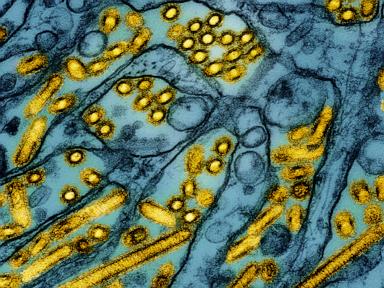
Most HIV drugs work like a wrench thrown into a single gear of the virus’s replication machinery—blocking reverse transcriptase, or halting integrase, or jamming protease. Lenacapavir does something entirely different. Think of the genetic material of HIV as a tightly coiled spring locked inside a microscopic, cone-shaped protein shell called the capsid. For the virus to infect a human cell, that shell has to enter the cell intact, travel to the nucleus, disassemble at the exact right moment to release its genetic payload, and later reassemble to build new viruses.
Lenacapavir acts as a capsid inhibitor. It binds directly to the seams of that protein shell, stiffening it so it cannot properly shed its coat, enter the nucleus, or assemble new viral particles. It jams the virus at multiple stages of its lifecycle simultaneously.
Because the human body breaks down lenacapavir extraordinarily slowly, a single subcutaneous injection—just two shots under the skin of the abdomen—maintains protective drug levels in the bloodstream for six full months.
Stop and let that sink in.
Two clinic visits a year. No pill bottles rattling in a purse. No daily negotiations with fear, forgetfulness, or domestic surveillance. A woman can walk into a clinic in January, receive an injection that leaves no telltale packaging behind, and walk out protected until July.
When Gilead Sciences released the results of the PURPOSE 1 trial—which tested twice-yearly lenacapavir among more than 5,300 cisgender women and adolescent girls in South Africa and Uganda—the medical community went dead silent in disbelief. Out of 2,134 women who received the lenacapavir injections, zero contracted HIV.
Zero. Not a statistically significant reduction. Not a modest improvement over standard care. One hundred percent efficacy.
A second major trial, PURPOSE 2, spanning cisgender men and gender-diverse individuals across Argentina, Brazil, Mexico, Peru, South Africa, Thailand, and the United States, showed a 96 percent reduction in HIV infections compared to background incidence, outperforming daily oral PrEP by a wide margin.
For the first time in the forty-year history of the AIDS pandemic, researchers were looking at something that functioned, in practical terms, like a vaccine.
The Wall of Forty Thousand Dollars
And then came the number that threatened to turn a scientific triumph into a moral obscenity.
In the United States, where lenacapavir was first approved under the brand name Sunlenca for patients with multidrug-resistant HIV, Gilead priced the regimen at more than $42,250 per patient per year.
In countries like Malawi, Mozambique, or Haiti, total annual government health spending per capita hovers between $30 and $80. A $42,000 prevention drug isn't just unaffordable in those settings; it is a mathematical hallucination. Even a steep corporate discount to a few thousand dollars would have locked out the very populations bleeding the most from the epidemic.
Public health history has been here before, and the memories are still raw. In the late 1990s and early 2000s, triple-combination antiretroviral therapy transformed HIV from a death sentence into a manageable chronic condition in New York, London, and Paris. Meanwhile, across sub-Saharan Africa, millions of people wasted away and died in full view of the world because patent monopolies kept those drugs priced at $10,000 a year. It took years of street protests, legal battles, and generic manufacturing breakthroughs in India to drive the price below $100 and finally open the floodgates of treatment.
Nobody who lived through those years—nobody who watched entire hospital wards fill with skeletal young adults while life-saving pills sat locked behind intellectual property walls—wanted to watch that movie a second time with prevention.
Researchers at the University of Liverpool ran the chemical synthesis numbers and calculated that, once scaled up for mass production, generic lenacapavir could be manufactured and sold at a profit for roughly $40 per patient per year. Eventually, at high volumes, that price could fall even lower.
The gap between $42,250 and $40 was the distance between an elite boutique medicine and the end of an epidemic.
What Generic Approval Actually Unlocks
When generic versions of lenacapavir clear regulatory approval—through stringent authorities, World Health Organization prequalification, and national medicines agencies—the entire equation flips from theoretical hope to industrial reality.
Generic approval is not a ceremonial rubber stamp. In global health, institutional buyers like the Global Fund to Fight AIDS, Tuberculosis and Malaria, PEPFAR, and Unitaid are legally and ethically barred from spending donor money on unverified knockoffs. Before a single vial of low-cost lenacapavir can be shipped to a rural clinic in Kenya or Vietnam, generic manufacturers must prove bioequivalence: demonstrating through rigorous laboratory and clinical testing that their formulation enters the bloodstream at the exact same rate, reaches the exact same concentration, and stays active for the exact same six-month window as the originator product.
Once that regulatory gate swings open, three things happen almost immediately.
First, competition crushes the price. Under voluntary licensing agreements signed with six generic manufacturers—primarily based in India, Egypt, and Pakistan—multiple factories can produce the active pharmaceutical ingredient and finished vials simultaneously. When buyers tender contracts across competing generic suppliers rather than negotiating with a single patent holder, prices plummet toward the cost of raw chemical synthesis.
Second, supply chains decentralize. A single pharmaceutical plant in North America or Europe cannot possibly manufacture hundreds of millions of doses for the Global South on top of supplying wealthy markets. Generic approval activates the massive, high-volume pharmaceutical manufacturing engine of Asia and the Middle East—the same factories that currently supply more than 80 percent of the world’s HIV treatment medications.
Third, ministries of health can finally budget for scale. A minister of health in Uganda or Zambia cannot build a national prevention program around a drug whose future price is uncertain or dependent on corporate charity. With approved generics priced near the cost of daily oral PrEP—which typically runs around $40 to $50 a year in low-income markets—governments can integrate twice-yearly injections directly into national HIV strategic plans without bankrupting their primary care budgets.
The Catch Nobody Wants to Talk About
If you think regulatory approval of a cheap generic means the battle is won, you haven't spent enough time watching good medicine fail in the last mile.
Let’s be honest about what still stands in the way, because pretending this is a fairytale does a disservice to the people whose lives hang in the balance.
First, there is the problem of who gets left off the map. Voluntary licenses almost always draw geographic borders. The licensing deals covering generic lenacapavir encompass roughly 120 low- and lower-middle-income countries—covering the vast majority of the global HIV burden, particularly in Africa. Yet several upper-middle-income countries with severe, concentrated HIV epidemics—places like Brazil, Mexico, Peru, and parts of Eastern Europe and Central Asia—were excluded from the initial generic licensing territory. Notice the irony: Brazil and Peru helped run the clinical trials that proved lenacapavir works, yet their public health systems face steep barriers to accessing the generic versions unless governments issue compulsory licenses or negotiate aggressive price tiers.
Second, an injection is not a pill you can hand to a community health worker in a paper bag. Lenacapavir requires cold-chain integrity within specific temperature ranges, sterile syringes, trained nurses or pharmacists capable of administering a deep subcutaneous abdominal injection without causing painful injection-site nodules, and—crucially—an HIV test before every single dose. If a person already has an undiagnosed, acute HIV infection and receives lenacapavir alone, the virus can rapidly develop resistance to the drug, burning a vital treatment option for the future.
Third, global health funding itself is under relentless political pressure. Donor fatigue, shifting geopolitical priorities, and domestic debt crises across low-income nations mean that even a $40-a-year miracle requires political will to purchase, distribute, and staff.
And finally, stigma does not evaporate just because a pill becomes a shot. Clinics still have to become places where an unmarried teenager, a sex worker, or a gay man can walk through the door without being lectured, judged, or outed to their community.
The Quiet Revolution in the Clinic
Still, talk to anyone working on the front lines of HIV prevention right now, and you can feel the electricity in their voices.
Think back to Amara in Lusaka. Picture her walking into that same cinderblock clinic six months from now, once generic lenacapavir has cleared national procurement and stocked the clinic’s shelves.
She takes a rapid finger-prick HIV test. Negative. A nurse swabs a small patch of skin on her abdomen, administers two quick injections, hands her a small appointment card with a date written six months in the future, and sends her on her way.
There is no bottle in her purse. There is nothing to hide under her mattress. There is no daily reminder at 8:00 PM that her body is a battleground. For the next 180 days, the molecule sits quietly in a depot beneath her skin, releasing a steady, invisible shield into her bloodstream while she works, sleeps, raises her children, and lives her life.
Epidemics rarely end with fireworks. They end when the friction of prevention finally drops below the friction of transmission—when protecting yourself becomes easier than getting infected.
For forty years, HIV exploited every crack in human vulnerability: poverty, inequality, silence, and the sheer exhaustion of trying to stay safe every single day. With the arrival of affordable, generic lenacapavir, humanity finally holds a tool built for the way people actually live. The science is settled, the patents are cracking open, and the factories are ready; all that remains is whether the world has the nerve to deliver those two shots to every clinic waiting for them.